- icy@wzhgroup.com
- +86 15081877521


In 2026,the price range for prefabricated houses(prefab homes)is quite broad;publicly available cost data for the U.S.market indicates an overall range of approximately US$40–300 per square foot.If you are interested in modular homes—which closely resemble traditional houses—the typical base price is around US$80–160 per square foot.For a 1,000-square-foot modular home,the cost of the house structure itself is roughly US$80,000–160,000;however,expenses such as land,foundations,transportation,installation,permits,and utility connections must be calculated separately.
This wide price range exists because"prefab house"is a broad concept.Panelized homes,modular homes,container homes,prefab cabins,and fully factory-built homes can all fall under the category of prefab housing.When creating a budget,rather than focusing solely on the price per square foot,it is better to break down the costs into the house structure itself,transportation,on-site work,and ancillary expenses.
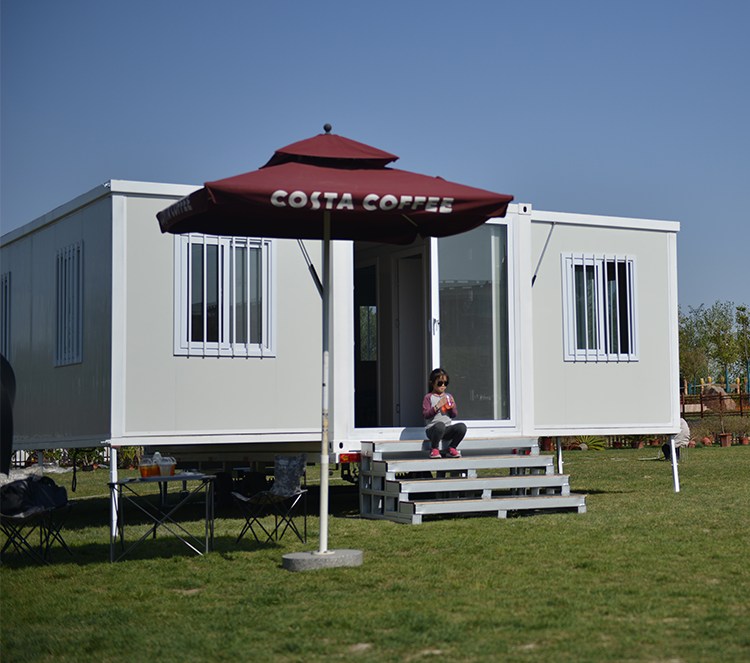
There is no single fixed price for prefab houses that applies to every project.The final quote depends on factors such as the perfab house type,size,specifications,and construction location.
Base prices by size
Based on cost data for modular homes in the U.S.market,the base price for a 500-square-foot home is approximately US$40,000–80,000;for a 1,000-square-foot home,it is about US$80,000–160,000;and for a 2,000-square-foot home,it is around US$160,000–320,000.These figures primarily reflect the cost of the house structure or modular building itself and do not represent the final move-in cost.
| Home Size | Reference Base Price for Modular Homes |
|---|---|
| 500 sq ft | US$40,000–80,000 |
| 800 sq ft | US$64,000–128,000 |
| 1,000 sq ft | US$80,000–160,000 |
| 1,500 sq ft | US$120,000–240,000 |
| 2,000 sq ft | US$160,000–320,000 |
| 3,000 sq ft | US$240,000–480,000 |
Prices increase further if the project utilizes higher-grade exterior cladding,doors,windows,kitchen and bathroom fixtures,or interior finishes.For highly customized modular homes,prices found in public data can reach approximately US$130–310 per square foot.
Price-per-square-foot figures are useful for early-stage budgeting but are not suitable as the sole criterion for evaluating a final quote.
Even in a small 500-square-foot home,essential components—such as the kitchen,bathroom,electrical systems,doors,and windows—must still be included.These costs do not decrease in direct proportion to the reduction in floor area.Conversely,larger homes allow certain fixed costs to be spread across a greater amount of space.
When comparing two quotes,it is best to verify that they are based on the same delivery standards,rather than simply comparing figures like"US$100/sq ft"versus"US$130/sq ft."
The"Prefab House Price"provided by manufacturers often refers only to the cost of the house unit itself.Definitions of the scope of delivery vary among manufacturers,which is a primary reason for significant price differences.
Base quotes typically cover the structural system,walls,roofing,doors,windows,and certain interior functional areas.Specific configurations depend on the product type.
For modular homes,a significant portion of the construction work is completed in the factory;for panelized or container-style prefab homes,components may be shipped as wall panels,structural elements,or complete modules.You need to separately confirm whether the kitchen,bathroom,flooring,lighting,air conditioning,and furniture are included in the quote.
Costs for transportation and on-site construction are incurred after the house leaves the factory.
Publicly available cost data indicates that transportation expenses for modular homes in the U.S.can range from US$3,000 to US$20,000,with some projects priced based on square footage.Factors such as the type of foundation,transport distance,on-site road conditions,and the lifting method used will all influence this cost.
If a manufacturer's quote lists only the"House Price,"you need to verify whether this figure includes transportation,unloading,lifting,and on-site installation.
Expenses such as land grading,foundations,water,electricity,sewage,gas,and permits are typically classified as on-site project costs rather than the manufacturing cost of the house itself.
These items can significantly drive up the budget,especially in remote areas.Furthermore,the cost of the land itself should not be conflated with the price of the prefabricated house.
"Prefab house"is not a single architectural form but an umbrella term covering various types of factory-prefabricated buildings.The U.S.Department of Housing and Urban Development(HUD)makes a clear distinction between modular homes and manufactured homes:modular homes are built according to applicable state and local building codes,whereas manufactured homes adhere to the federal HUD Code.
Modular homes typically offer more comprehensive residential features and can be designed based on floor plans,square footage,and local building codes.
Current market data indicates that the typical price for modular homes ranges from approximately US$80 to US$160 per square foot,though high-end custom projects can cost significantly more.
Panelized homes are usually transported to the site as wall panels,roof sections,or other structural components.While the material cost for some basic products may be as low as US$40–60 per square foot,labor and on-site construction costs must be calculated separately.
The advantages of these products lie in transportation efficiency and on-site construction flexibility;however,their final cost cannot be directly compared to that of a complete modular home based solely on material prices.
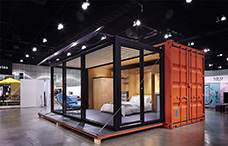
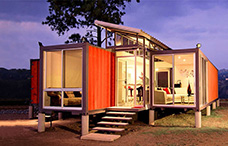
The pricing logic for container homes,small prefab units,and expandable homes differs again.These typically emphasize factory standardization,transportability(size constraints),and rapid on-site assembly.
You may see online quotes for"prefab houses"starting at a few thousand dollars or less,but these figures often cover only the basic unit,a semi-finished product,or a base configuration of a specific size;they do not represent the final,all-in cost of a complete,ready-to-live-in home.
Even with the same square footage,the prices of two prefabricated homes can vary significantly.Price is determined not only by size but also by design complexity and delivery standards.
Simple rectangular floor plans are generally easier to standardize for production.Incorporating features such as extensive glazing,complex rooflines,cantilevered structures,non-standard wall shapes,or multiple module connection points increases both design and manufacturing efforts.
For custom homes,costs also include structural design,engineering reviews,and compliance with local building codes.
Exterior cladding materials,insulation thickness,the quality of doors and windows,flooring,bathroom and kitchen fixtures,and HVAC systems all impact the final price.For instance,for a 100-square-meter home,the quoted price can vary drastically depending on whether it features standard specifications or high-performance doors and windows,custom kitchens,and upgraded bathroom fixtures.
Although prefabricated houses are manufactured in a factory,they must ultimately comply with the building requirements of the project site.
Requirements regarding structural loads,insulation,fire safety,electrical systems,plumbing,and energy standards can vary by state,city,or even specific project location.Factoring in local codes during the design phase usually makes cost control easier than attempting modifications after production is complete.
The figure that truly matters is the"Total Project Cost"—the comprehensive cost covering everything from manufacturing to the point where the house is ready for occupancy.
From Factory to Site
A practical formula for calculation is:
Total Project Cost=House Unit+Packaging&Shipping+Unloading/Hoisting+Foundation+On-site Installation+Utility Connections+Permits+Site Work+Interior/Exterior Upgrades
The proportion of these costs varies by project.
If the land already has infrastructure and site conditions are favorable,project costs are generally easier to manage.Conversely,if a new foundation is required,utility lines must be laid over long distances,or significant land grading is needed,on-site costs can rise substantially.
Why is there a significant difference between the"house price"and the"project price"?
If a manufacturer quotes US$100,000,you cannot simply assume that US$100,000 covers everything needed to move in.
If that price excludes shipping,foundations,hoisting,utility connections,permits,and on-site construction,you will need to increase your budget to cover these additional items.
Public data indicates that land preparation,foundations,and utility connections can add tens of thousands of dollars—or more—to the project cost;costs can be even higher for complex sites.
The price prefabricated house from China is differs significantly from local purchasing:the factory quote represents only a portion of the total cross-border project cost.
Chinese manufacturers benefit from comprehensive building material supply chains and large-scale manufacturing systems,and exports of Chinese prefabricated buildings have continued to grow in recent years.In 2025,the export value of Chinese prefabricated buildings reached approximately US$4.3 billion—up from US$1.7 billion in 2020—with markets spanning the United States,Southeast Asia,Australia,and Western Europe.
When requesting quotes from Chinese prefab house manufacturers,it is advisable to break the pricing down into several tiers:
EXW(Ex Works)/Factory Price→FOB→CIF→Delivered Cost→Local Installation Cost
This makes it easier to identify the true price differences between manufacturers.
For example,one manufacturer’s quote might cover only production,while another’s includes ocean freight to the destination port.Comparing the two figures directly could easily lead to an incorrect conclusion.
Ocean freight and import costs cannot be overlooked.
For cross-border projects,you must also consider container loading methods,ocean freight charges,insurance,destination port fees,tariffs or taxes,customs clearance,and local transportation.
For bulky items like prefabricated houses,packaging and container loading efficiency are particularly important.A well-designed product—even with a slightly higher ex-factory price—can result in lower overall costs due to higher loading capacity and greater transport efficiency.
When sourcing from China,the greatest value lies not in finding the"lowest ex-factory price,"but in ensuring the manufacturer clearly outlines product specifications,packaging dimensions,container loading quantities,trade terms,and the scope of delivery.
This question cannot be answered with a simple"yes"or"no."
"Prefab"is a broad category,and modular homes are just one type within it.Prices vary significantly across different prefab products.Public data suggests that prefab products generally span a wide range—from US$40 to$300 per square foot—whereas modular homes typically fall into the higher price bracket associated with residential housing.
Traditional construction offers greater design flexibility on-site,while factory prefabrication shifts more manufacturing steps into a controlled environment.For projects with a high degree of standardization,factory production can reduce the amount of on-site construction work required.
However,"prefab"does not automatically mean a project will be cheaper.If your project requires extensive customization,complex foundations,long-distance transport,or high-end finishes,the final cost could approach or even exceed that of traditional construction.
A meaningful comparison requires looking at identical floor areas,configurations,building standards,and scopes of delivery.
Prefab home costs shouldn't be viewed solely through the lens of the construction phase.For a home intended for long-term use,factors such as maintenance,energy efficiency,material lifespan,and potential for future modifications are equally important.
Budgeting logic for a 1,000-square-foot home
Based on publicly available pricing for modular homes in the US,the cost of the home unit itself is roughly US$80,000–$160,000.
If the project also requires foundations,transportation,permits,site preparation,and utility connections,the final budget will naturally exceed this range.
The most important step isn't arriving at a seemingly precise final figure,but establishing the right budgeting structure:determine the cost of the home unit first,then add on-site costs item by item.
Long-term value goes beyond the initial price
If you plan to live in a prefab home for the long term,factors such as thermal insulation,the quality of doors and windows,waterproofing design,structural durability,and ease of maintenance are crucial.
A home with a lower initial price tag but frequent maintenance needs does not necessarily result in lower long-term costs.Conversely,investing in proper insulation,energy-efficient equipment,and durable materials may increase the initial outlay but reduce ongoing operating and maintenance expenses.
When reviewing quotes from different manufacturers,the most common issue isn't failing to understand the pricing,but rather the fact that the scope of delivery varies from one quote to another.
Standardize specifications before comparing prices
You should first determine key specifications such as floor area,structural materials,wall thickness,insulation,doors and windows,kitchen and bathroom fittings,electrical systems,HVAC,and flooring.
If Manufacturer A offers a"shell"product while Manufacturer B includes a fully fitted kitchen and bathroom,simply comparing the total prices is not very meaningful.
Break down the quote into four price tiers
A clear budgeting approach involves these tiers:
Tier 1:Factory Price
The price of the house upon completion of factory production.
Tier 2:Delivered Price
The price including packaging,shipping,and international logistics.
Tier 3:Site Cost
Includes foundations,site preparation,hoisting,and on-site installation.
Tier 4:Complete Project Cost
The total cost including utilities,permits,interior upgrades,and other local construction work.
This method is particularly suitable for cross-border prefab house projects,as it helps quickly identify hidden costs.
Don't just ask"How much for a unit?"
When requesting a quote,provide the manufacturer with details such as floor area,intended use,destination country,building codes,specification levels,estimated quantity,and delivery location;the resulting quote will be far more useful for comparison.
If a manufacturer quotes a very low price per unit without specifying the structure,materials,fittings,and trade terms,that figure alone holds little value for comparison.
In 2026,prefab house prices can range from approximately US$40 to over US$300 per square foot,depending on the type of prefab and delivery standards;for more complete modular homes,the common market range is roughly US$80–160 per square foot.
When creating a project budget,do not mistake the"factory price"for the final cost.Transportation,foundations,site work,utilities,permits,installation,and local building requirements can all alter the final budget.
If you plan to source prefab houses from China,it is more valuable to compare the total delivered cost and the scope of the quote rather than simply seeking the lowest factory price.By separating Factory Price,Shipping,Site Cost,and Complete Project Cost,you can more easily identify where the costs lie and better control the overall project budget.



Copyright © Hebei Weizhengheng Modular House Technology Co., Ltd. All Rights Reserved
Sitemap

 +8615081877521
 +8615081877521