- icy@wzhgroup.com
- +86 15081877521


If you have decided to purchase a container home,there are several key details to confirm before paying a deposit or scheduling production.Factors such as structural integrity and materials,dimensions and layout,insulation and fenestration(doors and windows),electrical and plumbing systems,local building regulations,shipping methods,and the scope of the price quote will all impact the home's performance and actual cost.
Purchasing a container home involves more than simply selecting a preferred look and size.Two products that appear nearly identical may differ significantly in steel structure specifications,wall panel thickness,insulation materials,door and window configurations,interior finishes,and even electrical systems.Failing to clarify these details before placing an order can lead to complicated modifications later on and potentially incur extra costs.
This is especially important when sourcing from overseas manufacturers;you must consider the product itself alongside shipping logistics,local site conditions,and your specific usage requirements.The following points highlight the most critical aspects to check before buying,helping you clarify product specifications,pricing,and delivery terms before finalizing your order.
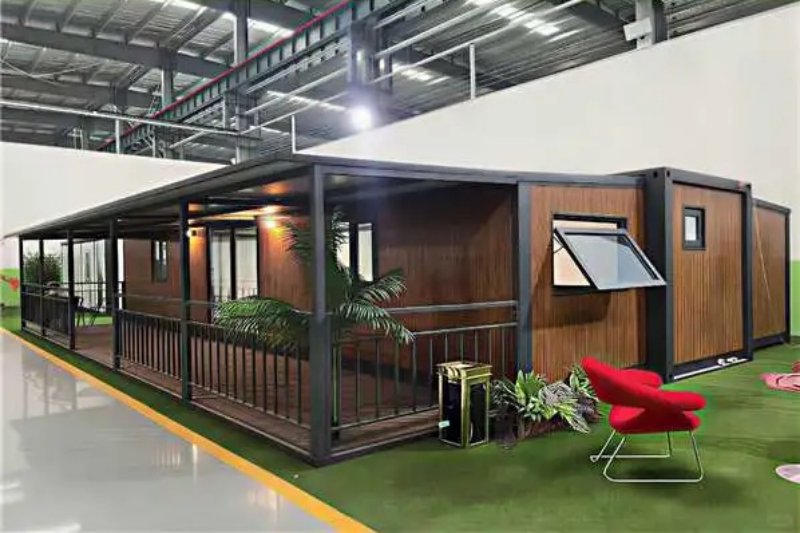
While appearance and layout are certainly important,the structure is the foundation that determines the home's stability and lifespan.Before ordering,you need to understand the structural system used and the specifications for key components—such as the steel framework,base frame,roof,and connection points—rather than relying solely on a generic"Steel Structure"line item in the quote.
If the home requires customization,pay special attention to whether the structure is adjusted to match the design changes.For instance,adding large windows or doors,altering the interior layout,or connecting multiple modules may necessitate structural reinforcement.For foldable or expandable models,confirm that the design accounts for the necessary structural connections and support mechanisms once the unit is deployed.
In addition to the structural type,ask the manufacturer about steel specifications,anti-corrosion treatments,and primary connection methods.These parameters are particularly crucial for projects intended for long-term use or installation in challenging environments,such as areas prone to high winds,earthquakes,or coastal conditions.
In short,don't just look at what the house"looks like"before buying;understand how it is built,what materials form the main structure,and whether the design is tailored to your specific environment.It is best to verify these details using formal blueprints and specification sheets rather than relying on product photos or chat logs alone.
When purchasing a container home,do not judge the size solely based on"20ft"or"40ft"designations or the"expanded area"advertised by the manufacturer.External dimensions do not equate to actual usable area;elements such as walls,structural components,partitions,kitchens,and bathrooms all consume interior space.For expandable models,you must also verify the dimensions in both the transport state and the fully expanded state.
What is the difference between"actual usable area"and"expanded area"?
With standard container homes,there are inherent differences between external dimensions,internal dimensions,and actual usable area.This distinction is even more pronounced with expandable container homes,as the dimensions differ between the transport and expanded states.The"expanded area"listed by manufacturers usually refers to the footprint when fully unfolded;it does not necessarily equal the actual usable area of the enclosed interior space.
Beyond the total area,consider the logic of the internal layout.Residential units require efficient flow between bedrooms,living areas,kitchens,and bathrooms;offices need to balance workspace with storage;and accommodation projects must account for bed capacity and communal areas.If space is excessively compressed to squeeze in more rooms,the actual user experience may suffer,even if the total area remains unchanged.
Before placing an order,request a detailed floor plan from the manufacturer showing external and internal dimensions,room sizes,the placement of doors and windows,and the location of kitchen and bathroom facilities.For expandable or modular combination units,confirm the expanded dimensions and the final assembly configuration.
Dimensions determine how much space you have,but the layout determines whether that space can be truly utilized.When comparing different container homes,look beyond"20ft vs.40ft"and focus on the actual usable space you will ultimately receive.
This is an area where discrepancies often arise in low-cost quotes.
Some quotes simply list"sandwich panel,"but this is insufficient.You need to verify specific details such as the panel type,thickness,core material,density parameters,roof structure,and overall insulation method.
For instance,a 50mm wall panel and a 100mm wall panel represent different specifications.Even with the same thickness,variations in core materials and structural design can result in significantly different thermal insulation performance.
In addition to wall panels and roofing,the flooring structure should not be overlooked.You need to verify the floor structure,whether an insulation layer is installed underneath,the surface material used,and the design load capacity of the entire flooring system.
If heavy furniture,equipment,appliances,or commercial facilities are to be placed inside the house,confirming the floor specifications in advance becomes even more critical.
Wall panels,roofing,and flooring collectively form the building envelope and functional foundation;specifications cannot be determined based solely on simple descriptions like"sandwich panel"or"insulation."
While doors and windows may seem like minor details,they directly impact natural lighting,ventilation,thermal insulation,heat rejection,and waterproofing performance.When purchasing a container home,do not focus merely on the number of windows,glass surface area,or aesthetics;instead,determine the specifications based on the location where the house will be installed.
Local climate influences door and window specifications
For houses installed in hot regions with intense sunlight,prioritize the glass's solar shading capabilities and consider how large windows and doors affect the indoor cooling load.In cold regions,the focus should shift to thermal insulation performance to minimize indoor heat loss.
In areas with high humidity,coastal locations,or regions prone to strong winds,airtightness and waterproofing are crucial considerations.Frame materials,glass types,and door structures and opening mechanisms should be selected based on the specific environment rather than relying on a generic"standard configuration."
If the project location has specific building codes or energy efficiency requirements,these must be incorporated into the door and window design prior to production.
Door and window specifications and performance are generally more important than quantity.When making a selection,consider the local climate,building regulations,and the actual intended use of the house.
If you are purchasing a container home ready for immediate occupancy or office use,you must confirm the electrical,plumbing,and interior specifications before placing your order.This is particularly important for export projects,as different countries have varying standards for voltage,frequency,power outlets,and electrical systems;you cannot assume that a single standard configuration suits every market.
Beyond the electrical system,verify whether facilities such as the kitchen,bathroom,water heater,air conditioner,lighting,plumbing,and sewage connections are included.If the unit comes with a finished interior,clarify the specific details regarding wall finishes,flooring,ceilings,cabinetry,and furniture to avoid discovering—only after the unit arrives on-site—that additional items need to be purchased or installed.
What exactly does"Fully Equipped"include?
Container home quotes often feature the term"Fully Equipped,"yet different manufacturers define this phrase differently.One manufacturer might include a kitchen,bathroom,air conditioner,and water heater,while another might provide only the basic infrastructure.
Rather than relying on the vague"fully equipped"label,ask the manufacturer for a detailed specification list that outlines exactly what is included and the specific details for each major item.For example:
A detailed specification table is far clearer than the phrase"Fully Equipped"and makes it easier to compare quotes from different manufacturers.Any items that are optional,excluded,or intended for local procurement should also be clearly marked in the quote.
For finished container homes,the more specific the confirmed specifications,the lower the risk of future disputes.By confirming electrical,plumbing,and interior equipment item by item before ordering,you gain a true understanding of what the manufacturer is delivering and what work remains to be done once the unit arrives on-site.
Before paying a deposit,it is advisable to verify the regulations applicable to the specific site where the unit will be placed.Whether a container home can be used on a specific site depends on various factors,including local zoning laws,building codes,setback requirements,foundation specifications,fire safety regulations,and utility connection requirements;in some areas,community association rules may also apply.Requirements vary significantly across different cities,counties,states,and countries.
This step is particularly crucial if you intend to use the container home as a backyard dwelling,a permanent residence,a rental property,an office,or for long-term accommodation.
Do not assume your project will face no issues simply because"container homes are permitted in this country."
What you really need to verify is:
"Can I obtain a permit to use or build this type of home on my specific plot of land?"
Foundation requirements should also be considered before production begins
While the manufacturer handles the design and fabrication of the home itself,the choice of foundation depends on site-specific conditions.
Factors such as soil conditions,local structural loads(including wind and seismic loads),drainage,finished floor elevation,and connection methods all influence foundation design.
Projects requiring official approval may also necessitate architectural drawings,structural calculations,foundation plans,connection details,and other technical documentation.
This is why it is best to inform the manufacturer of the destination and basic project conditions before finalizing the product.
A factory quote of US$5,000 for a container home does not mean the total project cost will be just US$5,000.
Overseas procurement often involves additional costs:
Factory price+packaging+domestic transport+ocean freight+port charges+import duties/taxes+destination transport+unloading+foundation+utility connections+local construction.
Some projects may also incur costs for building permits,inspections,engineering design,site grading,and additional installation work.
Procurement volume also affects cost calculations.
If you are purchasing only one unit for a backyard dwelling,logistics costs may account for a significant portion of the total project cost.
If you purchase 20,50,or even 100 units at once,the cost calculation changes.
You need to consider:
How many units fit into a single shipping container?
Is the product foldable,flat-packed,or shipped using another method?
How many containers are required in total?
Can the container loading method be further optimized?
What is the average ocean freight cost per unit?Are destination port charges calculated based on the entire shipment or per unit?
For bulk B2B purchases,these factors can significantly impact the final cost per unit.
A quotation is more than just a price list;it defines what the manufacturer provides and which costs you must cover separately.Many pricing disputes arise not from the total price itself,but from differing interpretations of the scope of the quote.
For example,suppose one container house manufacturer quotes US$4,800 while another quotes US$6,200.On the surface,the latter appears more expensive.However,if that quote includes higher-specification doors and windows,thicker insulation,kitchen and bathroom fixtures,air conditioning,water heaters,furniture,and superior packaging,the two quotes are not actually for the same product package.
Pay attention to terms like"Excluded"and"Optional."
When reviewing a quotation,in addition to confirming the included specifications,pay close attention to terms such as"Excluded,""Optional,""Not Included,""By Buyer,""Local Supply,"or"Upon Request."
These terms may indicate that certain equipment,materials,shipping costs,or on-site work are not covered by the current quote.Relying solely on the total price at the top of the quote can easily lead to underestimating the final cost.
When comparing container house manufacturers,it is best to request a detailed quotation and specification sheet that itemizes product configurations,quantities,specifications,and included or excluded items.This ensures a true"apples-to-apples"comparison of specifications and scope,rather than a simple comparison of two numbers.
FOB,CIF,and DDP represent different pricing concepts.
When purchasing from overseas manufacturers,you must also confirm the trade terms used in the quote.FOB,CIF,and DDP entail different transportation and delivery responsibilities for the seller,resulting in different cost structures.
If you are unfamiliar with these trade terms,ask the manufacturer to break down the costs,for example:
Product price→International shipping costs→Destination-related charges→Costs to be borne locally
This approach not only facilitates the comparison of quotes from different manufacturers but also allows for a clearer estimate of the true landed cost of the container house.
A quote that appears cheaper does not necessarily mean the final cost will be lower.A truly meaningful comparison is one made under identical product specifications,scopes of delivery,and trade terms.
Product pricing and specifications ultimately hinge on one premise:the manufacturer's ability to complete production as agreed.This is especially critical for custom products or bulk orders,as website images and company profiles do not always accurately reflect actual production capabilities.
Before paying the deposit,take the time to learn more about the manufacturer's factory,production lines,processing equipment,workflows,quality control measures,export experience,and past projects.For steel structures or modular container homes,specifically examine the processing equipment for key structural components,welding and assembly procedures,and the methods used to check dimensions and quality during production.
For export projects,the manufacturer's track record is equally important.Beyond checking for past overseas projects,verify their ability to provide relevant product certifications,technical drawings,material specifications,and necessary export documentation.For bulk purchases,these details are often far more valuable than promotional content found on a website.
Confirm production drawings for custom products
If the project involves customization regarding dimensions,layout,doors and windows,wall panels,electrical systems,or interior fittings,it is advisable to approve a comprehensive set of"Production Drawings"before manufacturing begins.
These drawings should clearly define final dimensions,floor plans,door and window locations,key materials,and customization details.Approving these drawings prior to production minimizes the risk of discrepancies between sales discussions,technical design,and actual manufacturing.
What truly matters is not how"large"the manufacturer appears to be,but whether they have the capability to consistently manufacture and deliver products according to your specifications.A holistic assessment—considering the factory,equipment,past projects,certifications,and production processes—is essential to accurately gauge the manufacturer's actual production capabilities.
Paying the deposit does not mean the order is fully finalized.Before production actually starts,a final verification step is necessary to ensure the product the manufacturer is preparing to build aligns perfectly with the quotation,specifications,and previously approved designs.
Once production is underway,modifying the layout,door and window locations,wall materials,or electrical configurations can incur additional costs,and some completed components may be impossible to alter.This pre-production confirmation is a crucial step in minimizing the risk of rework and disputes later on.At a minimum,the following must be verified:
Floor plans→Dimensions→Elevations→Doors and windows→Wall and roof specifications→Electrical layout→Plumbing layout→Interior configuration→Optional features→Colors and finishes.
For foldable and expandable container homes,it is also necessary to confirm dimensions in both folded and expanded states,connection points,and requirements for on-site unfolding and installation.These details should ideally be explicitly stated in the final drawings or specification documents,rather than relying solely on chat logs.
If the order volume reaches dozens or even hundreds of units,consider implementing a First Article Approval process prior to mass production.
Once the first unit is completed,inspect it against the confirmed drawings and specifications to ensure dimensions,configuration,and workmanship meet requirements before proceeding with mass production.This prevents discovering discrepancies in specifications or configuration only after the entire batch has been manufactured.
For large-volume orders,the goal is to confirm not only"can the manufacturer produce one unit?"but also"can they consistently produce the entire batch to the same specifications and quality standards?"
Before paying the deposit,you should have a complete set of order documentation—going beyond just product photos,price quotes,and chat logs.At a minimum,confirm the following:
Final price quote
Detailed product specification sheet
Dimensioned floor plans
Final exterior and interior designs
Material and insulation specifications
Electrical and plumbing configurations
List of included and excluded items
Shipping method and trade terms
Production lead time
Payment terms
Warranty terms
Technical and compliance documents required for the project
These documents serve not merely as records but ensure a shared understanding between you and the manufacturer regarding the final product:what it is,what it includes,when it will be delivered,and who is responsible for what.
If specifications need to be modified later,this documentation allows for a clear determination of whether the changes fall within the original order scope or constitute new requirements.This is particularly crucial for custom and bulk projects.
When purchasing a container home,viewing it merely as a"container with rooms inside"makes it easy to overlook factors that truly impact project costs and usability.A complete container home package encompasses structure,dimensions,materials,insulation,doors and windows,electrical and plumbing systems,interior fit-out,transportation,foundation work,and compliance with local building regulations.The ex-factory price represents only one component;the ultimate consideration is the total cost of delivering the complete product and project.
Thoroughly confirming product specifications,price ranges,manufacturer capabilities,shipping methods,and final drawings before placing an order helps minimize the need for subsequent modifications,additional purchases,or disputes regarding delivery.
If you plan to source a container home from China,providing details such as the order quantity,destination country,desired layout,and key configuration requirements when requesting a quote allows the manufacturer to tailor specifications to your project needs and provide a more accurate price estimate.



Copyright © Hebei Weizhengheng Modular House Technology Co., Ltd. All Rights Reserved
Sitemap




 +8615081877521
 +8615081877521