- icy@wzhgroup.com
- +86 15081877521


If you are looking for a home that is reasonably priced,quick to build,and suitable for long-term use,an affordable prefabricated house is often one of the most cost-effective choices available today.
Based on 2026 international market trends,the price of most affordable prefabricated houses ranges from approximately$15,000 to$120,000.Specific costs vary depending on factors such as floor area,building materials,configuration standards,and installation methods.
This article analyzes affordable prefabricated houses from various perspectives—including price,product type,budget options,and practical applications—and recommends 10 noteworthy models to help you find the solution that best suits your needs.
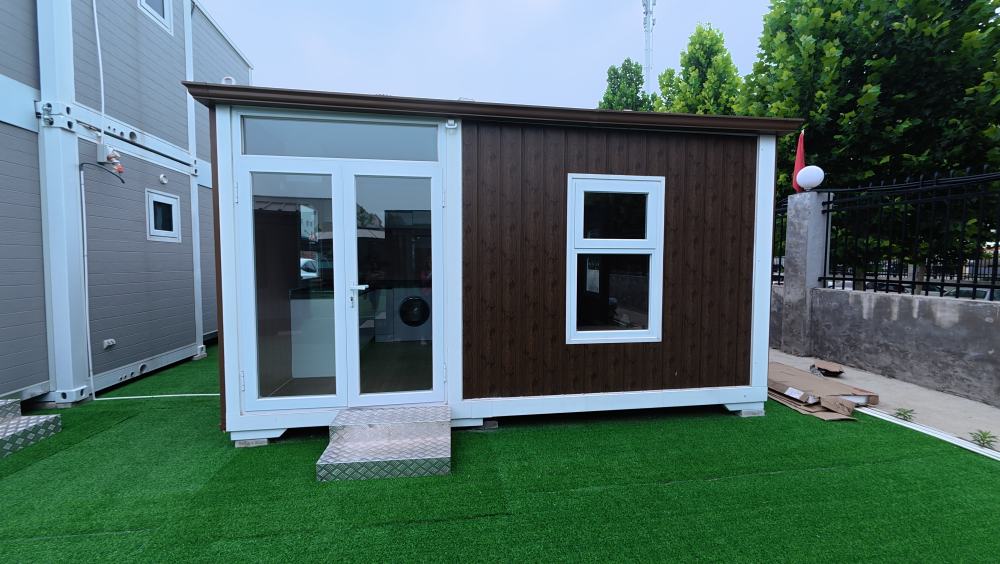
An affordable prefabricated house is a type of prefab home delivered at a lower construction cost while maintaining high standards of build quality,safety,and living comfort.Compared to traditional housing,these homes offer shorter construction timelines and lower overall building costs,making them increasingly popular for both residential and commercial projects.
Unlike traditional on-site construction,most components of these houses are manufactured in a factory beforehand and then transported to the site for assembly.Factory production not only boosts construction efficiency but also minimizes material waste and ensures more consistent overall quality.
Today,affordable prefabricated houses are no longer limited to temporary structures;they are widely used for family homes,granny flats,vacation homes,short-term rentals,and office spaces.As modular construction technology matures,many products now rival traditional homes in terms of thermal insulation,soundproofing,and durability.
It is important to note that"affordable"does not simply mean choosing the lowest price;rather,it is about seeking superior overall value.A truly cost-effective prefabricated house strikes a balance between budget,functionality,lifespan,and long-term maintenance,making it well-suited for extended use.
In 2026,the market price for an affordable prefabricated house typically ranges from$15,000 to$120,000.Prices vary based on factors such as floor area,structural type,building materials,configuration standards,and customization requirements.For most residential projects,a budget of$20,000 to$50,000 covers the majority of mainstream products on the market.
| House Type | Estimated Price (USD) | Best Suited For |
|---|---|---|
| Tiny Prefab House | $15,000–$30,000 | Single occupants, vacation homes, and guest houses |
| Expandable Container House | $18,000–$45,000 | Family homes, granny flats, and rental units |
| Foldable House | $15,000–$35,000 | Temporary accommodation, construction site offices, and emergency housing |
| Flat Pack House | $20,000–$40,000 | Construction camps, workforce housing, and temporary facilities |
| Modular Home | $45,000–$100,000 | Permanent residential living |
| Luxury Prefab House | $100,000+ | High-end residences, vacation villas, and luxury retreats |
The prices listed reflect the market reference range for the main structure;actual costs vary based on configuration and project requirements.Factors such as the inclusion of insulation systems,the grade of doors and windows,bathroom fixtures,or solar power systems can all influence the final budget.Significant price differences often exist between standard and customized configurations for the same product.
Beyond the house itself,the total investment is also affected by labor costs,shipping fees,and local building standards in different regions.Therefore,when comparing options,it is advisable to conduct a comprehensive assessment based on performance,usage needs,and long-term maintenance costs,rather than focusing solely on the initial quote.
The market for prefabricated houses is becoming increasingly diverse,with various products offering unique features regarding structural design,transportation methods,and intended use.If you are on a budget but still prioritize living quality,the following options are currently popular in the international market.
Tiny prefab houses have long been a favorite in the affordable housing sector.They typically range from 15 to 40 square meters in floor area,with prices generally falling between$15,000 and$30,000.Despite their compact size,smart spatial design ensures they meet all daily living needs.
Whether used as vacation homes,retirement dwellings,garden cabins,or short-term rentals,tiny houses offer low upfront investment and minimal ongoing maintenance costs,driving steady market growth in recent years.
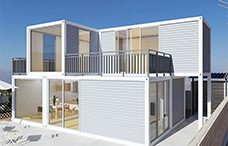
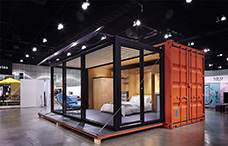
Expandable container houses are among the fastest-growing prefab products in recent years.They maintain standard container dimensions during transport but can be quickly expanded on-site,tripling or even quadrupling the usable interior space.This design effectively balances transport efficiency with living comfort.
Current market prices range from approximately$18,000 to$45,000.Available layouts include one-,two-,and even three-bedroom options,making them ideal for use as granny flats,family homes,or tourist accommodation.
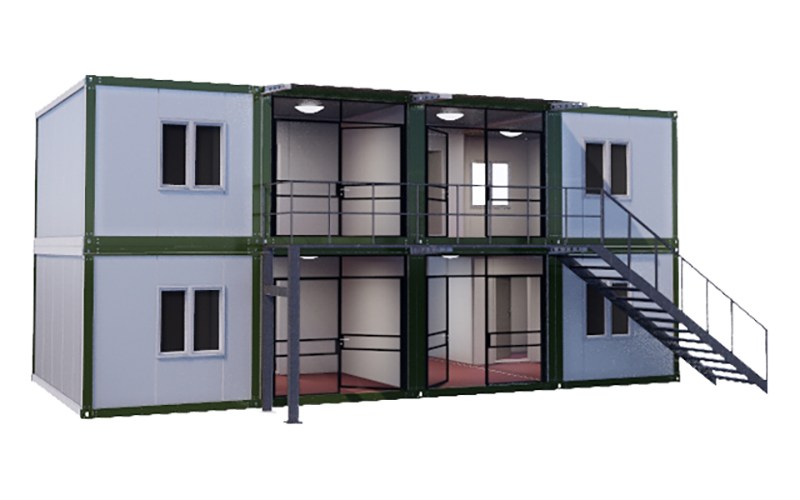
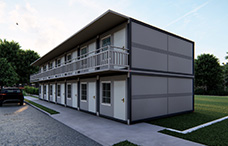
The defining feature of flat-pack houses is that all components can be disassembled for transport and assembled on-site.This design maximizes container loading capacity,offering a distinct cost advantage for international shipping.
While traditionally used for construction projects,staff dormitories,and temporary offices,flat-pack houses are increasingly entering the residential market as designs improve.Compared to traditional construction,they offer faster installation and are easier to disassemble and reuse later.
If long-term living quality is your priority,a modular home is often the more mature choice.These homes are constructed by combining multiple modules;since most of the building process takes place in a factory,on-site construction time is significantly reduced.Compared to standard prefab houses,modular homes offer performance characteristics—such as sound insulation,thermal insulation,and spatial layout—that more closely resemble traditional housing.Although the price typically ranges from$45,000 to$100,000,they offer excellent overall value for those planning long-term residency.
Driven by rising demand for Accessory Dwelling Units(ADUs)in markets across Australia,New Zealand,and North America,"granny flats"have emerged as one of the fastest-growing categories of prefab housing in recent years.
Typically ranging from 30 to 70 square meters in size,these units can serve as independent living quarters for family members,rental properties,or home offices.Compared to newly built traditional homes,prefab granny flats offer shorter construction times and greater flexibility for customization to meet local regulations,making them an increasingly popular choice for families.
The defining features of foldable prefabricated houses are their high transport efficiency and rapid installation.The main structure is assembled at the factory;upon arrival at the site,the unit simply needs to be unfolded and connected to be ready for use—with some standardized models taking only a few hours to install.
Currently,these products are priced between approximately$15,000 and$35,000 and are suitable for applications such as temporary housing,emergency shelters,construction camps,and mobile offices.Recent structural upgrades have introduced features like thermal insulation,soundproofing systems,and modern interior fittings,significantly improving living comfort compared to earlier models.
Steel-structure prefab houses have long been among the most widely used products in the international market.Compared to timber-frame buildings,steel structures offer superior wind,seismic,and corrosion resistance,as well as advantages regarding lifespan and maintenance costs.
Depending on floor area and specifications,steel prefab houses typically range in price from$30,000 to$80,000.Suitable for long-term living,they are also widely used for schools,medical facilities,commercial offices,and industrial buildings.Steel-structure homes are often the preferred choice in regions frequently affected by strong winds,heavy storms,or earthquakes.
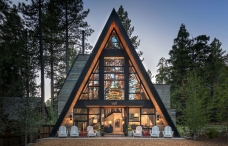
In recent years,A-Frame cabins have gained popularity at campsites,resorts,and mountain guesthouses thanks to their distinctive design.Their classic pitched roof is not only instantly recognizable but also effectively sheds snow and rain,making them particularly well-suited for cold or rainy regions.
Currently,the price of a standard A-Frame prefabricated cabin typically ranges from$25,000 to$70,000.Beyond serving as vacation homes,they are increasingly popular choices for rural residences,forest retreats,and Airbnb short-term rental projects.
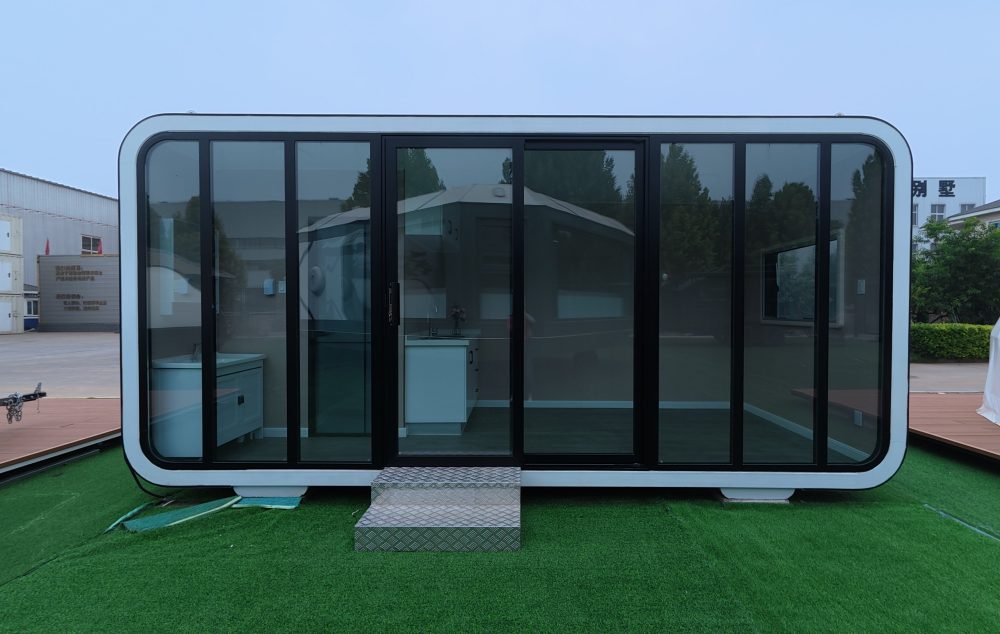
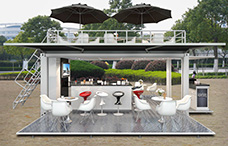
Although relatively compact,portable cabins offer excellent mobility and flexible layouts,making them widely used for offices,ticket booths,tourist service stations,and temporary housing.
These units are typically manufactured using standardized modules,ensuring easy transport and reusability should relocation or reconfiguration be required later,thereby effectively lowering long-term operating costs.For projects with limited budgets that still require future flexibility,portable cabins represent a compelling solution.
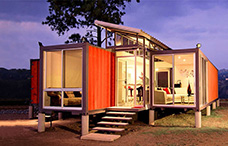
Many people assume that"affordable prefabricated housing"implies settling for basic specifications,but this is not the case.With advancements in modular construction technology,luxury modular cabins can now offer a living experience comparable to traditional homes while remaining within a reasonable budget.
These units often feature open-plan living areas,expansive floor-to-ceiling windows,high-performance insulation systems,and modern kitchen and bathroom designs,with prices generally ranging from$60,000 to$120,000.While the initial investment is higher,they offer excellent overall value for long-term residences,boutique guesthouses,or high-end vacation projects.
The type of prefabricated house best suited for you depends on your budget.Rather than focusing on a specific product right away,it is better to first define your budget range and then select options based on your intended use;this makes it easier to find a solution that meets your needs.
If your budget is under$20,000,tiny prefab houses and foldable houses are usually good choices.These products feature relatively simple structures and lower transportation and installation costs,making them suitable for use as temporary housing,garden studios,or vacation cabins.
When the budget increases to the$20,000–$50,000 range,the variety of available options expands significantly.Expandable container houses,flat-pack houses,and some"granny flats"offer complete living spaces that meet daily residential needs while also serving purposes such as rentals,offices,or tourist accommodation.
For budgets exceeding$50,000,modular homes,steel prefabricated houses,and luxury modular cabins offer superior spatial layouts and living experiences.These products typically utilize higher-grade building materials and allow for greater design customization,making them better suited for long-term residence.
For most households,a budget of$30,000 to$50,000 often offers the best value for money,providing a comfortable living space while keeping long-term maintenance costs manageable.
A key reason for the rapid growth of prefabricated houses in recent years is their ability to strike an excellent balance between construction efficiency and overall cost.
First is the construction timeline.Traditional homes often take months or even over a year to complete,whereas most of the construction for prefabricated houses is done in a factory beforehand,significantly shortening on-site installation time.This is particularly important for residential,office,or commercial projects that need to be ready for use quickly.
Second is cost control.Factory-based production minimizes material waste and reduces labor costs,resulting in a more predictable overall budget compared to traditional on-site construction.Additionally,standardized production ensures product consistency,reducing quality fluctuations caused by weather or site conditions.From an environmental perspective,an increasing number of prefabricated houses are incorporating energy-efficient doors and windows,eco-friendly insulation materials,and recyclable steel structural systems.Compared to traditional construction,they generate less waste and align better with modern green building trends.
Of course,prefabricated houses are not intended to replace traditional homes but rather offer a more efficient construction alternative.Each has its own advantages depending on the project;the key is to make a decision based on a comprehensive assessment of budget,intended use,and local building regulations.
In recent years,China has emerged as one of the world's most active exporters of prefabricated houses.A complete steel structure supply chain,mature manufacturing processes,and extensive experience with international projects ensure that Chinese-made prefabricated houses remain highly competitive in the global market.
Compared to many other regions,China boasts a more comprehensive supply system.From steel processing and wall systems to doors,windows,bathroom fixtures,and interior finishes,most components can be manufactured locally.This not only boosts production efficiency but also helps control overall manufacturing costs.
At the same time,an increasing number of Chinese container house manufacturers are offering customization services.Aspects such as floor plans,insulation ratings,and exterior designs can be tailored to meet the specific building codes and usage requirements of different countries,going well beyond standard off-the-shelf products.
Take WZHHouse,for example:the company has long specialized in products such as expandable container houses,granny flats,modular homes,and other prefabricated structures,exporting to markets including Australia,Canada,New Zealand,the United States,and Europe.Beyond manufacturing,they provide one-stop services—including design,production,logistics coordination,and installation support—to ensure the smooth execution of projects.
For projects that prioritize a balance of product quality,budget control,and long-term service,choosing a Chinese manufacturer with extensive export experience typically ensures a more reliable delivery process.
How much do affordable prefabricated houses generally cost?
Currently,the price of most budget-friendly prefabricated houses on the international market ranges from approximately$15,000 to$120,000.Specific costs depend on factors such as floor area,specifications,materials,and shipping distance.
Is it possible to buy a prefabricated house suitable for long-term living for under$50,000?
Yes.Many expandable houses,granny flats,and certain modular homes can be purchased for under$50,000 while still meeting the requirements for comfortable,long-term living.What is the lifespan of a prefabricated house?
If high-quality steel structures are used and proper maintenance is carried out according to specifications,most prefabricated houses have a design lifespan of 30 to 50 years;some high-quality modular homes can even last over 50 years.
Can prefabricated houses be customized to meet specific needs?
Yes.Most international manufacturers currently offer customization options for floor plans,exterior aesthetics,doors and windows,insulation systems,and interior finishes to meet the specific requirements of different countries and projects.
Are Chinese-made prefabricated houses reliable in quality?
For companies with mature manufacturing systems and export experience,products are typically manufactured to international standards,with relevant certifications and technical documentation provided for specific markets.Therefore,selecting a factory with extensive experience in overseas projects is often more important than simply comparing prices.
Which type of prefabricated house is most recommended?
If you are looking to balance budget,transport efficiency,and living experience,expandable container houses often offer the best overall value;if long-term housing quality is the priority,modular homes and steel prefabricated houses are worth considering.
Affordable prefabricated houses have become a key choice for an increasing number of residential,vacation home,and commercial projects.Different products vary in price,structure,and application;the key is to make a decision based on a comprehensive assessment of your budget and actual needs.
As global modular construction evolves,Chinese-made products are becoming increasingly competitive in the international market,thanks to mature supply chains,consistent quality,and extensive export experience.Choosing an experienced manufacturer capable of providing customized services ensures a smoother project execution.
If you are seeking a prefabricated housing solution that balances quality,price,and delivery capabilities,WZHHouse offers a wide range of modular home products.We support custom designs and global export services,providing flexible building solutions tailored to the specific needs of your project.



Copyright © Hebei Weizhengheng Modular House Technology Co., Ltd. All Rights Reserved
Sitemap

 +8615081877521
 +8615081877521