- icy@wzhgroup.com
- +86 15081877521


In Australia,farming is—and always has been—about much more than just"working the land."Many farms span hundreds or even thousands of hectares and are located far from urban centers,making the construction of infrastructure both costly and time-consuming.For farm owners,a very real challenge arises:how can they efficiently and affordably address a range of spatial needs—including accommodation,office space,and storage—with minimal delay?
This is precisely why an increasing number of farms are adopting container houses—particularly the"expandable container houses"that have gained popularity in recent years.Compared to traditional construction,these structures offer not only rapid installation but also the distinct advantages of flexible adaptability and reusability—qualities that align perfectly with the"dynamic,dispersed,and highly seasonal"nature of agricultural operations.
Rather than offering a generic overview,this article delves into practical,real-world applications to explore exactly how these versatile spaces are being utilized on Australian farms.
Before diving into specific applications,let’s briefly address a fundamental question:Why are container houses becoming such a common sight in agricultural settings?
Traditional construction—from obtaining permits to actual building—often takes months,if not longer.Container houses,by contrast,are largely prefabricated in a factory setting;once delivered to the site,they require only basic site preparation and assembly,allowing them to be fully operational within a matter of days.For the agricultural sector—which is characterized by distinct seasonal demands—this difference in efficiency is absolutely critical.
In Australia,where labor costs are relatively high,the expenses associated with traditional construction can easily spiral out of control.Container houses,however,benefit from a relatively standardized design and production process,making their budgets far easier to manage—a feature that is particularly appealing to small and medium-sized farms.
Farm requirements are rarely static;for instance,one season might demand additional accommodation for seasonal workers,while the next might see those spaces sitting vacant.Mobile and expandable living/working spaces are clearly better suited to accommodate these fluctuating rhythms.
Parts of Australia experience extreme summer heat,while coastal regions often face strong winds and the ever-present risk of bushfires.When properly engineered,steel-structure container houses actually demonstrate greater weather resistance and structural stability than many forms of lightweight construction.
Now,let's look at how these versatile spaces are being put to work in the field,examining their specific applications based on real-world usage scenarios.
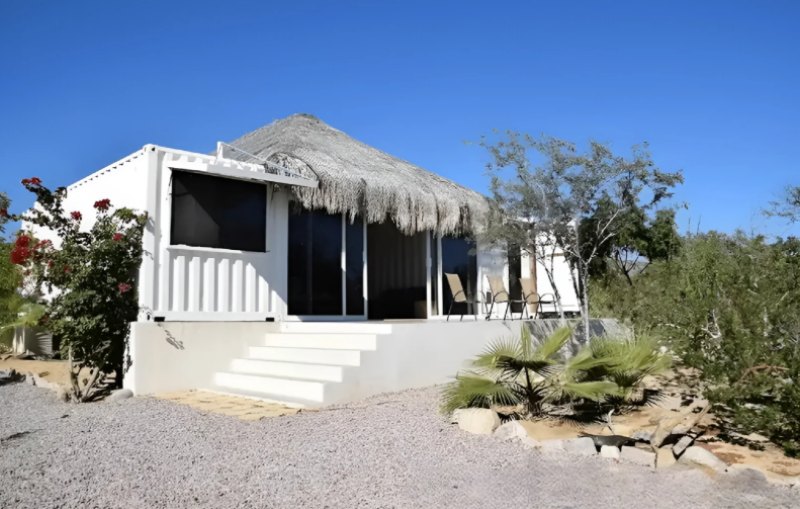
On Australian farms,worker accommodation requirements typically peak during the harvest season—such as fruit picking or grain harvesting.These employment cycles generally last only 6 to 12 weeks,yet the workforce size can fluctuate significantly.
According to data from various modular accommodation projects in Australia,the construction cost for a single worker accommodation unit typically ranges from**AUD 6,000 to AUD 15,000 per unit(basic configuration)**.For complete accommodation modules featuring a kitchen and private bathroom,costs may rise to between AUD 15,000 and AUD 30,000 per unit.
In contrast,while traditional temporary sheds are inexpensive,they offer poor comfort levels;given Australia's high-temperature climate,indoor temperatures within these structures can easily exceed 40°C during the summer months.
Consequently,an increasing number of farms are adopting modular container-based solutions.A typical accommodation area designed for 10 workers usually consists of 5 to 8 modular units,configured to create distinct sleeping quarters and communal living spaces.
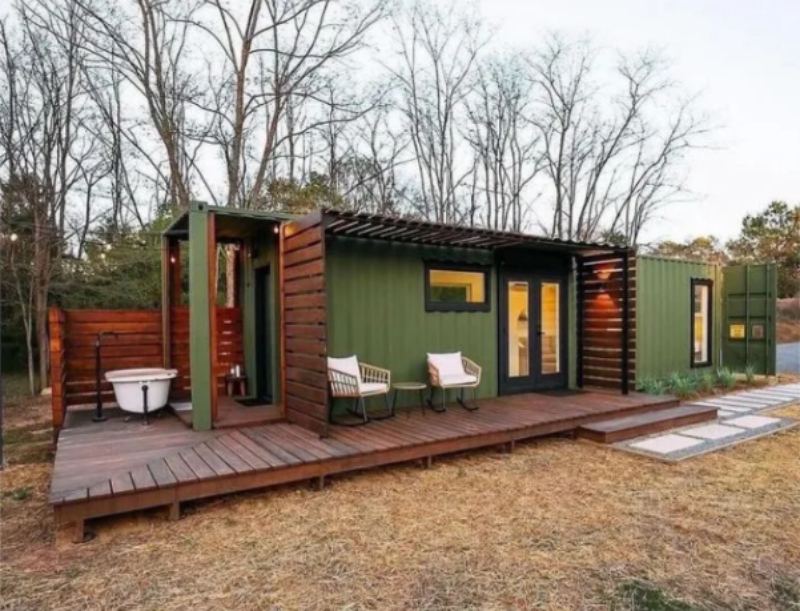
In Australia,the"granny flat"is a well-established form of residential housing.Depending on the specific building codes of each state,property owners are generally permitted to construct an ancillary residential unit—typically ranging from 60 to 90 square meters in size—on the same land parcel as the main residence.
Market data indicates the following price ranges:
Basic Granny Flats:AUD 45,000–85,000
Standard Two-Bedroom Configurations:AUD 80,000–160,000
High-End Custom Version:Can exceed AUD 180,000
Compared to traditional construction methods(which typically entail a 6-to-12-month build time),container-based or prefabricated structures can significantly shorten the installation timeline to just 6 to 10 weeks(excluding the time required for regulatory approvals).In a farm setting,these types of spaces are frequently utilized as:
Residences for elderly family members
Housing for long-term staff
Or rental units generating supplementary income(e.g.,via Airbnb)
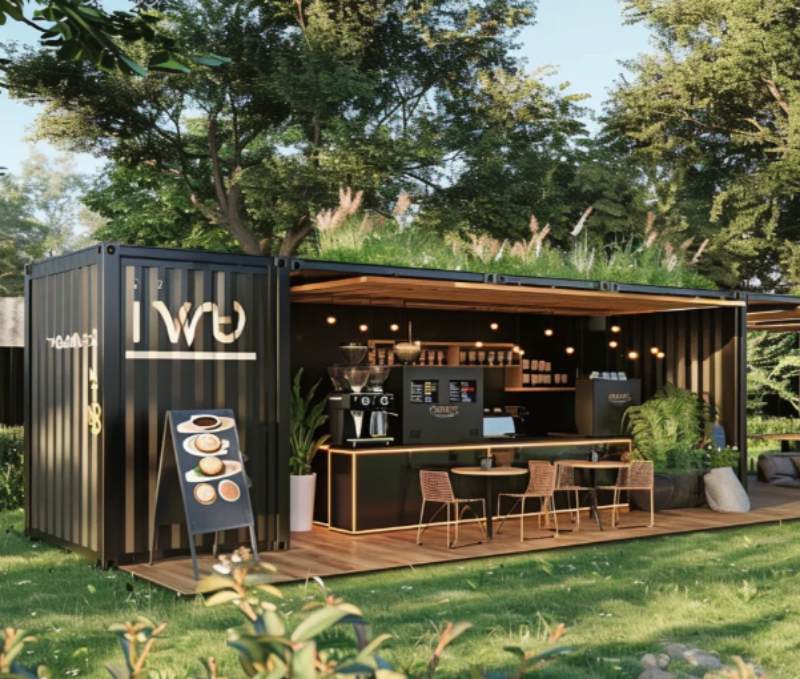
Modern Australian farms are growing increasingly large in scale—particularly commercial farms exceeding 500 hectares—and typically require dedicated spaces for management and administration.
The construction cost for a standard container office unit typically ranges from AUD 10,000 to AUD 25,000(for a basic setup);however,if network systems,air conditioning,and insulation upgrades are included,the cost may exceed AUD 30,000.
In terms of practical operations,these spaces often serve as a"dispatch center,"responsible for:
Farm machinery scheduling
Staff rostering
Inventory record-keeping
Supply chain coordination
Compared to working temporarily out of a vehicle or warehouse,having a fixed,dedicated workspace like this can significantly reduce errors in communication and management.
According to statistics from the Australian Agricultural Equipment Association,a medium-sized farm typically owns machinery and equipment valued between AUD 50,000 and over AUD 300,000—including tractors,irrigation systems,and maintenance tools.
If left exposed to the outdoors for extended periods,the annual maintenance costs for this equipment can increase by an average of 15%to 25%,primarily due to corrosion and component aging.
Consequently,utilizing shipping containers as storage structures has become a common and practical choice.The cost of converting a standard 40-foot container into a storage unit typically ranges from AUD 8,000 to AUD 20,000.
On a farm,container structures can serve purposes beyond mere storage;they can also be designated as tool areas,maintenance bays,or even temporary holding areas for agricultural supplies,providing you with versatile,freely usable space.
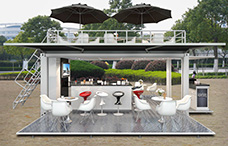
If your farm operates on a weekend farmers'market model,a container structure can be repurposed to serve as a small retail space for selling daily necessities or your farm's own produce.
The cost of converting a container into a farm shop typically ranges from AUD 15,000 to AUD 40,000—a far more cost-effective solution than constructing a traditional brick-and-mortar building.Furthermore,you can adjust the location of your sales outlet to align with your farm's overall layout and planning.
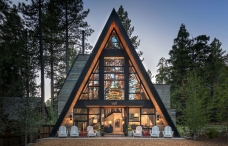
According to Australian tourism market data,the"Farm Stay"sector has experienced significant growth in recent years,with annual growth rates exceeding 8%–12%in certain regions.
The construction cost for a standard container-based accommodation unit typically ranges from AUD 30,000 to AUD 120,000.If you opt for a more high-end design—featuring elements such as floor-to-ceiling windows,private en-suite bathrooms,and scenic viewing layouts—the cost can rise to approximately AUD 150,000 or more.
In terms of actual operations,a well-designed farm stay unit located in a tourist-heavy region can achieve an average occupancy rate of 55%–75%,with rates climbing even higher during peak seasons.This occupancy rate tends to be higher than that of traditional residential properties.
On a farm,container homes can also serve as accommodation for temporary projects—particularly during the initial stages of farm development,where they can function as a provisional residence.
Constructing temporary accommodation on a farm using container homes typically costs between AUD 5,000 and AUD 12,000 per unit.Furthermore,installation can be completed rapidly,allowing the unit to be quickly positioned in a suitable location.Should you wish to relocate the unit later on,the process is also remarkably convenient.
From a long-term cost perspective,this type of temporary housing solution can result in savings of approximately 20%–35%compared to single-use,disposable temporary structures.
While expandable container homes are becoming increasingly popular in farm settings,there are several unavoidable issues that must be addressed before actual implementation.You must clearly understand the following points before making a purchase to ensure full compliance and avoid any regulatory violations.
In Australia,any structure intended for residential use or long-term occupancy inevitably encounters a fundamental reality:the requirement for local government approval(known as"council approval").
The attitudes of different states and regions regarding container homes as residences vary quite significantly.In areas characterized by extensive agricultural activity and a dispersed population,if a container home is intended solely as temporary accommodation for farm workers,the approval process tends to be relatively straightforward.In some instances,provided that basic safety and sanitation standards are met,the unit can be installed and put into use quite rapidly.However,when the intended use changes—for instance,to serve as a long-term residence(such as a"granny flat")or as a commercial space open to the public(such as a farm stay or a retail outlet for farm produce)—the regulatory approval requirements become significantly more stringent.Such projects typically need to comply with formal building codes and satisfy local regulations regarding structural safety,fire safety,drainage,and land-use planning(zoning).
In the practical execution of these projects,many farm owners adopt an approach where they first verify the land-use classification before deciding on the architectural form,rather than the other way around.This initial step often directly influences subsequent design decisions—for example,whether a multi-unit layout is permitted or whether the space can be legally used for commercial operations.Consequently,regulatory approval is not merely a late-stage procedural hurdle;it is a critical factor that must be integrated into the planning process right from the very inception of the project.
Australia possesses a highly complex and diverse climate,ranging from the high heat and humidity of northern Queensland to the low temperatures and strong winds of southern Victoria,and extending to the vast diurnal temperature fluctuations found in the country's interior.This climatic variability places rigorous demands on building performance.
In actual farm-based projects,if a structure lacks adequate insulation,it is not uncommon for indoor temperatures to soar above 40°C during the afternoon in summer—a phenomenon that becomes particularly pronounced in spaces where metal structures constitute a significant portion of the building fabric,thereby amplifying the effects of thermal conduction.
Consequently,well-executed container home projects typically incorporate a comprehensive climate adaptation strategy right from the design phase.For instance,an insulation layer of approximately 50–100 mm is often installed within the walls to mitigate thermal conduction;the roof structure undergoes thermal shielding treatments to minimize heat accumulation caused by direct solar radiation;and windows are frequently fitted with double-glazing to enhance overall thermal efficiency.
In more sophisticated projects,these measures are often combined with passive ventilation designs,allowing air to circulate naturally in response to diurnal temperature differentials,thereby reducing reliance on mechanical air conditioning systems.Such attention to detail often determines whether a space can provide long-term comfort within a farm environment—elevating it beyond a mere"functional"structure to one that is truly habitable.
Unlike urban dwellings,many farms in Australia are situated in typical"off-grid"locations,where infrastructure is often underdeveloped or entirely absent—lacking even a stable connection to municipal water and electricity grids.
In such environments,the true"usability"of a building depends largely on its capacity for independent operation and self-sufficiency.
Consequently,in the practical implementation of these projects,an increasing number of farms are opting to equip their container homes with independent energy and water systems.For instance,solar power systems have become a very common choice,providing stable energy support for lighting,air conditioning,and basic appliances.Simultaneously,rainwater harvesting systems or water storage tanks are widely utilized to supplement domestic water supplies,while sewage treatment systems are employed to address waste disposal issues.
Under this configuration model,container homes no longer rely on external infrastructure;instead,they function more like independent,self-contained living units that can be deployed directly at any suitable location on the farm.This capability is particularly crucial for agricultural settings characterized by vast areas and dispersed layouts.
Although the container structure itself is inherently designed with transport advantages,in actual farm projects,the feasibility of"smooth installation"is often a more critical factor than the mere possibility of"transportation."
Many farms in Australia are situated in remote regions where road conditions vary significantly.While some areas allow for direct access by heavy-duty trucks,numerous farms require traversing gravel roads,muddy terrain,or even sloped ground—factors that directly influence the chosen transport strategy.
Furthermore,the availability of on-site lifting capabilities(crane access)constitutes a significant limiting factor.If crane operations are not feasible at the site,it may be necessary to adjust module dimensions or adopt a segmented installation approach,thereby impacting the overall design scheme.
Foundation preparation is another aspect that cannot be overlooked.In areas characterized by soft soil or poor drainage,ground leveling or reinforcement work is typically required in advance to ensure the long-term structural stability of the building.
Based on practical project experience,many issues do not stem from the housing structure itself,but rather from the preliminary preparation phase.If transport routes or installation conditions are not thoroughly assessed beforehand,subsequent costs often escalate significantly.
In farm projects,the product itself represents merely the first step;far more critical is the provider's capability to deliver a comprehensive,holistic solution.
WZHhouse container house factory has extensive project experience in overseas modular construction.It has built a strong portfolio of real-world case studies across multiple regions and industries.In particular,the company has delivered successful projects for farms,campsites,and remote-area developments.
In agricultural applications,our standard support services include:
Modular design tailored to the specific scale and requirements of each farm
Multi-unit layout configurations(combining accommodation,office space,and storage facilities)
Structural optimization solutions specifically adapted to the Australian climate
Factory prefabrication combined with rapid delivery and on-site installation
For agricultural projects requiring long-term strategic planning,such"systematized spatial solutions"often prove far more valuable than a standalone product alone.
If you are planning to upgrade your farm's spatial layout,feel free to contact the WZHhouse team to discuss your specific project requirements and receive a customized proposal and quotation.
Container homes are widely utilized on farms across Australia and serve a multitude of purposes.If you own a farm and are planning to construct residential quarters or other structures,container homes are certainly worth considering.They offer a lower cost compared to traditional housing and boast greater durability than certain lightweight prefabricated structures.
If you are considering introducing expandable container homes to your farm—whether for worker accommodation,office space,or comprehensive farm planning—please contact WZHhouse to obtain a customized solution and project quote.We can provide spatial solutions that are precisely tailored to your specific land conditions and operational requirements.



Copyright © Hebei Weizhengheng Modular House Technology Co., Ltd. All Rights Reserved
Sitemap

 +8615081877521
 +8615081877521