- icy@wzhgroup.com
- +86 15081877521


Does living in a container home get hot during the summer?Will it result in high electricity bills?These are questions frequently considered by prospective buyers—particularly those planning to use the structure as a long-term residence,such as a"granny flat"—who are naturally keen to understand the living experience during both the winter and summer months.
Compared to traditional housing,container homes owe their current popularity partly to their lower construction costs and rapid assembly times;however,the actual living experience remains the core concern.One cannot overlook certain inconveniences inherent to their structure—specifically,the issues of excessive cold in winter and excessive heat in summer.Fortunately,there are corresponding solutions available to address these challenges.
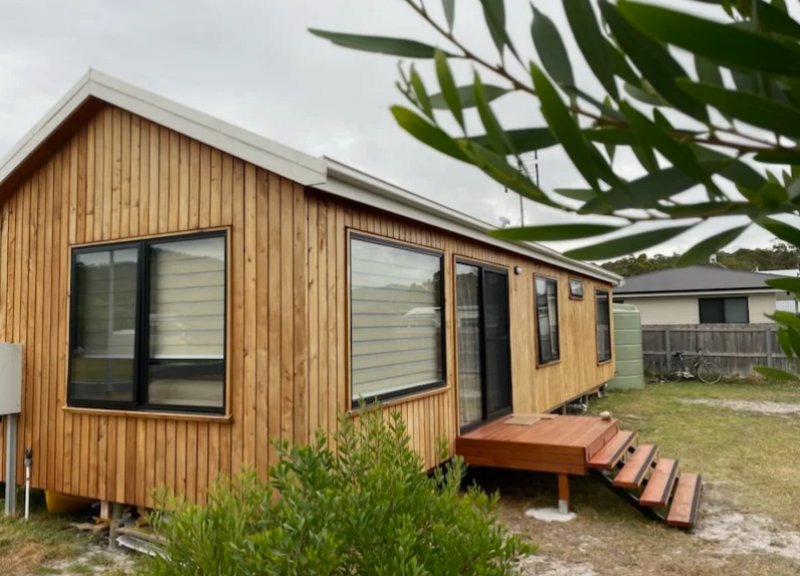
The primary reason container homes become extremely hot during the summer is that their steel structure conducts heat rapidly and often lacks an effective thermal insulation system.This allows external heat to quickly penetrate the interior and accumulate continuously.
Many people living in a container home for the first time share a very visceral impression:during the day,stepping inside feels like entering a"baking oven,"and even after temperatures drop at night,the interior cools down very slowly.This is not an isolated phenomenon,but rather a direct consequence of the physical properties inherent to the structure itself.
Container homes are fundamentally steel structures,and steel possesses a thermal conductivity far greater than that of traditional brick-and-mortar or timber-framed buildings.When direct sunlight strikes the roof or side walls,heat is rapidly conducted into the interior.If the building lacks a comprehensive insulation layer,this heat faces virtually no resistance and directly impacts the indoor temperature.
If your specific unit faces significant exposure to the afternoon sun(a"west-facing"orientation),lacks roof insulation,or features large areas of exposed metal on its exterior,the interior of your container home will become intensely hot during the summer—making for a highly uncomfortable living environment.
While the issue of excessive heat in container homes during the summer is an undeniable drawback,it is by no means an unsolvable problem.By implementing the following measures,you can effectively mitigate these issues and significantly enhance the overall living experience within your container home.
Add a reflective coating to the exterior layer to reduce solar heat absorption.
Incorporate closed-cell insulation material into the interior layer to block thermal conduction pathways.
Create an insulating air gap by utilizing a double-layer roof structure.
Integrate awnings or eaves to minimize direct exposure to sunlight.
The core objective behind all these methods is singular:to prevent heat from entering in the first place,rather than relying on air conditioning to manage heat that has already penetrated the structure.This approach helps reduce electricity consumption during the summer months,thereby saving you money on utility bills.
Effective cooling in a container home relies on the synergistic interplay of three key elements—structural design,airflow,and mechanical systems—rather than relying solely on air conditioning.
In the minds of many,"cooling"is synonymous with simply"installing an air conditioner."However,in the context of a container home,this approach often addresses only a portion of the problem;if heat continues to infiltrate the structure,the air conditioner merely fights against the heat source rather than eliminating it.
From the perspective of actual living experience,a well-designed container home can effectively lower the perceived temperature through natural airflow,even without the aid of mechanical cooling systems.
During the summer,airflow plays a critically important role.If the indoor air remains stagnant,the space will feel stuffy and stifling,even if the actual temperature has dropped.
Actionable Cooling Strategies
Design for cross-ventilation to ensure air can flow freely"in and out"of the space.
Install exhaust vents at the ceiling level to allow rising hot air to escape naturally.
Utilize ceiling fans or industrial-grade fans to enhance air circulation.
Install external shading systems to minimize the influx of thermal radiation.
Integrate a fresh air ventilation system to facilitate continuous air exchange.
In practical projects,effective cooling is typically achieved through a combination of"passive cooling measures"and"active mechanical systems,"rather than relying on a single,isolated method.
The fundamental cause of summer condensation in container homes is the phenomenon of water vapor condensing when cool indoor air comes into contact with hot metal surfaces.This issue is particularly prevalent during the summer months,especially when air conditioning systems are operated for extended periods.
You may encounter a scenario like this:you run the air conditioner at a comfortable setting throughout the evening,only to discover water droplets on the walls—or even patches of dampness in specific areas—the following morning.This is,in essence,a condensation phenomenon triggered by the temperature differential.
The exterior shell of a container home is constructed from metal,a material that cools down—and heats up—very rapidly.When the indoor temperature is rapidly lowered by an air conditioning system,moisture present in the air will condense on cooler metal surfaces.
If you neglect to address issues related to condensation and moisture over an extended period,it can lead to a host of problems,including mold growth on interior finishes,moisture saturation of insulation layers,and accelerated corrosion of metal structural components.These issues not only compromise the living experience within your container home but also significantly reduce its overall service life.
To effectively tackle the condensation and moisture challenges inherent to container homes,we can implement a multi-faceted approach:
Install a complete vapor barrier system within the wall cavities.
Utilize closed-cell insulation materials to minimize water vapor penetration.
Enhance the indoor air circulation system.
Employ dehumidification equipment to regulate humidity levels.
Avoid creating excessive temperature differentials between the interior and exterior.
Fundamentally,this is a matter of"temperature differential management"rather than merely a humidity issue.
The primary reason for high electricity bills when using a container home during the summer is not a lack of air conditioning efficiency;rather,it stems from the building's insufficient thermal insulation,which allows cooled air to continuously escape.
Upon moving into a container home,you may encounter a common issue:the air conditioning runs almost continuously throughout the day,yet the indoor temperature remains unstable.This typically indicates a specific problem—external heat is constantly infiltrating the interior space.
In such a scenario,the air conditioning unit functions less as a simple"cooling tool"and more as a"continuous operational system"constantly battling against an incoming heat source.
To address this situation and reduce electricity consumption,you can implement the following adjustments:
Enhance the overall thermal insulation performance to minimize heat gain.
Utilize variable-frequency(inverter)energy-saving air conditioning systems.
Improve the airtightness of doors and windows.
Minimize structural thermal bridges.
Implement a zoned cooling design strategy.
Once the building's inherent thermal load is reduced,energy consumption will decrease significantly—without the need to rely on increasingly powerful air conditioning equipment.
Steel naturally undergoes thermal expansion and contraction in response to high temperatures;this is a normal physical phenomenon and does not compromise the overall structural stability of the building.The true areas of concern lie within the"non-structural components"—specifically,sealing materials,protective coatings,and connection fasteners.
When exposed to prolonged high-temperature environments,these materials may exhibit accelerated aging,reduced elasticity,and diminished sealing performance.Consequently,it is essential to conduct regular inspections and perform necessary repairs to maintain the integrity of the structure.Naturally,you can also take the following measures to prevent certain materials from sustaining severe damage under high summer temperatures—damage that could compromise the structural integrity of the entire home:
Utilize highly weather-resistant anti-corrosion coatings.
Allow for structural expansion and contraction gaps.
Employ high-temperature-resistant sealants.
Conduct regular structural inspections and maintenance.
How Can You Enhance the Overall Living Comfort of a Container Home During the Summer?
Achieving a high level of living comfort in a container home during the summer hinges on the synergistic interplay of three key systems:temperature control,airflow,and light management.
Many people focus solely on"temperature,"but once you actually move in,you will discover that lighting,air quality,and spatial layout are equally important.For instance,even at the exact same indoor temperature of 28°C,the perceived comfort level differs drastically between a well-ventilated space and a completely enclosed one.
To improve comfort levels in a container home during the summer,you should approach the issue by optimizing the home's design and configuration to create a truly comfortable living environment:
Optimize window placement and proportions to avoid direct,intense sunlight.
Use light-colored interior finishes to enhance light reflection.
Install curtains or blinds to regulate indoor lighting.
Zone the interior space into distinct"cool"and"warm"areas.
Combine natural ventilation with mechanical ventilation systems.
Fundamentally,comfort is a matter of"system optimization,"not merely a single-point improvement.
The roof serves as the primary entry point for heat into a container home during the summer,typically accounting for over 60%of the total thermal load.
When it comes to cooling strategies,the roof is often far more critical than the walls.This is because the sun's direct rays bear down almost continuously on the top structure throughout the day,making the roof the central hub for heat accumulation.
Many people overlook a crucial fact:even if the walls are well-insulated,the interior will still heat up significantly if the roof has not been properly treated.
So,how exactly can you tackle the problem of high roof temperatures in a container home during the summer?You can utilize the following suggested methods to effectively lower the temperature of the roof structure.
Utilize high-reflectance roof coatings(to reduce heat absorption).
Increase the thickness of insulation layers(e.g.,sprayed polyurethane foam or rock wool).
Construct a double-layer roof system to create an insulating air gap.
Install external shading structures,such as pergolas or sunshades.
Implement green roof systems where conditions permit.
In architectural engineering design,the roof is often the primary focus for optimization,as improvements made to it yield the most significant results.
While it is true that container homes face issues with elevated temperatures during the summer,through sound structural design and the implementation of appropriate insulation systems,they can absolutely serve as a viable form of long-term housing—rather than merely being"unbearably hot spaces."
Many people hesitate—and may even be dissuaded from purchasing—when they first encounter container homes due to concerns about them becoming"too hot in the summer."Based on actual usage experience,this concern is valid;however,it does not imply that container homes are unfit for habitation.Rather,it highlights the fact that their livability depends heavily on the quality of their design and construction.
From the perspective of real-world projects,the suitability of a container home for summer use hinges not on the container material itself,but on whether a comprehensive thermal environment control system has been implemented.If the structure consists merely of a"bare box"—devoid of insulation,shading features,or ventilation systems—it will indeed exhibit significant issues regarding internal temperatures.
However,if you integrate a complete system for insulation,ventilation,and shading during the design phase,the living experience can rival—or even surpass—that of certain traditional temporary structures.
For instance,container homes are already widely utilized for applications such as guesthouses,vacation cabins,and temporary office spaces,and they successfully maintain a stable indoor environment even during the summer months.The fundamental reason for this success is that these projects typically do not rely solely on"air conditioning for cooling";instead,they address the issue of heat ingress proactively at the architectural structural level.
It is inevitable that container homes will experience elevated temperatures during the summer,which can impact the living experience.However,if you anticipate this issue during the initial purchasing phase—and subsequently implement appropriate design and configuration measures—living in a container home during the summer can be remarkably comfortable,differing very little from residing in a standard residential home.



Copyright © Hebei Weizhengheng Modular House Technology Co., Ltd. All Rights Reserved
Sitemap


 +8615081877521
 +8615081877521