- icy@wzhgroup.com
- +86 15081877521


From the perspective of"is it possible to live in one,"long-term living in a container house is feasible;
However,from the perspective of"is it comfortable,convenient,and suitable for long-term living,"the answer is not a simple"yes"or"no."
Container houses are more suitable for specific groups of people and specific use scenarios,such as vacation homes,camp accommodations,temporary housing in remote areas,or low-cost self-built housing solutions.
Whether it is suitable for long-term living depends on your lifestyle,living expectations,requirements for comfort,and the design and configuration level of the house itself.
In other words,container houses are not a complete substitute for traditional housing,but rather an option between"architecture"and"modular living space."
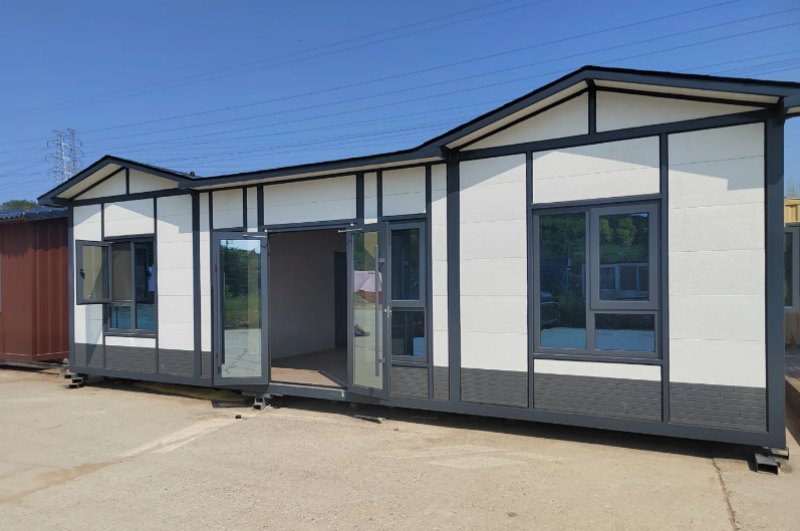
Comfort is often the first hurdle in determining whether it's possible to live in one long-term.
Many people have similar feelings when they first enter a container house:
The space is more compact than expected,the ceiling height is slightly lower,and the enclosed feeling brought by the steel structure is quite noticeable.If it's an unmodified original container,it's stuffy in summer and cold in winter,and the living experience is not ideal.
However,most container houses on the market today that are used for living are no longer in the state of"original containers directly used for habitation."
By adding insulation layers,heat insulation layers,double-glazed windows,and roof insulation structures,combined with air conditioning or underfloor heating systems,the living comfort can be raised to a relatively reasonable level.
In some campsites or holiday resorts,you will see scenes like this:
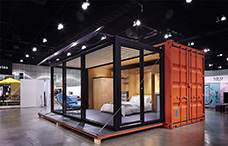
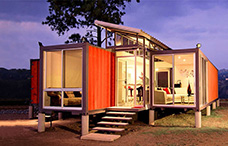
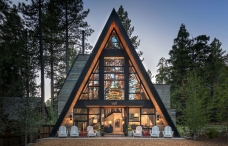
The container houses have a simple appearance,facing lakes or forests,with a large floor-to-ceiling window bringing in natural light,and the interior is simple but not shabby.Short-term living is very pleasant,but if you were to live there long-term,the comfort level depends more on whether you can accept the relatively compact space.
If you are used to large living rooms,large kitchens,and spacious bedrooms,then a container house might give you a continuous feeling of"space compression."
However,if you prefer a minimalist lifestyle and are not sensitive to space size,a well-designed container house can meet the comfort requirements of daily living.
Many people worry:"If I live in container housea for a long time,will it lack essential living functions?"
Structurally,a container house can be completely transformed into a fully functional living unit.
Bedrooms,bathrooms,kitchens,living rooms,and even separate workspaces can all be achieved through modular combinations.
The real difference lies more in"how much you are willing to invest in achieving complete functionality."
For example:
Is the kitchen just a simple countertop,or does it have complete cooking facilities?
Is the bathroom a temporary washroom,or does it have a good drainage,moisture-proof,and ventilation system?
Are the water and electricity lines temporarily installed,or are they constructed according to long-term living standards?
In the case of long-term living,these details will gradually become more significant.
What initially seems"usable enough"will become a continuous inconvenience in daily life over time.
In addition,storage space is a problem that many container homes easily overlook.
Long-term living means that belongings will gradually increase.If storage areas are not planned in advance,it's easy to end up with a situation where"there's enough space to live,but life feels cluttered."
If you plan to live in a container house long-term,it's recommended to consider the"daily living flow"during the design phase,rather than just focusing on whether the appearance is aesthetically pleasing.
One important reason why container houses are popular is that they"seem cheaper."
From a structural point of view,the cost of a container house is indeed usually lower than that of traditional reinforced concrete houses.
However,if you plan to live in it long-term,the factors that truly affect the cost are not just the"price of the container itself."
Actual long-term costs usually include:
Foundation construction costs
Water and electricity connection costs
Indoor insulation,heat insulation,and sound insulation systems
Later maintenance(rust prevention,waterproofing,and sealant replacement)
Energy consumption costs(air conditioning,heating)
In areas with more extreme climates,container houses are more dependent on temperature control equipment,and long-term electricity bills may not be low.
In addition,some seemingly inexpensive container houses require continuous modifications to improve the living experience,and the overall cost gradually approaches or even exceeds that of light steel structure houses.
Therefore,if it's only for short-term use,the cost-effectiveness of container houses is very obvious;
But from a long-term living perspective,whether it is"really cheaper"needs to be judged based on the complete usage cycle.
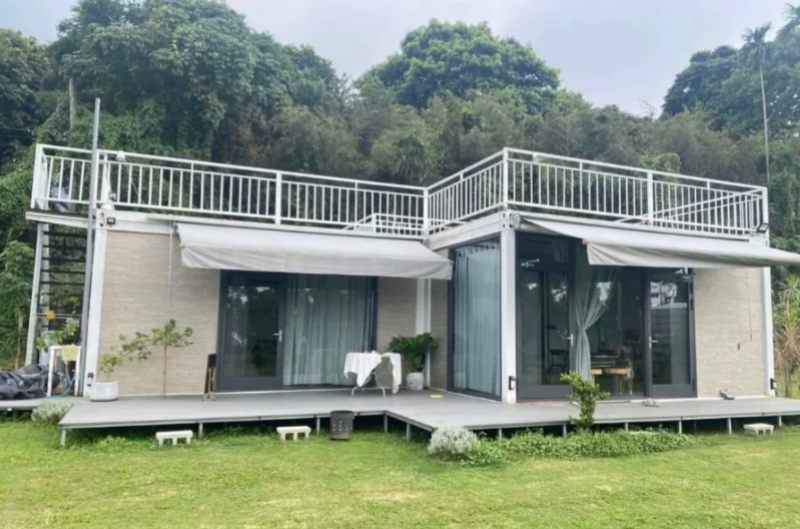
From a structural safety perspective,containers themselves possess strong compressive strength and structural stability.
After professional design and installation,using them as living spaces does not present any significant structural safety hazards.
The factors that truly affect long-term living safety are the following:
Whether the anti-corrosion treatment is adequate
Whether the waterproofing system is reliable
Whether the fire-resistant materials meet residential standards
Whether the electrical circuits are up to code
In humid,rainy,or coastal areas,if the anti-corrosion and moisture-proof treatments are inadequate,the steel structure is prone to rust,which will affect its service life and safety in the long run.
In addition,the adaptability of container houses to extreme climates also needs to be carefully considered.
For example,in high-temperature regions,if the insulation system is not perfect,the indoor temperature rises very quickly;in cold regions,if the insulation is insufficient,heating costs will increase significantly.
In other words,container houses are not"inherently unsafe,"but they are more dependent on manufacturing standards and construction quality.
People who have actually lived in container houses for a long time often give some very realistic feedback.
Some people feel that this way of living is very liberating:
The house can be built quickly,the environment can be chosen freely,the view outside the window can be mountains,lakes,or grasslands,the pace of life slows down,and the space,although small,is clean and orderly.
Others may gradually feel cramped:
Especially after the number of family members increases,insufficient space,poor sound insulation,and overlapping functional areas can make daily life feel somewhat oppressive.
Long-term living is not only a matter of physical space but also a matter of psychological adaptation.
Container houses often have a"temporary"feel.If you have a strong psychological need for a stable residence,this type of living arrangement may not be suitable for you.
Conversely,if you are pursuing a more flexible and closer-to-nature lifestyle,a container house may bring you a sense of ease.
From a practical application perspective,container houses are more suitable for long-term living for the following groups:
Camp operators or on-site managers
People working or stationed in remote areas for extended periods
Those seeking low-cost self-housing solutions
People who embrace a minimalist lifestyle
Those using it as a vacation home or second residence
However,container houses may not be the ideal choice for the following groups:
Families with high demands on living quality
People who require high levels of space comfort,sound insulation,and privacy
People who need a stable urban living environment for the long term
Choosing a container house is essentially choosing a lifestyle,not just a type of house.
Returning to the initial question:Is it convenient to live in a container house long-term?
It can be a viable long-term living solution,but only if your usage scenario,living expectations,and lifestyle match the nature of this type of housing.
If you simply treat a container house as a"cheap house"and ignore the long-term living experience,the longer you live in it,the more problems will arise;
However,if you clearly define the purpose beforehand,have clear expectations for comfort,and design it systematically for long-term living,a container house can also become a stable and practical living space.
Ultimately,whether to live in a container house long-term is not a question with a standard answer,but rather a question of matching lifestyle and living expectations.
Whether a container house is suitable for long-term living often depends on your specific usage scenario,climate environment,and living needs.
If you already have some initial ideas,it is recommended to communicate with a professional manufacturer to discuss feasible solutions before making a decision.
WZHhouse,as a Chinese container house manufacturer,provides modular and customized container house solutions.We can provide more practical configuration suggestions based on your expected lifespan,space requirements,and budget,helping you assess the feasibility and cost of long-term living.



Copyright © Hebei Weizhengheng Modular House Technology Co., Ltd. All Rights Reserved
Sitemap

 +8615081877521
 +8615081877521