- icy@wzhgroup.com
- +86 15081877521


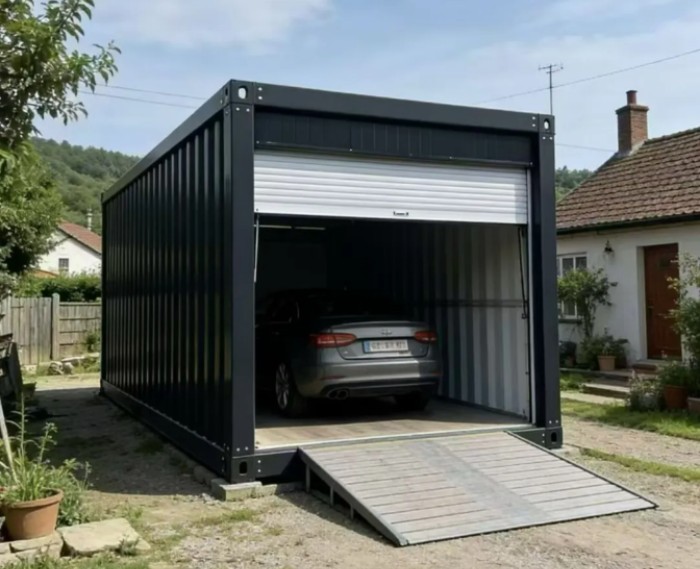
If you are primarily looking to purchase a container to store goods,tools,equipment,or construction materials,the price typically ranges from$1,500 to over$10,000.The exact cost depends on the type and size of the container you choose.
| Container Type | Typical Price Range | Common Applications |
|---|---|---|
| Used 20ft Shipping Container | $1,500 – $3,000 | Small storage, tools, backyard storage |
| Used 40ft Shipping Container | $2,000 – $4,500 | Construction materials, farm equipment, commercial storage |
| One-Trip 20ft Container | $2,500 – $5,000 | Clean storage for equipment and inventory |
| One-Trip 40ft Container | $4,000 – $7,000 | Large-scale storage and business use |
| Modified Storage Container | $4,000 – $10,000+ | Customized storage with insulation, electricity, doors, windows, and shelving |
| Flat Pack Storage Container | $2,000 – $6,000+ | Temporary or portable storage solutions |
Below,we provide a detailed introduction to various types and sizes of storage containers to help you gain a comprehensive understanding of their costs.
Storage containers come in various forms.When looking for a storage container,the most common options include used shipping containers,one-trip shipping containers,modified shipping containers,and flat-pack storage containers.They differ in price,structure,lifespan,and intended use;the right choice depends largely on what you need to store and how long you plan to use it.
If you simply need a secure space to store furniture,tools,construction materials,or equipment,a used shipping container is usually the most budget-friendly choice.Originally manufactured to meet maritime shipping and cargo transport standards,these steel units offer robust structural integrity and weather resistance,while standard container doors provide basic security.For standard storage needs,you do not need to pay a premium for residential-grade specifications.As long as the unit is free from severe rust,leaks,or structural damage,a well-maintained used shipping container offers a cost-effective storage solution.
If you plan on long-term use and prioritize the unit's condition,consider a"one-trip"shipping container.These containers have typically made only a single overseas voyage;consequently,the body,doors,flooring,and seals are generally in better condition than those of standard used containers.
While the price is higher than that of a standard used container,the superior condition makes it a worthwhile investment for storing equipment,inventory,or other high-value items.You also reduce the likelihood of dealing with issues like rust,worn flooring,or aging door seals down the line.
A modified shipping container is the ideal choice when you have specific requirements—such as the need for personnel doors,roll-up doors,lighting,electrical outlets,ventilation systems,or shelving.
These units start as standard shipping containers but are customized to suit specific operational needs.For instance,wider doors can be added for large equipment;shelving can be installed for tools and spare parts;and ventilation or insulation can be added if the container is located in a hot or humid climate.
The more extensive the modifications,the higher the final price.Therefore,if you are simply storing standard goods,there is no need to add features that do not serve your specific purpose.
Flat-pack storage containers are better suited for temporary storage,construction projects,and scenarios requiring frequent transport.Unlike standard shipping containers,these can be disassembled and flat-packed for shipping—offering a distinct advantage when transport access is limited or multiple units need to be delivered to a project site.
However,flat-pack containers differ structurally from standard shipping containers,so a direct price comparison isn't always appropriate.You should consider factors such as the intended lifespan,transport method,installation conditions,and the nature of the stored items before deciding which product is the best fit.
For standard,long-term,stationary storage,a standard shipping container is usually the most straightforward choice;however,if your project prioritizes transport flexibility and rapid on-site assembly,a flat-pack storage container offers a viable alternative.
If your goal is simply to secure reliable storage space,a used shipping container is often the best option to consider first.
The price of a used 20-foot container typically ranges from$1,500 to$3,000,while a 40-foot container generally costs between$2,000 and$4,500.Specific pricing depends on factors such as local inventory,the container's age and condition,and transportation distance.Prices may be more competitive when local ports or suppliers have ample stock;conversely,shipping costs can rise significantly if the unit needs to be transported from a distant location.
The interior space of a 20-foot container is suitable for household storage,small job sites,and tool storage.A 40-foot container offers nearly double the length,making it better suited for construction materials,agricultural equipment,factory spare parts,and large inventories.
It is important to note that"used"does not mean all containers are in the same condition.You should carefully inspect the unit for roof leaks,severe wall dents,doors that fail to close properly,damaged door seals,and significant floor damage.While minor cosmetic wear usually does not affect functionality for general storage purposes,severe rust or structural damage warrants caution.
If you are looking for a container in better condition,a"one-trip"shipping container is another common option.
A 20ft one-trip container typically costs around$2,500–$5,000,while a 40ft unit usually ranges from$4,000–$7,000.Although the price is higher than that of a standard used container,the unit is generally cleaner,the flooring shows less wear,and the door locks and seals are in better condition.
If you plan to use the container for a decade or longer—and are storing high-value equipment,inventory,or tools—investing a bit more in a container in better condition may be the more sensible choice.However,for general construction materials,scrap equipment,or short-term on-site storage,a new or one-trip container may not be necessary.
Here is a simple rule of thumb:if the initial price is your primary concern,a used shipping container is more suitable;if you prioritize the container's condition and long-term usability,a one-trip container is worth considering.
When a standard shipping container doesn't fully meet your specific needs,you might consider modifications.
A basic modified storage container typically costs between$4,000 and$10,000+.The price range is broad because costs vary significantly depending on the specific modifications involved.
For instance,adding just a personnel door and simple lighting won't increase the cost drastically.However,installing roll-up doors,multiple windows,a full electrical system,LED lighting,ventilation,insulation,and custom shelving will significantly raise the final price.
For storing large equipment or palletized goods,adding large double doors or roll-up doors offers greater convenience than standard container doors.For tools and smaller items,internal shelving allows you to maximize vertical space,resulting in better storage efficiency within the same footprint.
If you are simply storing general items and do not require long-term occupancy,there is usually no need to install residential amenities like kitchens,bathrooms,or air conditioning.Focusing your budget on doors,ventilation,lighting,moisture protection,and storage systems aligns better with the practical purpose of a storage container.
Flat-pack storage containers typically cost between$2,000 and$6,000+,depending on size,structure,materials,and configuration.
The key difference compared to a standard shipping container is that flat-pack units can be disassembled and packed flat for transport.This format simplifies logistics and handling for construction sites,temporary projects,and remote locations.
However,if you require a storage space for long-term,stationary use that offers high structural strength and accommodates frequent loading and unloading,a standard shipping container remains a compelling alternative worth considering.
Neither option is objectively"better"than the other;the right choice depends on factors such as transport conditions,the duration of use,the items being stored,and site-specific constraints.If your project requires frequent relocation,the flexibility of a flat-pack unit is highly valuable;conversely,if the container will remain in one place for the long term,the advantages of a standard shipping container often become more apparent.
20-foot and 40-foot containers are the two most common sizes for storage applications.
A 20ft container is approximately 20 feet long and is suitable for storing furniture,tools,small equipment,and construction materials.It has a smaller footprint,making it easier to accommodate regarding transport vehicles and site space.If you do not have a large volume of goods,choosing a 20ft container allows you to avoid paying for unused space.
A 40ft container is approximately 40 feet long and offers a storage capacity nearly equivalent to two 20ft containers.While the purchase price is higher,the cost per unit of storage capacity is often more economical if you genuinely require a large amount of space.
For example,if you anticipate needing to store approximately 30–35 cubic meters of goods,a single 40ft container may be a simpler solution than purchasing two 20ft containers.Conversely,if your site is cramped or the volume of goods is limited,a 20ft container offers greater flexibility.
Therefore,do not simply compare the purchase prices of the two containers.You should evaluate the cost per unit of storage space alongside transport logistics and site conditions.
The difference between"used"and"one-trip"containers lies primarily in the trade-off between price and condition.
The main advantage of a used container is its lower price.If your storage needs are straightforward—such as storing lumber,tools,construction materials,agricultural supplies,or equipment that isn't overly sensitive to environmental fluctuations—choosing a used container in good condition can significantly reduce your upfront investment.
The advantage of a"One-Trip"container lies in its condition.For inventory requiring long-term storage—especially in scenarios demanding high standards for waterproofing,dust protection,and structural integrity—a new container often offers greater peace of mind.
You also need to consider local market conditions.In regions with an abundant supply of used containers,prices can be very attractive;however,if local availability is limited,the cost of long-distance transport might narrow the price gap between a used unit and a One-Trip container more than you’d expect.
When you see a price quote for a container,the first step is to clarify exactly what is included.
The base price for a standard shipping container typically covers the steel body,cargo doors,flooring,and basic locking mechanisms.Some suppliers offer options based on condition grades,such as"Wind&Watertight"or"Cargo-Worthy."
However,delivery is usually not included in this base price.
If you purchase a 20-foot container from a supplier for$2,000,that isn't your final cost.You may also need to pay for truck transport from the depot to your site,as well as unloading fees upon arrival.If the site is inaccessible to the delivery vehicle,specialized lifting equipment might also be required.
Therefore,when comparing quotes from different suppliers,it is best to ask for a clear breakdown of the container price,delivery costs,and unloading requirements.Only by considering all these expenses together can you determine the actual budget required.
There is no single,fixed transport cost that applies to every region.
If you buy from a local supplier,the primary cost is usually ground transport from the container depot to your site.Costs rise with distance;road conditions,vehicle type,and unloading methods also influence the final quote.
If you source directly from an overseas factory,the cost structure becomes more complex.In addition to the factory price,you must account for export transport,ocean freight,destination port charges,customs clearance,local drayage,and final delivery to the site.
For 40-foot containers,you also need to confirm that there is sufficient space on-site for the vehicle to enter and complete the unloading process.If a crane is required,the lifting and installation costs should also be calculated in advance.
This is why,when comparing Chinese factories,local distributors,and used container suppliers,you shouldn't focus solely on the unit price listed on the product page.The"delivered cost"—the final cost of getting the container to your site—is the figure that truly matters.
The type of storage container you choose depends primarily on your storage space requirements,duration of use,type of goods,and budget.Different containers aren't simply a matter of"expensive vs.cheap";they are designed to meet specific storage needs.
If you simply need affordable storage space,a used 20ft shipping container is usually the most straightforward choice.With a budget of approximately$1,500–$3,000,it is suitable for household storage,small construction sites,tools,and seasonal items.
For smaller storage needs,a 20ft container provides ample enclosed space while maintaining a small footprint,making it relatively easy to transport and position on-site.
If you need greater capacity,consider a used 40ft shipping container,priced at approximately$2,000–$4,500.This size is often more practical for factory inventory,agricultural equipment,construction materials,and large quantities of tools.
Although the purchase price is higher,a 40ft container offers nearly double the length of a 20ft container.If you genuinely require significant storage space,a 40ft container often provides better value in terms of cost per unit of storage space.
If you plan to use the container for the long term and want to ensure the unit remains in good condition,a"one-trip"container is a better choice.Prices range from approximately$2,500–$5,000 for a 20ft unit and$4,000–$7,000 for a 40ft unit.
These containers have undergone minimal transport and use,meaning the body,flooring,doors,and seals are in relatively excellent condition.This option is ideal for long-term inventory,equipment,or high-value items.
If your requirements go beyond standard containers—such as needing additional doors,lighting,ventilation,insulation,or shelving—you can opt for a modified storage container.Prices for these products typically start around$4,000,depending on the specific modification project;complex projects can reach$10,000 or more.If you require forklift access,the loading and unloading of heavy equipment,or internal sorting and storage capabilities,specialized structural and functional modifications offer greater convenience than simply using standard containers.
For factories,warehouses,or large-scale commercial projects,a single shipping container may not be the most economical solution.You can compare the option of combining multiple containers against constructing a dedicated steel-frame storage building,basing your decision on factors such as storage area,site conditions,transportation requirements,and long-term usage plans.
When storage requirements scale up significantly,the focus shifts from the price of an individual container to the cost per square meter of storage space,loading/unloading efficiency,and the ease of future expansion.For such projects,customized storage containers or steel-frame warehouse structures may be a more sensible choice than simply adding more standard containers.
The simplest approach is to determine the storage space you actually need rather than starting with the container specifications.
If a 20-foot container suffices,there is no need to opt for a 40-foot unit just for"a little extra space."Similarly,if you are storing standard construction materials or tools,paying a premium for a brand-new unit is unnecessary;a used shipping container in good condition is often perfectly adequate.
Transportation is another cost factor that is easily overlooked.You can compare prices for local stock against direct factory shipments.Sometimes factory quotes are lower but involve longer transport distances;conversely,while local used containers might have a higher unit price,the savings on logistics can be substantial.
Bulk purchasing can also alter the final unit price.If you require five,ten,or more containers,you can ask the supplier for a project-wide quote rather than pricing per unit.This approach can also lead to better cost control regarding transportation,modifications,and loading/unloading arrangements.
For many storage needs,a shipping container is a simple and practical choice.
As a steel structure originally designed for cargo transport,it offers excellent weather resistance and high security.Standard 20-foot and 40-foot sizes make transportation,procurement,and relocation convenient.They are well-suited for a variety of applications,including construction sites,farms,factories,commercial inventory,and residential storage.
However,they are not suitable for every situation.If you require a vast,column-free interior,frequent forklift access,or long-term storage of massive quantities of goods,a traditional steel-frame warehouse might offer better space utilization.If,on the other hand,you simply need a standalone,enclosed,and lockable storage space,a shipping container usually involves a lower investment and faster deployment.
Ultimately,you should determine your storage volume,duration of use,and site conditions before deciding on the container type.For general storage,a used shipping container is often the most cost-effective starting point;for long-term use,a"one-trip"container is worth considering;and specific modifications can be added if specialized functions are required.
How Much Does a 20ft Storage Container Cost?
A used 20ft shipping container typically costs around$1,500–$3,000,while a new or One-Trip 20ft container may cost approximately$2,500–$5,000.Delivery and unloading are usually additional costs.
How much does a 40ft storage container cost?
A used 40ft shipping container typically costs around$2,000–$4,500.A One-Trip 40ft container may cost approximately$4,000–$7,000,depending on location,condition and availability.
What is the cheapest type of storage container?
For basic storage,a used shipping container is usually the most affordable option.A 20ft used container is often the lowest-cost choice when you do not need a large storage capacity or custom features.
Is a used shipping container good for storage?
Yes.A good-condition used shipping container can be suitable for storing tools,furniture,construction materials,agricultural supplies and equipment.Before purchasing,check the roof,doors,seals,floor and visible corrosion.
Are shipping containers waterproof?
Shipping containers are designed to protect cargo from outdoor weather during transportation,but their actual condition matters.A used container with damaged roof panels,worn door seals or corrosion may need repairs before it can provide reliable weather protection.
How long does a storage container last?
The service life varies according to the container's original condition,climate,maintenance and exposure to moisture.A well-maintained steel shipping container can remain useful for many years,while containers in coastal or highly humid environments may require more frequent inspection and maintenance.
Do storage containers need a foundation?
A foundation is not always required in the same way as it would be for a permanent building,but the container should be placed on a stable,level surface that keeps the structure off standing water.Local building requirements should also be checked before installation.
How much does it cost to deliver a storage container?
There is no single worldwide delivery price.The final amount depends on the distance,container size,transportation method,road access,unloading equipment and local...charges.For an accurate project budget,request a quote that includes delivery rather than comparing the price of the container alone.
The price of a storage container depends primarily on what you need to store,the amount of space required,the planned duration of use,and whether any additional modifications are needed.
If you are unsure which type of storage container best suits your project,WZHhouse can help you compare different product options based on your storage needs,site conditions,order quantity,and budget.
As a manufacturer of container structures,WZHhouse offers both standard shipping containers and customized storage container solutions.We can determine the appropriate size,configuration,and level of modification based on your specific requirements,ensuring you have a clear understanding of the product and budget before placing an order.
If you are planning a storage project,contact WZHhouse with your requirements to receive a tailored storage container solution and a quote.



Copyright © Hebei Weizhengheng Modular House Technology Co., Ltd. All Rights Reserved
Sitemap







 +8615081877521
 +8615081877521