- icy@wzhgroup.com
- +86 15081877521


If you are looking for Chinese container house suppliers,you may notice significant differences in the quotes provided by various manufacturers.For a standard 20-foot container house,some quotes might be as low as a few thousand dollars,while high-spec models can exceed$10,000.
Why do such discrepancies exist?In reality,the price of Chinese container houses is not determined by size alone;it is influenced by a combination of factors,including product type,material standards,interior fit-out,manufacturing processes,and export methods.
Before comparing quotes from different Chinese manufacturers,it is crucial to understand the components that make up the price.Knowing why prices vary allows you to assess whether a quote is reasonable,rather than simply opting for the cheapest-looking option.
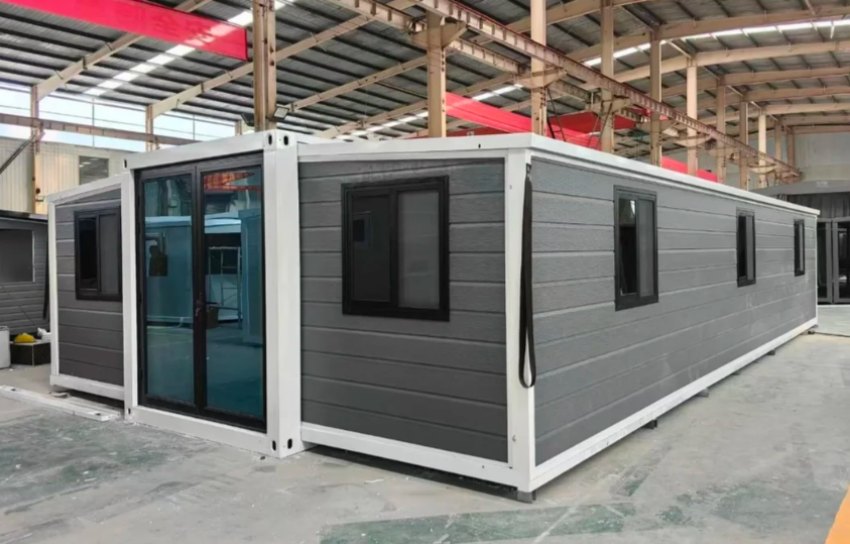
Many people inquiring about Chinese container houses for the first time encounter a common issue:why do quotes for seemingly similar Chinese-made units vary so much—ranging from$3,000 to$7,000,or even exceeding$15,000?
The primary reason is that different manufacturers offer distinct products.Container houses range from simple temporary structures to fully equipped small homes featuring kitchens,bathrooms,and furniture;the differences in configuration are substantial.
For instance,a basic container house priced around $3,000 is typically best suited for use as an office,dormitory,or temporary workspace.It likely includes a steel frame,wall panels,doors,windows,and a basic electrical system,but lacks full residential amenities.
In contrast,a container home costing over$10,000 often functions as a complete,compact residence.Beyond the basic structure,it may include a bathroom,kitchen,flooring,lighting,electrical wiring,and superior insulation.
Therefore,when you see varying prices from Chinese container house suppliers,the first step is to verify whether the quotes are based on the same product standards.
In the Chinese market,different types of container houses involve distinct manufacturing methods,leading to significant price variations.Your choice of structure usually depends on the project's intended use,transportation logistics,installation environment,and budget constraints.
Currently,the most common types of container houses in the Chinese export market include flat-pack(demountable)units,flat-pack modular units,and expandable container houses.Although they all fall under the category of modular architecture,there are distinct differences in structural design,manufacturing processes,and use cases,resulting in varying price points.
Dismountable container houses are a lower-priced product category in China's export market,with factory quotes typically ranging from$900 to$2,500 per unit.
These units are primarily used for construction site offices,staff dormitories,temporary housing,and project camps.Their key features include simple structures,ease of transport,and the ability to be configured according to specific project needs.
Thanks to their modular,knock-down design,multiple units can be rapidly assembled on-site.However,compared to residential-style container houses,their interior layout and finishing standards are generally more basic,prioritizing practicality and rapid deployment.
If your project involves short-term office space,personnel accommodation,or large-scale temporary structures,dismountable container houses often offer superior cost-effectiveness.
Flat-pack container houses have seen rapid growth in overseas markets in recent years;factory prices in China typically range from$1,200 to$3,500 per unit.
Compared to traditional dismountable container houses,flat-pack units undergo more extensive prefabrication at the factory—including wall panels,frames,and some interior components—resulting in higher on-site installation efficiency.
For large-scale projects requiring export,shipping costs are a significant factor in the final price.Because flat-pack units can be collapsed for packaging,allowing more units to fit into a single shipping container,the transport cost per unit is effectively reduced during bulk shipments.
These products are commonly used for:
*Construction project offices
*Worker dormitories
*School expansion projects
*Temporary medical facilities
*Commercial modular buildings
If your project involves a large number of units and requires reduced transport and installation costs,flat-pack container houses are often the most sensible choice.
Expandable container houses fall into a higher price bracket;depending on dimensions,materials,and interior specifications,factory quotes from China typically range from$5,000 to$15,000 per unit.Compared to standard container units,the key distinction of expandable models lies in how space is utilized.They maintain a compact profile during transport but can be expanded on-site to create a larger interior area,making them particularly well-suited for projects with limited land availability or those requiring rapid occupancy.
Due to the inclusion of expansion mechanisms,reinforced steel framing,and more comprehensive interior fit-outs,their manufacturing costs are significantly higher than those of standard container units.
Currently,these products are primarily used for:
Vacation rentals
Tourist campsites
Small-scale residences
Commercial display spaces
Long-term housing projects
If your goal goes beyond simply providing temporary space and aims to create a modular building that offers a genuine living experience,expandable container units are generally the better choice.
When comparing prices for container homes from China,many people focus first on floor area,exterior design,and room layout,often overlooking a crucial cost factor:the steel structure.
The steel structure determines a container home's load-bearing capacity,safety,and long-term performance.For homes of the same size,using different steel specifications can result in price differences of hundreds—or even over a thousand—dollars.
A standard container home typically utilizes a lightweight steel structure sufficient for daily use,with prices ranging from approximately$1,500 to$3,000.If a project demands greater structural strength—such as increased steel thickness,enhanced wind resistance,or compliance with long-term usage standards—the total cost may rise by 10%to 30%.
Container home projects destined for markets like the US,Australia,and Canada often require structural design adjustments based on local environmental conditions.Coastal areas necessitate considerations regarding strong winds,while cold regions require calculations for snow loads;these factors influence both steel specifications and manufacturing costs.
For instance,while a standard structure suffices for a 20-foot container home used as a temporary office,manufacturers often reinforce frame connections,increase steel usage,and apply superior anti-corrosion treatments when the unit is intended for use as a residence,vacation rental,or commercial space.
These variations in specifications are reflected in the quoted price.
When requesting quotes from Chinese manufacturers,look beyond the base price per unit;inquire about the material specifications,steel thickness,and surface treatment methods used for the steel structure.Price discrepancies often stem from these less visible internal specifications.
Wall systems determine not only the container home's appearance but also its interior temperature,fire resistance,and long-term livability.
Common wall materials in the Chinese export market include EPS sandwich panels,rock wool sandwich panels,and PU/PIR insulation panels.Price differences between these materials are primarily driven by variations in thermal insulation performance,fire ratings,and suitability for specific environments.
EPS sandwich panels are a cost-effective option,frequently used for construction site offices,temporary dormitories,and short-term projects.A standard 20-foot container house with basic EPS(Expanded Polystyrene)specifications typically has an ex-factory price of around$1,500–$3,500.
For projects requiring higher fire safety standards,rock wool sandwich panels are a common choice.Compared to EPS,rock wool offers superior fire resistance and sound insulation,though it comes at a higher cost.Upgrading to rock wool wall panels can increase the total price by$500–$1,500,depending on the house size,panel thickness,and specific configuration requirements.
If the project is located in a cold region—such as Canada or Northern Europe—or is intended for long-term residential use,PU(Polyurethane)or PIR(Polyisocyanurate)insulation panels are often preferred.These materials offer higher thermal efficiency,providing better insulation performance at the same thickness.
High-performance insulation materials increase the initial investment.For instance,upgrading a basic container home to meet high insulation standards might raise the price by 10%–25%.However,for long-term use,a superior insulation system can reduce energy consumption for winter heating and summer cooling.
When comparing price quotes for Chinese container houses,it is crucial to verify the wall panel material,thickness,and insulation rating.Two products that appear identical in size can differ significantly in final price and user experience based on their wall configurations.
Significant price variations among container house quotes are often due not only to differences in the external structure but also to interior configurations.
For a standard 20-foot container house,an office setup might require only basic walls,flooring,electrical wiring,and lighting.In contrast,a residential unit requires the addition of a bathroom,kitchen,furniture,and other living amenities.
A basic 20-foot container house typically costs around$2,000–$4,000.Adding a complete bathroom system—including a toilet,shower,sink,and plumbing—can increase the cost by$1,000–$3,000.
Kitchen configuration also impacts the final quote.A setup with simple cabinetry and a sink is relatively inexpensive,whereas a design featuring appliances,custom cabinetry,and a fully equipped kitchen system will drive up the price.For overseas residential projects,the configuration of doors and windows is often an overlooked detail.While standard PVC doors and windows are inexpensive,options such as thermal-break aluminum frames,double-glazed glass,and high-sealing systems increase the overall price but significantly improve thermal insulation,soundproofing,and living comfort.
The low-priced container homes displayed on many Chinese manufacturers'websites usually represent the basic version.If you see a price of just a few thousand dollars,it is advisable to verify whether it includes a bathroom,kitchen,plumbing and electrical systems,and furniture.
Ultimately,the price is determined not by the size of the container home,but by the standard of functionality and finish you require.
One of the advantages of Chinese container homes is the ability to customize them to project needs;however,the level of customization directly affects production costs.
Standard-sized products typically utilize mature production processes,allowing manufacturers to lower costs through mass production.In contrast,customized projects require redesigning,structural adjustments,and specific production scheduling,resulting in prices higher than those of standard models.
For example,converting a standard 20-foot container home into a small residence with a separate bedroom,bathroom,and living room can increase costs by 20%to 50%.
Specific requirements can also influence the quote,such as:
Installing large glass curtain walls;
Altering the interior layout;
Adding a terrace or deck;
Incorporating solar power systems;
Using high-end interior finishing materials.
Modifying the interior layout may result in relatively limited additional costs.However,if structural changes are involved—such as enlarging openings,adding load-bearing reinforcements,or altering transport dimensions—costs will rise significantly.
Customization is often essential for hotels,resorts,and commercial projects.A modular building with a unique design that harmonizes with the local environment typically offers greater project value than a standardized product.
The price of Chinese container homes depends not only on the product itself but also significantly on the purchase volume.
There are distinct differences in production,material procurement,and shipping arrangements between purchasing a single unit and a bulk order for a project.
If only a single sample unit is purchased,the manufacturer must schedule production specifically for that item;since raw material and labor costs cannot be amortized across a large order,the unit price is usually higher.When order volumes reach 10,50,or even 100 units,manufacturers can procure materials in advance and optimize production processes,typically resulting in a lower price per unit.
For example,the unit price of a standard flat-pack container unit might be around$2,500.If purchasing more than 50 units,the unit price could drop by 5%–15%,depending on the configuration and payment terms.
Large-scale projects can also reduce shipping costs by optimizing packaging methods.For instance,when exporting dozens of container units in a single batch,container loading can be arranged more efficiently to improve overall transport logistics.
If you are planning to build:
worker dormitories;
temporary office areas;
tourist campsites;or
modular residential communities;
planning your order volume in advance can usually help you secure more competitive prices from Chinese factories.
When inquiring about the price of Chinese container houses,many people focus solely on the factory quote while overlooking the impact of shipping and trade terms on the total investment.
Prices provided by Chinese manufacturers are usually based on different trade terms—such as EXW,FOB,CIF,and DDP.Since these quotes cover different elements,they cannot be compared directly.
EXW(Ex Works)is the factory-gate price;while it is the lowest,you are responsible for subsequent transport,export formalities,and international logistics.
FOB(Free On Board)prices typically cover costs up to the point of loading at a Chinese port,making them more suitable for businesses with international procurement experience.
CIF(Cost,Insurance,and Freight)prices include sea freight and insurance,making it easier for you to estimate the cost of delivery to the destination port.
DDP(Delivered Duty Paid)offers the most comprehensive coverage—usually including transport,customs clearance,and taxes—making it ideal for projects seeking a simplified procurement process.
Take a 20-foot container house export project as an example:the product price might be$5,000,but delivery to an overseas destination could incur additional costs such as:
sea freight;
port charges;
customs clearance fees;
local inland transport;and
installation costs.
Logistics costs vary significantly across different countries and regions.For example,due to differences in shipping distances,port conditions,and local fees,the final project cost for destinations in the US,Australia,or parts of Europe could differ by thousands of dollars.When comparing quotes from Chinese suppliers,it is necessary to verify the applicable trade terms.Only by aggregating product prices,shipping costs,and local installation expenses can the true total investment be determined.
When calculating the price of Chinese container homes,many people focus solely on the product quote provided by the manufacturer while overlooking expenses such as transportation,foundation work,and on-site installation.In reality,the final project cost depends not only on the container home itself but also on local construction conditions and import procedures.
Although container homes are a form of modular construction,most projects still require a prepared foundation.Common options include concrete foundations,concrete piers,and steel platforms;the specific choice depends on local soil conditions and building requirements.
Foundation costs for small projects typically range from$500 to$2,000,whereas costs may be higher for large-scale modular buildings or projects involving complex geological conditions.
While Chinese manufacturers often provide installation guidance,it is essential to confirm beforehand whether on-site installation abroad is included in the quote.Installing flat-pack units is relatively straightforward,whereas expandable container homes or large modular complexes may require cranes,specialized tools,and a professional construction crew.
Installation costs generally account for 5%–15%of the total project cost;however,on-site construction expenses can rise significantly in regions with high labor costs.
International shipping is another major factor influencing the final price of Chinese container homes.Beyond the cost of the product itself,one must consider ocean freight,port charges,customs clearance fees,import duties,and local inland transportation costs.
Import requirements vary by country;for instance,markets such as the US,Australia,and Canada may require compliance with local building standards or the submission of specific documentation,all of which can impact the final price.
A common pitfall when comparing quotes for Chinese container homes is focusing exclusively on the final price figure.
For example,if one supplier quotes$5,000 for a 20-foot container home and another quotes$8,000,the lower price does not necessarily represent the better deal.The price difference could stem from variations in steel specifications,wall materials,interior fittings,and the scope of services provided.
A comprehensive quote should include not only the product price but also details regarding dimensions,material standards,functional specifications,and the scope of delivery.Only by understanding these details can you determine whether two quotes are truly comparable.
The steel structure is the core component of a container house and a key factor influencing the price.
Different manufacturers may use steel of varying specifications;factors such as steel thickness,profile dimensions,and anti-corrosion treatments all impact production costs.Low-priced quotes might rely on lighter structures suitable for temporary use,whereas long-term residential or commercial projects typically require higher-strength structural designs.
If the project is located in regions like the US,Australia,or Canada,local requirements regarding wind loads,snow loads,and building codes must also be considered.These structural requirements directly influence material selection and are reflected in the final quote.
Wall systems are another major reason for price variations among Chinese container houses.
For instance,while EPS sandwich panels,rock wool sandwich panels,and PU insulation boards can all serve as wall materials,they differ significantly in terms of thermal insulation,fire resistance,and service life.
A container house using basic EPS wall panels is usually cheaper and suitable for offices or construction site dormitories.Conversely,projects intended for residential use,vacation rentals,or cold climates typically utilize higher-performance materials like rock wool or PU/PIR,which can increase the price by 10%–25%.
When comparing quotes,it is essential to verify not just the type of wall panel used,but also the panel thickness,insulation rating,and suitability for the project location's climate.
Many price differences stem not from the product itself,but from variations in the scope of the quote.
Some Chinese manufacturers provide a price for the basic unit,covering only the steel structure,wall panels,doors,and windows.Another quote,however,might include a bathroom,kitchen,plumbing and electrical systems,flooring,furniture,and packaging/shipping arrangements.
For example,a basic container house might cost only a few thousand dollars,but adding a full bathroom and kitchen setup could increase the price by$1,000–$3,000.
When comparing supplier quotes,it is crucial to clarify the inclusions upfront.Otherwise,a proposal that initially appears cheaper could end up costing more once the necessary features are added later.
As a Chinese manufacturer of modular buildings,WZHhouse has long specialized in the design and production of container houses,modular structures,and steel-frame buildings.
From standardized container units to customized modular homes,WZHhouse provides comprehensive solutions—covering structural design,material selection,manufacturing,and export services—tailored to the specific needs of different countries and regions.
Price is not the only factor to consider when manufacturing container houses.Standards for steel structures,insulation specifications,interior functional design,and transportation logistics all impact the final product's quality and user experience.
Leveraging years of manufacturing expertise,WZHhouse helps overseas projects select the most suitable product solutions based on budget,local environmental conditions,and intended use.This ensures that the container houses not only meet initial cost requirements but also satisfy long-term operational needs.
The price of container houses from China is influenced by a variety of factors;everything from product type and steel specifications to insulation materials,interior fit-outs,and shipping methods affects the final quote.
For projects planning to source container houses from China,a"reasonable price"does not simply mean finding the lowest quote;rather,it involves striking the right balance between product quality,functional features,shipping costs,and long-term value.
If you are planning a container house project,WZHhouse can provide product recommendations and price quotes tailored to your specific use case,project scale,and target market requirements.Whether for basic modular units,staff dormitories,and office spaces,or for customized residential and commercial projects,we can help you evaluate the optimal structural configurations and cost plans.
Simply provide us with details such as project dimensions,intended use,location,and functional requirements,and we will develop a container house solution that aligns with your budget and local environmental conditions.



Copyright © Hebei Weizhengheng Modular House Technology Co., Ltd. All Rights Reserved
Sitemap





 +8615081877521
 +8615081877521