- icy@wzhgroup.com
- +86 15081877521


When a mine enters the development phase,the first challenge facing the project team is often not mining equipment or production processes,but rather how to smoothly bring personnel to the site and begin work.
For mining projects located in mountainous,desert,plateau,or other remote areas,mature infrastructure is typically lacking.Employee accommodation,project offices,catering,medical care,and daily living services all need to be built from scratch.If these basic conditions cannot be met,even if mining equipment has arrived on site,the project will struggle to proceed as planned.
In the past,many mining companies used traditional construction methods to build mining camps.However,with the accelerating pace of project development,more and more companies are seeking more efficient and flexible solutions.Container Mining Camps have gained widespread adoption in this context and are gradually becoming an important part of modern mining projects.
So,how should a complete mining camp be planned?Why are more and more mining companies choosing modular camps?If you are preparing for a new mining project,this article will provide detailed answers.
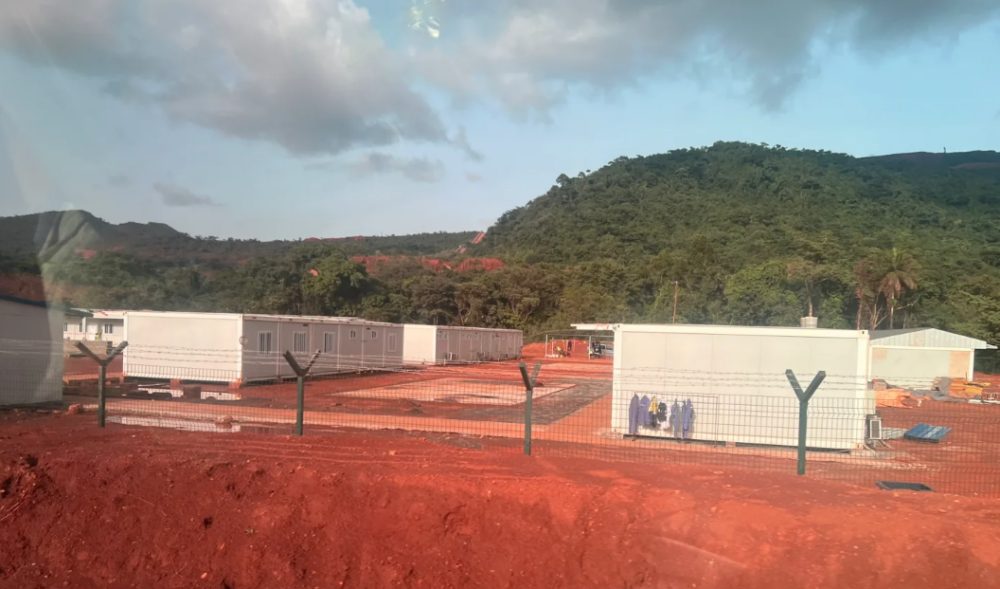
Many people initially understand Container Mining Camps as a type of container dormitory.In fact,this understanding is not comprehensive.
In mining projects,accommodation is only one part of a camp's functionality.A camp truly capable of supporting the long-term operation of a mine needs to simultaneously meet the diverse needs of employees,project management,and logistical support.
For example,if a mine has 200 employees,simply building dormitories is clearly insufficient.Employees need meals,the management team needs offices,on-site medical support is required,supplies need warehousing and management,and even recreational spaces are needed.All these facilities together constitute the complete system of a mining camp.
Therefore,a more accurate definition of a Container Mining Camp should be a comprehensive mining infrastructure solution,rather than a single building product.
As the mining industry develops,the functions of mining camps are constantly evolving.Past mining dormitories emphasized"having a place to live,"while modern mining camps focus more on overall operational efficiency and employee experience.
Today,a mature Container Mining Camp typically includes multiple functional modules such as accommodation areas,office areas,dining areas,medical areas,public activity areas,and storage areas.Through modular design,these areas can be flexibly combined according to the project scale to meet the development needs at different stages.For mining companies,the biggest advantage of this model is its ability to establish a complete operating environment in a relatively short time,allowing project teams to quickly get up and running.
Many mining project managers find during the initial planning stages that mining area construction is far more complex than imagined.This is especially true for projects located in remote areas,which often face a series of real-world challenges.
Many people believe that the main expense in mining camp construction is the building itself,but this is not the case.
For projects in remote areas,transportation often accounts for a significant proportion of costs.Traditional construction requires the continuous transport of steel bars,cement,sand,gravel,and various construction equipment.If the project site is far from a city,every additional kilometer of transportation distance can incur additional costs.
More importantly,some mining areas have limited road conditions,making the transportation of large equipment and building materials difficult.Inclement weather can further impact construction progress.
Modular construction allows most of the production work to be completed in a factory;only the finished product needs to be transported to the site for installation,effectively reducing on-site construction pressure.
Mineral resources are often distributed in areas with complex environments.
For example,some mining areas in the Middle East and Africa face persistent high temperatures and dust storms;high-altitude mining areas need to cope with low temperatures and strong winds;and tropical regions face challenges of high humidity and heavy rainfall.
These environmental factors not only affect the lifespan of buildings but also directly impact employee living comfort.If camp design does not adequately consider local climate conditions,later maintenance costs may far exceed expectations.
Therefore,mining camp construction cannot simply replicate ordinary residential models but requires targeted design based on the specific environment of the project site.
For mining companies,time often means return on investment.
In actual projects,mine road construction,equipment transportation,ore processing facility installation,and camp construction are usually carried out simultaneously.If camp construction is behind schedule,the technical and management teams may not be able to enter the site in a timely manner,thus affecting the overall project development pace.
Many mining companies choose modular camps precisely because of their shorter construction cycles,which help projects enter the operational phase faster.
Not all mining areas will operate long-term.
Some projects may complete resource extraction after a few years and then relocate to new areas for continued development.If traditional buildings are used,a large amount of infrastructure may not be reusable.Modular mining camps can be disassembled,transported,and reassembled,significantly improving asset utilization.This flexibility is particularly important for mining companies with multiple projects.
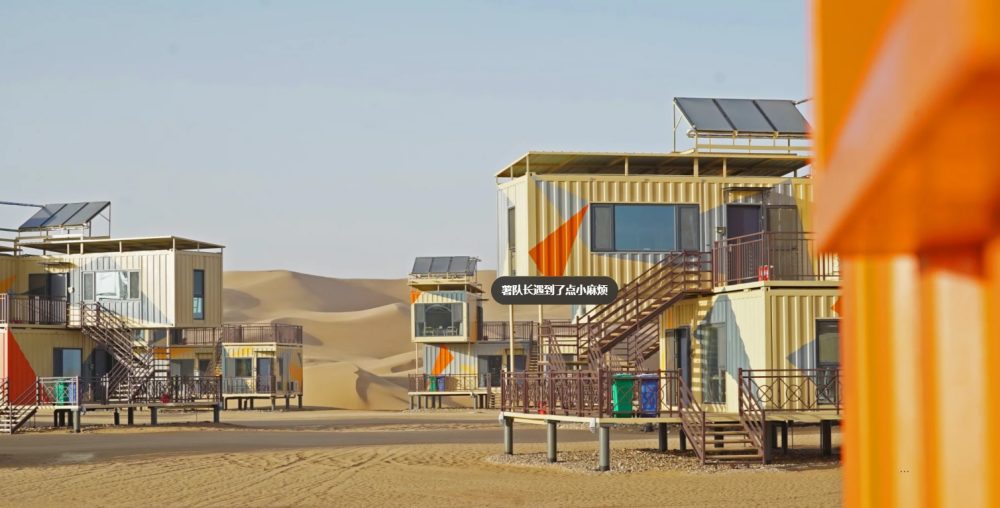
Many procurement personnel focus on the number of dormitories when planning mining camps.However,a mining camp capable of long-term stable operation requires consideration of many more factors.
Accommodation typically occupies the largest area of a mining camp and is where employees spend the most time.
Depending on project needs,accommodation can be designed with single,double,or multi-person rooms.Management and technical personnel usually have private or double rooms,while general staff often use multi-person accommodation.
Modern mining dormitories are no longer just places to sleep.Air conditioning systems,insulation,storage space,and network facilities have become standard features in many projects.A good living environment not only improves employee satisfaction but also helps reduce staff turnover.
Regardless of project size,mining operations rely heavily on a management team.
Project managers need to coordinate construction schedules,engineers need to handle technical issues,and safety supervisors need to oversee on-site management.All of these tasks require dedicated office space.
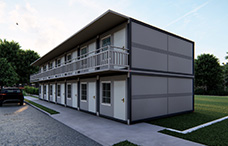
A well-designed office area typically includes offices,meeting rooms,a dispatch center,and a data management area.For large mining projects,the office area may even utilize a two-story modular building to improve space utilization efficiency.
In remote mining areas,employees can hardly rely on external catering services.
This means that the camp must have a complete catering supply capacity.From food storage to food processing and centralized meal service,every step needs to be planned in advance.
Many projects underestimate the importance of the catering system in the initial stages,leading to operational problems later on.In fact,an efficient catering system not only affects employee health but also impacts overall work efficiency.
Mining areas are special working environments,and safety is always a management priority.
While most employees do not frequently use medical facilities,a comprehensive medical support system can play a crucial role in emergencies.
Therefore,many mining areas are equipped with first-aid rooms,treatment rooms,and medicine storage areas.For larger projects,dedicated medical centers are also established to meet long-term operational needs.
This is an aspect many companies easily overlook during the planning phase.
For employees stationed long-term in the mining area,life outside of work is equally important.If the camp lacks public activity spaces,employees may feel monotonous and stifled.
More and more modern mining camps are equipped with gyms,reading rooms,lounges,and recreational areas.While these facilities don't directly generate economic benefits,they improve employee satisfaction and team cohesion.
In recent years,modular mining camps have become a priority for many mining projects.This trend is not accidental but a result of actual operational needs.
Compared to traditional buildings,one of the biggest advantages of modular construction is speed.
Building units are manufactured in the factory and can be directly transported to the site for installation.This not only reduces on-site construction time but also reduces the impact of external factors such as weather on project progress.
For mining projects that urgently need to go into production,a faster construction cycle means a faster return on investment.
Mine size typically changes with project development.
Initially,there might be only 100 employees,but later it could grow to 500 or more.With traditional buildings,expansion is often complex.
Modular camps,however,can be expanded gradually by adding building units,keeping camp construction in sync with project development.
Many large mining companies own multiple projects simultaneously.
When a mine closes,some camp facilities still have value.Modular buildings can be relocated to new project sites for continued use,improving asset utilization.
Many procurement decisions focus only on the initial investment amount,neglecting subsequent operating costs.
In reality,shorter construction cycles,lower maintenance costs,and reusability can help companies save significant amounts of money over long-term operations.
Although the name includes"Mining Camp,"its applications extend far beyond the traditional mining sector.
Gold mine projects are typically located in mountainous,desert,or remote areas,requiring rapid deployment capabilities.Modular camps enable project teams to quickly establish operational bases.
Copper Mine Projects:Copper mine development cycles are relatively long,so companies prioritize building durability and long-term operational capability.Modular camps meet long-term usage needs while retaining flexibility for expansion.
Coal Mine Projects:Coal mine projects often have large workforces,requiring substantial accommodation and public service facilities.Modular buildings can quickly form complete living communities.
Lithium Mine Projects:With the rapid development of the new energy industry,global lithium mine development is accelerating.Many new lithium mine projects utilize modular camps as an infrastructure solution.
Oil and Gas Projects:Beyond the mining sector,similar models are widely adopted in oil and gas development projects.Modular camps have become a mainstream choice,especially in desert and coastal areas.
For medium-sized mining projects,proper planning is often more important than simply increasing the number of buildings.
Below is a common functional area configuration reference:
Functional Area | Suggested Area Percentage |
Accommodation Area | 45% – 55% |
Office Area | 10% – 15% |
Dining Area | 10% – 15% |
Medical Area | 3% – 5% |
Public Activity Area | 8% – 12% |
Storage Area | 10% – 15% |
In actual planning,it is recommended to reserve space for future expansion.Many projects start small,but as production capacity increases,the number of employees may grow rapidly.Planning ahead can reduce subsequent modification costs.
There are many suppliers in the market,but few companies truly possess the capability for complete project delivery.
Price is important,but mining camps are not standardized products.Different regions,climates,and project sizes will all affect the final solution.Therefore,a supplier's ability to customize designs is often more important than price.
For large projects,delivery capabilities directly impact project progress.If a supplier cannot complete production on time,even the best solution will struggle to meet actual needs.
Overseas projects involve transportation,installation,and local regulations.A team with international project experience can help clients reduce execution risks.
Besides the product itself,after-sales technical support is equally important.Comprehensive installation guidance and after-sales service can help projects be implemented more smoothly.
WZHhouse a professional modular building solutions provider,WZHhouse has long served global engineering projects,mining projects,and large-scale camp construction projects.
With a mature production system and rich overseas project experience,WZHhouse can provide customized mining camp solutions based on different countries,environments,and project scales.From planning and design,manufacturing to transportation and installation,clients can obtain more efficient one-stop service support.
For mining projects that require rapid deployment,flexible expansion,and long-term operation,WZHhouse can help clients build safer,more comfortable,and more efficient operating bases.
What Is a Container Mining Camp?
A Container Mining Camp is a modular camp solution designed for mining and remote projects,including accommodation,offices,dining facilities,medical stations,and support infrastructure.
How Long Does It Take to Build a Mining Camp?
The timeline depends on project size.Modular mining camps are generally much faster to deploy than traditional buildings.
Can a Mining Camp Be Relocated?
Yes.Most modular mining camps can be dismantled,transported,and reinstalled at a new project site.
How Many Workers Can a Mining Camp Accommodate?
A mining camp can accommodate anywhere from dozens to thousands of workers,depending on the project requirements.
Are Mining Camps Suitable for Desert Areas?
Yes.They can be customized with insulation systems,sand-resistant designs,and high-performance cooling systems.
What Facilities Are Usually Included?
Typical facilities include worker accommodation,offices,kitchens,dining halls,medical clinics,sanitation facilities,recreation areas,and storage buildings.



Copyright © Hebei Weizhengheng Modular House Technology Co., Ltd. All Rights Reserved
Sitemap

 +8615081877521
 +8615081877521