- icy@wzhgroup.com
- +86 15081877521


If you are purchasing container houses,OEM and ODM are two manufacturing models worth understanding.OEM is generally suitable for buyers who already have design drawings or clearly defined technical specifications,while ODM is more suitable for businesses that want to use a manufacturer's existing design and adjust it to meet their project requirements.
The cost differences between these two models mainly come from design responsibilities,product development,customization scope,and order volume.OEM is not always more expensive than ODM,and ODM is not always the more economical option.Whether you are purchasing dozens of units for worker accommodation,developing a container hotel,or building your own container house product brand,you need to evaluate your project requirements and total budget to determine which model is more suitable.
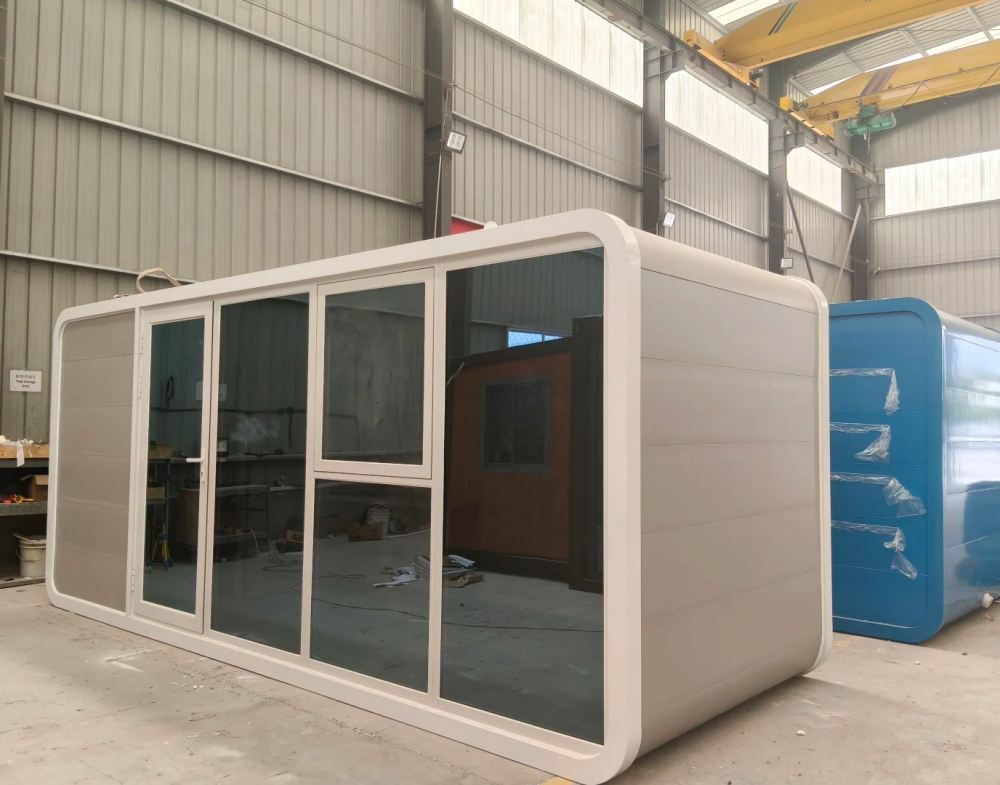
OEM and ODM can both be used in container house manufacturing,but they differ in design responsibilities and product development approaches.Understanding these differences before requesting a quote helps buyers evaluate manufacturers'pricing and service scope more accurately.
OEM generally refers to a manufacturing arrangement in which the manufacturer produces according to the buyer's design,drawings,or technical specifications.Under this model,the buyer leads the product requirements,while the manufacturer handles the agreed production and related technical work.
For example,a construction contractor needs to purchase 80 container accommodation units for an overseas construction site.The company has already determined the dimensions,room layout,wall panel materials,door and window configurations,and electrical requirements for each unit.The company also has technical drawings that are ready for production.The contractor can submit these documents to an OEM manufacturer,who will evaluate their feasibility,calculate the costs,and arrange production.
The OEM model is suitable for projects with clearly defined product specifications.Buyers can determine the structural design,interior layout,insulation configuration,and other technical parameters according to project requirements,but specialized structures still require engineering evaluation.Buyers also need to clarify responsibilities for design revisions,engineering validation,and quality acceptance in advance.
ODM generally refers to a manufacturing arrangement in which the manufacturer provides an existing product design or a base solution and delivers product development and manufacturing services as agreed.Buyers can select a suitable product from the manufacturer's existing designs and adjust certain features according to their branding or project requirements.
For example,a resort operator plans to build 20 container guest rooms but does not have a complete in-house building design team.The operator can first evaluate the manufacturer's existing guest room designs and then adjust the windows,exterior colors,interior finishes,and bathroom configurations according to the local climate,landscape,and operational requirements.
ODM can reduce the amount of work buyers need to undertake to develop a product from scratch.However,an existing manufacturer design does not mean that the product cannot be modified.The actual customization scope depends on the structural design,production conditions,and the agreement between both parties.
Buyers also need to confirm the usage rights of the base design,ownership of customized elements,and whether the manufacturer can offer the same or similar base design to other businesses.
The main difference between OEM and ODM lies in where the product design originates and who is responsible for the agreed design and development work.Buyers can use the following table to understand the typical differences between the two models.
Comparison Factor | OEM Manufacturing | ODM Manufacturing |
|---|---|---|
Design Responsibility | The buyer leads the design or provides technical specifications. | The manufacturer provides the base design. |
Starting Point | The buyer's drawings, specifications, or design requirements. | The manufacturer's existing or developed product design. |
Customization | Supports extensive customization as agreed. | Usually involves adjustments to an existing base design. |
Upfront Costs | May involve additional design, engineering validation, and tooling costs. | Using an established design may reduce upfront development investment. |
Development Time | Depends on drawing completeness and the scope of engineering modifications. | Using a suitable existing design may shorten the development process. |
Product Differentiation | Supports distinctive product specifications. | Depends on the permitted customization scope. |
Best Suited For | Engineering projects and product development based on existing drawings. | Distributors and project operators who want to use established designs. |
This table reflects common manufacturing arrangements rather than universal business rules.Some OEM projects include engineering support from the manufacturer,while some ODM projects may require extensive customization and development.
Buyers should not judge the entire cooperation arrangement solely by whether a supplier uses the OEM or ODM label.Buyers should confirm who provides the design,which elements can be modified,which costs are included in the quotation,and which documents and products will be delivered.
The price difference between OEM and ODM mainly comes from the actual scope of work rather than the two abbreviations themselves.Buyers need to calculate upfront development costs,per-unit production costs,and overall project delivery costs separately to determine which model best fits their budget.
OEM project costs are generally related to design readiness,customization requirements,and production volume.
If the buyer already has complete,confirmed production drawings,the manufacturer can evaluate their feasibility and prepare a quotation.If the project involves specialized structures,non-standard dimensions,or complex modular connections,the manufacturer may need to conduct additional engineering assessments and design revisions.
Steel specifications,wall panel types,insulation materials,doors,windows,flooring,and interior finishes all affect the production cost of each unit.A dormitory unit equipped with a private bathroom,electrical system,and furniture cannot be directly compared with a basic unit that only includes the primary enclosure structure.
Bulk production can help manufacturers arrange material purchasing and production processes more efficiently,but bulk orders do not mean that all costs will decrease proportionally.Specialized material procurement,dedicated tooling,and customized design fees may still apply.
Some construction projects need to meet specific requirements for wind loads,snow loads,fire protection,insulation,or electrical systems.These requirements may increase investment in materials,engineering validation,and quality inspections.
If buyers already have a mature product design,OEM can reduce duplicated development work.If buyers only have an initial concept and the manufacturer needs to complete extensive design work,the upfront cost of an OEM project may increase.
ODM projects generally start with the manufacturer's existing product designs,but buyers still need to calculate customization costs according to their actual requirements.
If the manufacturer already has a suitable container house design,buyers can reduce the amount of work required to develop a complete product from scratch.Buyers still need to confirm whether the existing design meets the building dimensions,intended functions,and applicable requirements at the destination.
Changing exterior colors,brand logos,or some interior features requires a different amount of work from modifying the main structure or redesigning the room layout.Buyers should ask manufacturers to list the costs of standard configurations and additional customization separately.
Brand logos,specialized finishes,bathroom equipment,furniture,and electrical configurations may all add costs.Buyers need to confirm whether these items are included in the base quotation.
ODM does not mean that the manufacturer only provides a design.Product manufacturing,packaging,transportation,and other agreed services still affect the final expenditure.Buyers should confirm whether the quotation includes shipping,international transportation,or site-related work.
ODM may reduce some development investment when an established design is used,but extensive modifications to the original design can also increase costs.Buyers need to evaluate the actual differences between the base design and the target product rather than judging the price solely by the ODM label.
When comparing OEM and ODM,buyers should standardize product specifications,quantities,quality requirements,and delivery terms before comparing quotations.Price comparisons are meaningful only when the deliverables are reasonably equivalent.
Purchasing Situation | Option to Evaluate First | Cost Considerations |
|---|---|---|
Complete production drawings are available for bulk manufacturing. | OEM | Design readiness, production costs, and dedicated tooling. |
No in-house design team is available, and an established guest room design is preferred. | ODM | Base design, configuration adjustments, and product development costs. |
Specialized structures or unique room layouts are required. | OEM or a Hybrid Model | Engineering design, structural validation, and customization costs. |
Only the colors and branding of a standard house need to be changed. | ODM | Whether the existing design supports the changes and the associated branding fees. |
Multiple specifications are required for a project. | Evaluate According to the Specific Design | Standardized production, design modifications for different specifications, and bulk costs. |
Buyers also need to compare the total project cost rather than focusing only on the manufacturer's per-unit quotation.The overall project budget may include product design,engineering validation,packaging,international transportation,customs duties,foundation construction,on-site installation,and local compliance requirements.
For example,one quotation may cover only the basic house module,while another may already include interior finishes and bathroom equipment.Even if the unit prices differ significantly,that difference alone does not indicate which manufacturer offers better value.
Buyers can choose a manufacturing model based on their existing design documents,product differentiation requirements,and project applications.The following scenarios can help narrow down the options.
OEM is more suitable for buyers who have clearly defined product requirements and need the manufacturer to produce according to specified requirements.
Construction contractors and project developers often need to arrange accommodation units,offices,or other functional buildings according to project drawings.Clear dimensional,material,and equipment requirements help manufacturers calculate production costs accurately.
Businesses with their own brands may also use OEM to manufacture products in bulk if they have already developed products with distinctive layouts or structural features.Buyers should agree on drawing usage rights,design modification permissions,and product acceptance standards in advance.
Large-scale bulk purchasing projects with clearly defined technical specifications and consistent product standards are also suitable for OEM evaluation.Manufacturers can arrange production based on confirmed specifications,reducing configuration differences between production batches.
However,OEM does not mean that buyers must complete all design work independently.Buyers can ask whether the manufacturer provides design evaluation or engineering support and confirm whether these services incur additional charges.
ODM is more suitable for buyers who want to use the manufacturer's existing product designs without developing the entire design from scratch.
Importers and distributors can select container house designs suitable for their target markets and then adjust the exterior,configurations,and branding according to local requirements.This approach can reduce some product development work,but distributors still need to confirm market suitability and branding rights.
Hotel and resort operators can first select a base design suitable for guest accommodation and then adjust the product according to room size,bathroom configuration,landscaping requirements,and operational needs.Operators need to consider both the house modules and supporting site facilities rather than developing the entire project budget based only on the price of each unit.
Businesses entering the container house industry for the first time can evaluate manufacturers'existing designs if they do not yet have mature product designs.These businesses can learn from actual projects and market demand before deciding whether to invest in developing proprietary products.
ODM does not guarantee a shorter delivery time.Manufacturers still need to confirm material availability,production schedules,modifications,and order quantities.
Some projects do not fit entirely into traditional OEM or ODM arrangements.Buyers can start with the manufacturer's base design and then customize key features according to their requirements.
For example,a resort developer wants to use an existing modular guest room design but requires larger floor-to-ceiling windows,a specific interior layout,and improved insulation performance.The manufacturer can evaluate the existing design and determine which features can be adjusted directly and which require redesign.
This cooperation model can balance the efficiency of an established product with project-specific customization.However,buyers need to confirm modification fees,engineering validation,design rights,and delivery schedules in advance.Buyers should also verify whether the manufacturer can produce the modified design consistently.
When requesting quotations from different manufacturers,buyers should provide consistent project information whenever possible.Complete inquiry documents reduce repeated communication and make quotations from different suppliers easier to compare.
Information to Confirm | Questions to Ask the Manufacturer |
|---|---|
Design Scope | Does the quotation include design, drawing revisions, and engineering evaluation? |
Product Specifications | Are the steel, wall panels, insulation materials, doors, windows, and interior configurations consistent with the agreed specifications? |
Customization Fees | Are additional charges required for changes to dimensions, layouts, colors, or structures? |
Order Quantity | What are the unit prices and upfront costs for different order quantities? |
Quality Control | What inspection procedures does the manufacturer use, and how will both parties confirm acceptance standards? |
Delivery Terms | Which packaging, transportation, and delivery items are included in the quotation? |
Design Ownership | How are the ownership and usage rights of the base design, modified drawings, and dedicated tooling defined? |
Production Lead Time | How long do design confirmation, material procurement, and bulk production each take? |
Buyers should also ask manufacturers to distinguish standard product prices from customization fees.If a quotation includes engineering design,specialized materials,or dedicated tooling,the manufacturer should clearly specify the relevant scope of work and charges.
The contract should also define procedures for material substitutions,design changes,product acceptance,and delayed delivery.Buyers should not rely solely on verbal promises to confirm these important matters.
Some buyers confuse the cooperation model,product pricing,and design rights when comparing manufacturers.The following issues are worth checking before signing a contract.
Two manufacturers may offer houses with the same dimensions but different steel specifications,wall panels,insulation layers,doors,windows,and interior equipment.Buyers should standardize the technical requirements before comparing quotations.
Some ODM designs allow changes to the exterior,layout,or configuration,but the scope varies between manufacturers.Buyers should confirm which modifications are included in standard services and which require additional development.
If buyers already have drawings that are ready for production,an OEM project may not require substantial upfront design investment.Actual costs still depend on materials,production volume,manufacturing processes,and special requirements.
Paying for design modifications does not automatically mean that buyers obtain all rights to the base design.Buyers need to define the ownership and usage rights of the base design,modification results,drawing files,and dedicated tooling in the contract.
Buyers who have not clearly defined the intended use,quantity,configurations,and delivery location may find it difficult to determine which cooperation model is more suitable.Buyers should organize their project requirements before asking manufacturers to propose workable solutions.
Is OEM More Expensive Than ODM for Container Houses?
OEM is not always more expensive than ODM.If buyers already have complete production drawings,manufacturers may not need to invest heavily in upfront design work.If buyers need specialized structures developed,an OEM project may involve additional engineering costs.ODM may reduce some development investment when an established design is used,but complex customization can also increase costs.
Can I Add My Own Brand to an ODM Container House?
Buyers can often discuss branding,exterior features,and some configurations with manufacturers,but the specific permissions depend on the manufacturer's cooperation policies and the contractual terms.Buyers should confirm the scope of use for brand logos,product designs,and related intellectual property.
Which Model Is Better for Bulk Container House Orders?
Both OEM and ODM can be used for bulk purchasing.Buyers with confirmed product drawings and technical specifications can evaluate OEM first,while buyers who want to use a manufacturer's existing standard designs can evaluate ODM first.Order quantity,standardization,and customization scope all affect the final cost.
Can an OEM Supplier Help Me Develop a Container House Design?
Some manufacturers provide design evaluation,engineering support,or drawing revision services,but the scope and costs must be confirmed in advance.Buyers should clarify which tasks are handled by themselves or a third-party design team and which tasks are the manufacturer's responsibility.
Can I Switch From ODM to OEM Later?
Buyers can evaluate whether switching from ODM to OEM is feasible,but the transition is not always straightforward.Buyers need to confirm usage rights for existing designs,ownership of modification results,the manufacturer's technical documents,and the costs of any redevelopment.
OEM and ODM do not have one fixed answer that suits every buyer.Buyers should choose a manufacturing model according to their design readiness,product differentiation requirements,budget,and delivery needs.
If you already have clear design drawings and need a manufacturer to produce according to technical specifications in bulk,OEM is worth evaluating first.If you want to use an established container house design and adjust the configurations to suit your brand or project,ODM may be more suitable.If your project requires both an established design and specialized customization,you can also ask manufacturers about a hybrid cooperation model.
WZHHouse is a custom container house manufacturer that can evaluate container house configurations,customization scope,and production requirements based on your project needs.You can provide your intended application,estimated order quantity,target dimensions,existing design drawings,and delivery location,allowing our team to assess feasible solutions and prepare suitable quotation options for your project.
When comparing suppliers,you should focus on design responsibilities,product specifications,customization fees,quality standards,and delivery scope.Clarifying these conditions helps you choose a manufacturing model that better meets your project requirements.



Copyright © Hebei Weizhengheng Modular House Technology Co., Ltd. All Rights Reserved
Sitemap

 +8615081877521
 +8615081877521