- icy@wzhgroup.com
- +86 15081877521


Purchasing a container house from China does not inherently entail high risk.The key factors to consider are the supplier's legitimacy and reliability,the clarity of product specifications,quality verification,compliance with local building codes,and the coordination of shipping,installation,and after-sales service.
While cross-border procurement involves more steps than local purchasing,most common risks can be mitigated through proper verification and management at the pre-production,pre-shipment,and post-delivery stages.
Below,we detail the potential risks associated with buying container houses from China.Understanding these risks beforehand allows you to avoid pitfalls and ensure a seamless purchasing experience.
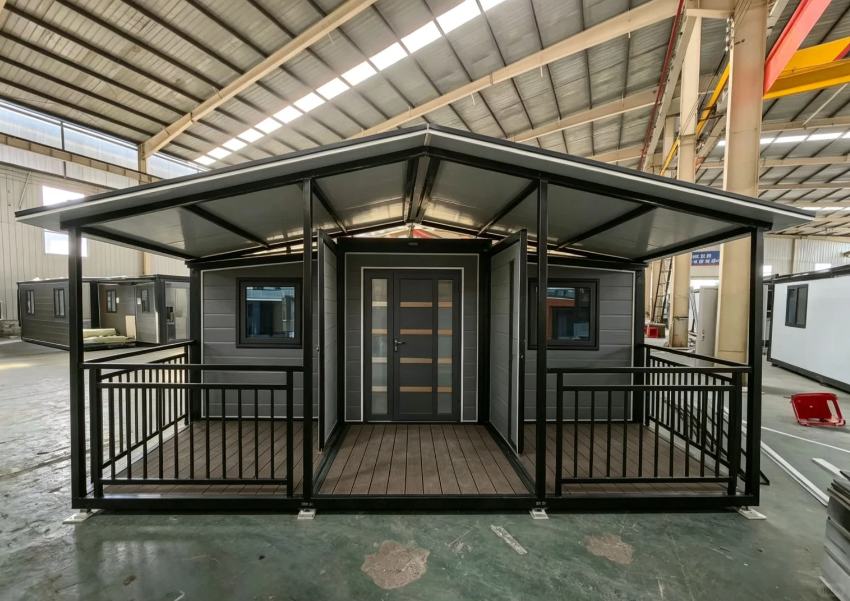
Container houses are building products that are prefabricated in a factory and assembled on-site;they are not simple,standardized commodities.Even if products appear similar in size and exterior,the internal components—such as steel,wall panels,insulation,doors,windows,electrical systems,and interior finishes—can vary significantly.
Common issues in cross-border procurement include discrepancies between a supplier's actual production capacity and their marketing claims,unclear material specifications in quotes,differences between the custom layout and the final product,and non-compliance with local regulations discovered only upon arrival.Factors such as shipping delays,packaging damage,on-site installation challenges,and after-sales responsiveness also require advance consideration.
| Potential Risk | Common Issues | Risk Mitigation Strategies |
|---|---|---|
| Supplier | Non-manufacturing company or limited production capacity | Verify the factory and production capabilities |
| Product Quality | Materials differ from the quoted specifications | Clarify technical specifications before production |
| Customization | Finished product differs from the approved design | Confirm and approve drawings before production |
| Compliance | Product does not meet local requirements | Verify local regulations and applicable standards in advance |
| Payment | Contract or payment account issues | Use formal contracts and established payment procedures |
| Shipping | Delays, damage, or missing components | Confirm packaging, insurance, and container loading records |
| Installation | Errors during on-site assembly | Provide installation drawings and technical guidance |
| After-Sales Service | Difficulties with cross-border repairs or support | Clarify warranty coverage and spare parts policies |
An important distinction to make is that these risks are not inherent flaws of Chinese container houses themselves;rather,they often stem from information asymmetry and project management issues during the cross-border procurement process.
If you are planning to source from China,the first step is not to compare quotes for the lowest price,but to verify exactly what type of supplier you are dealing with.Some companies own their own production lines,while others focus primarily on design,procurement,and export,or simply act as trading companies.Different business models do not necessarily imply differences in product quality,but you need to know who is actually responsible for manufacturing the core components.
Start by reviewing the company's registration details,establishment date,factory address,main products,and export experience before looking into the actual production facilities.Manufacturers with genuine production capabilities can usually demonstrate stages such as steel structure fabrication,welding,wall panel processing,assembly,interior installation,and packaging of finished goods,rather than just showing photos of the final product.
If you cannot visit the factory in China personally,you can request a live video inspection or commission a third-party factory audit.The priority is not the size of the office,but confirming whether the factory possesses production capabilities commensurate with your project scale and identifying who is responsible for the steel structure,envelope system,and major assembly work.
Quality control should begin before the order is placed,rather than relying on inspections after production is complete.The final quality of a container house depends largely on how clearly the product specifications are defined between you and the manufacturer.
For instance,"sandwich panel"is a broad category that does not specify performance characteristics.You need to confirm the core material type,panel thickness,density,and intended application.Similarly,regarding the steel structure,simply stating"steel frame"is insufficient;specifications for main components,materials,and anti-corrosion treatments must be clearly defined.
A comprehensive set of technical specifications should cover the steel structure,wall panels,roofing,flooring,insulation,doors and windows,electrical systems,plumbing,and interior finishes.If the project is located in an area with extreme heat,severe cold,coastal conditions,or high winds,local environmental factors must also be incorporated into the design.
In actual projects,product images only help assess appearance;they cannot replace technical specifications.
For example,two 40-foot container houses might look similar but feature different insulation panel thicknesses,door and window types,and flooring or roofing systems depending on the configuration.The final price will vary based on these specifications.
It is advisable to request a product specification sheet,floor plans,elevations,and necessary structural or installation documentation from the manufacturer,and to confirm the final versions before production begins.
When requesting quotes from multiple Chinese container house manufacturers,you may encounter a common scenario:the prices appear similar,yet the actual specifications vary.
One supplier might include the kitchen,bathroom,electrical systems,and interior fit-out in their quote,while another covers only the basic structure and building envelope.Even if both products are labeled as"40ft container houses,"the prices cannot be directly compared.
When comparing quotes,it is best to itemize components such as steel,wall panels,insulation,doors and windows,flooring,roofing,electrical systems,plumbing,furniture,and packaging.For customized projects,you should also clarify which items are included as standard and which incur additional costs.
A low quote is not inherently risky;however,an inexplicably low price warrants further verification.
Customized container houses typically involve bedrooms,bathrooms,kitchens,door and window placement,wall materials,electrical outlets,electrical systems,and interior finishes.Relying solely on verbal confirmation via chat apps can easily lead to misunderstandings during production.
A safer workflow is:
Requirement Confirmation→Design Drawings→Revisions→Final Approval→Production
Finalize details such as dimensions,layout,doors and windows,electrical and plumbing systems,materials,and colors before production begins.If changes occur,ensure both parties confirm the new version rather than relying on scattered chat logs.
This is particularly important for bulk orders.While a minor specification discrepancy in a single unit might be easily rectified,producing dozens or hundreds of units means an unclarified issue could be replicated repeatedly.
This is a risk often overlooked in overseas procurement.
Just because a Chinese factory can manufacture a product according to your technical specifications does not mean it will automatically meet building permit requirements in the destination country.Different countries—and even different regions—have varying standards regarding structural safety,electrical systems,fire safety,energy efficiency,wind and snow resistance,and foundation requirements.
For instance,if the project is located in a high-wind area,you must confirm the design wind load and anchoring methods in advance;for cold regions,factors such as insulation,heating,and freeze protection for pipes must be considered.Any local regulations regarding building energy consumption or electrical systems should also be established before production starts.While manufacturers can provide structural drawings,material specifications,and technical documentation,local building approvals usually require verification by you,a local architect,an engineer,or a contractor.
Do not wait until the house arrives at its destination to check whether local authorities permit its use.
Transportation is one of the most significant differences between sourcing from China and sourcing locally.Container houses often undergo multiple stages,including factory loading,port operations,ocean freight,destination port handling,and final inland transport.
Common issues include schedule changes,port delays,damage during loading or unloading,and coordination problems regarding final delivery.For expandable or foldable models,it is also crucial to verify dimensions in the folded state,packaging methods,and container loading capacity.
Before shipping,confirm the packaging plan,packing list,shipping documents,and the division of liability.For high-value or large-scale projects,cargo insurance can also serve as a risk mitigation measure.
One of the most troublesome scenarios upon arrival is not structural damage,but discovering that small connectors,door and window hardware,electrical components,or other accessories are missing.
Before loading,number each package and create a detailed packing list.Take photos or videos during the loading process to document key packages,product quantities,and the container's loading status.
If a project involves a large number of accessories,consider preparing appropriate spare parts based on actual project needs.This ensures that if a small component is damaged during transport or installation,the entire construction process does not grind to a halt while waiting for a low-value part.

Cross-border purchases often involve significant sums;before making a payment,ensure the contract accurately describes the products you are actually buying.
The contract should,at a minimum,specify product specifications,quantities,prices,payment terms,production lead times,packaging,inspection,delivery,warranty,and procedures for handling quality issues.For custom projects,the finalized drawings and technical specifications should ideally be included as contract attachments or part of the formal order documentation.
Payment account details must also be carefully verified.If you receive a sudden notification to"change bank accounts"during the transaction,do not rely solely on the existing chat window for confirmation;verify the change through reliable,official company contact channels.
Pre-shipment inspection is usually highly valuable for custom products and bulk orders.The purpose is not to guarantee that the product is entirely free of issues,but rather to detect any problems before the goods leave China.
Inspections can cover steel structures,welding,wall panels,insulation,doors and windows,electrical systems,interior finishing,dimensions,and accessories.For bulk orders,inspections can also be conducted on a sampling basis or in stages,in accordance with the contract and technical specifications.
If you are unable to visit the factory in person,you can opt for the manufacturer's internal QC,video inspections,or third-party inspection agencies.For high-value projects,third-party inspections provide an added layer of independence.
A product meeting quality standards does not guarantee a trouble-free on-site installation.
Issues such as a foundation not built to specifications,incorrect module positioning,improper connection methods,or local installers lacking familiarity with the product structure can all compromise the final outcome.Waterproofing,electrical systems,and plumbing connections are also critical areas requiring careful attention during installation.
Ideally,foundation requirements,installation drawings,connection details,and specifications for electrical and plumbing systems should be prepared—and the party responsible for local installation determined—before shipment.
If the manufacturer does not provide on-site installation services,you should clarify in advance what remote technical support and installation guidance are available.
While cross-border after-sales support is indeed more complex than local procurement,this does not mean there are no solutions when problems arise.
Common minor issues can often be resolved via photos,videos,and remote technical guidance.If replaceable components—such as doors,windows,connectors,or electrical parts—are involved,replacement parts can be arranged based on the specific situation.
For larger projects,after-sales responsibilities should be defined during the contract stage,covering the warranty period,scope of coverage,handling of parts,and methods of technical support.
What truly matters is not a vague promise of"comprehensive after-sales service,"but knowing the specifics:what the problem is,who is responsible,how the issue is assessed and resolved,and the expected timeframe.
Do not focus solely on the duration(number of years)of the warranty.
You need to understand exactly which components are covered and what is excluded.For instance,structural elements,wall panels,doors and windows,electrical equipment,and waterproofing systems may have different service characteristics.
You should also clarify how damage caused by improper installation,unauthorized modifications,normal wear and tear,or external environmental factors is handled.For overseas projects,the logistics of supplying replacement parts is another practical concern.
A clear,detailed warranty policy is far more valuable than a generic promise of"long-term after-sales support."
When viewing the procurement process as a whole,the greatest risk is not"Made in China"itself,but rather a failure to clearly define responsibilities,specifications,and acceptance criteria upfront.Before making payments or starting production,you need to clarify who is manufacturing the product,exactly what is included,the materials used,and whether local regulatory requirements are met.You must monitor quality during production,conduct inspections before shipment,and—upon arrival—carry out installation and acceptance testing in accordance with the documentation.
For overseas projects,distance does indeed increase communication and after-sales costs;however,comprehensive documentation,quality control,and structured project workflows can help identify and address many potential issues early on.
Yes.Purchasing container houses from China does not inherently entail high risk;the key lies in selecting a reliable manufacturer and ensuring due diligence regarding production,quality,shipping,and after-sales service.
Checklist For Managing Risks When Purchasing Container Houses From China
Before placing an order:Verify the supplier's identity,actual production capacity,product specifications,final drawings,local regulations,payment terms,and contract clauses.
During production:Check the steel structure,wall panels,insulation,electrical systems,and custom configurations;promptly confirm any changes to the production plan.
Before shipment:Inspect the finished products;verify quantities and accessories;confirm packaging,packing lists,and shipping documents;and arrange cargo insurance based on project requirements.
Upon arrival:Check the goods and accessories;inspect for transit damage;carry out installation according to the drawings;and retain records of acceptance and communication.
By addressing these steps proactively,your focus shifts from simply asking"Is there a risk in buying container houses from China?"to actively identifying and managing risks before problems arise.
If you are looking for a Chinese manufacturer of container houses,WZHhouse can provide solutions tailored to your project's intended use,dimensions,quantity,and configuration requirements,while assisting you in finalizing specifications and customization needs.
If you have a specific project in mind,please contact WZHhouse with details such as the project location,required quantity,and basic configuration needs so we can discuss suitable container house solutions.



Copyright © Hebei Weizhengheng Modular House Technology Co., Ltd. All Rights Reserved
Sitemap



 +8615081877521
 +8615081877521