- icy@wzhgroup.com
- +86 15081877521


If you're considering ordering a 40-foot expandable container house from China,the first question you'll likely ask is:"How much will it actually cost?"
Based on extensive practical project experience,the overall budget for a 40-foot expandable container house typically falls within the range of$18,000 to over$45,000.
This range seems quite large,even a little"intimidating."
But once you understand the details,you'll find that the price difference isn't arbitrary,but determined by a series of very specific and realistic factors.
The level of configuration of the house itself,how you plan to use it,the interior finishing standards,where it's shipped to,and how local taxes and fees are calculated...
These factors combine to form the final"total price"you see.
Next,we'll break it down step by step,from structure and configuration to transportation and on-site installation,to understand exactly where each dollar is spent,making it easier to determine what's worth paying for and where you can control the budget.

Before discussing the price,you need to understand what a 40-foot expandable container house truly is.
In its transport state,its external dimensions are almost identical to a standard 40-foot container:
Length:approximately 12.2 meters
Width:approximately 2.44 meters
Height:approximately 2.6 meters
Because of this,it can be directly integrated into the established shipping system,eliminating the need for customized transportation solutions,which is crucial for cost control.
The real value appears after it's unfolded.
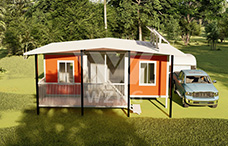
Through left,right,or multi-sided expansion structures,the actual usable area after unfolding can typically reach 60–75 square meters,equivalent to 2 to 3 times the area in its transport state.
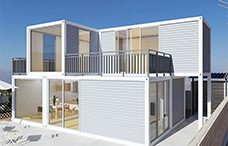
You don't pay for a larger shipping volume,but you get the space of a small house–this is the core meaning of the"expandable"design.Because of their combination of space and flexibility,these types of houses are often used in various scenarios:
When you first inquire about prices from Chinese suppliers,you usually receive EXW(Ex Works)or FOB(Free On Board)prices.
Many people instinctively assume this number is the"price of the house."
However,in reality,it's more like the basic structural cost of a house.
In most cases,the factory price of a 40-foot expandable container house ranges from$12,000 to$28,000.
The difference doesn't come from the size,but from the structural standards and intended use.
This range mainly meets basic safety and expansion functions.
Suitable for short-term projects,temporary offices,or functional use.
It's usable and safe,but not designed for high-frequency use over ten years or more.
When the budget reaches this range,you will clearly notice changes in structural details:
More reasonable steel thickness
More mature stress point design
More stable expansion structure
This type of configuration is often more suitable for medium-to-long-term projects and is the most common choice in many actual purchases.
At this stage,the house is no longer considered a"temporary building,"but a long-term modular building.
Higher-standard steel structures,more durable expansion systems,and structural redundancy reserved for subsequent interior decoration will all be directly reflected in the cost.
It's important to note:
Basic structure does not equal shoddy construction.
Regardless of the price range,the house itself usually includes:
Main steel structure frame
Expandable side wing structure
Wall and roof system
Basic door and window configuration
What truly determines the price is the design logic behind the structure.
From a long-term perspective,the structural part is often the area where it's least advisable to cut costs,because it determines whether the house can still be used safely in a few years.
Many people ask when inquiring about prices:
"Does this price include interior finishing?"
However,what truly affects the experience is never"whether or not there is interior finishing,"but rather the standard to which it is done.
The interior finishing of a 40-foot expandable container house is almost entirely optional,which means the cost is highly flexible.
Basic waterproof flooring+standard wall panels:$1,000–$1,800
Upgraded composite flooring or high-grade finishes:$2,000–$3,500
If you only need it for temporary use,the basic option is sufficient;
However,if you want less maintenance and a more comfortable visual experience in the long run,upgrading is often more cost-effective.
Basic lighting,sockets,distribution box:$800–$1,500
Multi-circuit design,reserved expansion capacity:$1,500–$2,500
The more complex the usage scenario,the higher the requirements for the electrical system,and the cost will naturally increase.
This is a part that many people overlook,but it most affects the long-term user experience.
Basic bathroom unit:$1,500–$2,500
More integrated overall bathroom system:$2,500–$4,000
Adding insulation,air conditioning,and other systems,the interior finishing costs can easily continue to accumulate.
When the purpose changes from temporary to long-term residence,these investments are often no longer"optional,"but necessary.
Before the house leaves the factory,there are some easily overlooked costs.
Transportation from factory to port:$500–$1,200
Container loading,reinforcement,and protective packaging:$300–$800
Export customs clearance and port miscellaneous fees:$300–$600
These costs may not seem high individually,but they are almost impossible to omit and are very typical fixed costs.
For overseas buyers,shipping costs are often the most volatile item.
Typically,a 40-foot expandable container house requires one 40HQ container space.Depending on the shipping route,the estimated price range is approximately:
Southeast Asia:US$2,000–US$3,500
Middle East:US$3,000–US$5,000
Europe:US$4,000–US$7,000
North America:US$5,000–US$9,000
In addition,you also need to consider:
Marine insurance:0.3%–0.6%of the cargo value
Destination port unloading and documentation fees:US$800–US$1,500
Because these costs are significantly affected by seasonal and shipping conditions,many projects reserve a certain degree of flexibility in the budgeting phase.
The arrival of the house at the port does not mean the cost calculation is complete.
In most countries,container houses are classified as modular buildings or building components,and the tax rates therefore differ.
Generally:
Import duties:0%–15%
Value-added tax or consumption tax:5%–20%
With moderate tax rates,taxes and fees usually account for 10%–25%of the CIF price.
This is why the final price of the same house varies significantly in different countries.
Installation and on-site construction costs
Even if the house is highly integrated at the factory,on-site construction is still crucial.
Foundation treatment(concrete floor or steel frame):US$1,000–US$3,000
Unfolding and fixed installation:US$1,000–US$2,500
Water and electricity connection and commissioning:US$500–US$1,500
Whether a professional installation team is needed often depends on the project complexity and local requirements,and will directly affect the total budget.
Considering all the costs above,you can roughly refer to the following ranges:
Basic Use Projects:$18,000–$25,000
Medium to Long-Term Use Projects:$25,000–$35,000
High-Configuration Commercial or Residential Projects:$35,000–$45,000 and above
What is the total cost of purchasing a 40-foot expandable container home from China?
The total cost of sourcing a 40-foot expandable container home from China typically ranges from$18,000 to over$45,000,covering the cost of the unit itself,shipping,and basic installation fees.Price variations are primarily driven by differences in specifications,interior finishing standards,shipping distance,as well as local taxes and installation labor costs.
What is the ex-factory price of a 40-foot expandable container home?
The ex-factory price for a 40-foot expandable container home typically falls between$12,000 and$28,000.Basic models come at a lower price point but offer limited specifications and durability;high-end models typically feature thicker steel structures and superior insulation materials,resulting in a significantly longer service life.
Are the installation costs for a 40-foot expandable container home high?
Installation costs typically range from approximately$1,000 to$5,000,depending on site conditions and the complexity of the construction work.If the ground is level and the foundation requirements are simple,installation costs remain relatively low;however,if concrete foundations,heavy lifting equipment,or additional construction work are required,the costs will increase significantly.
Ordering a 40-foot expandable container house from China is not complicated in itself.
The real challenge lies in making more rational and sustainable configuration choices within your budget.
When you truly understand that each cost corresponds to structural safety,service life,and living experience,rather than just focusing on the final price,the overall cost will become more transparent and controllable.
If you are evaluating configuration options,transportation methods,or the overall budget for a specific project,please feel free to contact WZHhouse
Through clearer needs analysis and professional advice,you will find it easier to make sound and confident decisions in the early stages of your project.
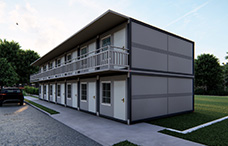
Long-term office and accommodation for construction sites or engineering projects
Modular accommodation units for camps or resorts
Emergency shelters,temporary communities
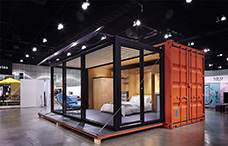
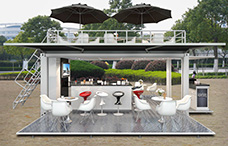
Commercial uses,such as showrooms,temporary shops,medical units
Different uses require completely different configurations,and this is often where the price differences begin.



Copyright © Hebei Weizhengheng Modular House Technology Co., Ltd. All Rights Reserved
Sitemap



 +8615081877521
 +8615081877521