- icy@wzhgroup.com
- +86 15081877521


If you are considering purchasing a batch of 10,20,or even 50 container houses,the pricing considerations differ from buying just a single unit.While wholesale purchases typically offer a lower unit price compared to single-unit orders,the final project cost must also account for expenses such as customization,international shipping,customs clearance,local delivery,and installation.
Based on current market offerings,the wholesale price for a standard container house typically ranges from$5,000 to over$10,000 per unit,while a 40-foot expandable container house usually costs between$8,000 and over$18,000 per unit.Units fully equipped with kitchens,bathrooms,furniture,and electrical systems can range from$10,000 to over$25,000 per unit.
These figures serve only as a preliminary budget reference.The actual wholesale price is influenced by factors such as order volume,house type,interior configuration,the level of customization,and the project location.
Compared to purchasing a single unit,buying a batch of twenty 40-foot expandable container houses allows the manufacturer to consolidate raw material procurement,production,and packaging,thereby reducing the average cost per unit.Bulk orders can also offer advantages regarding shipping and project coordination.
Therefore,determining whether a wholesale container house deal is cost-effective requires looking beyond the manufacturer's quoted unit price.A more reasonable approach is to calculate the total project cost by factoring in the product itself,customization,shipping,and on-site construction.
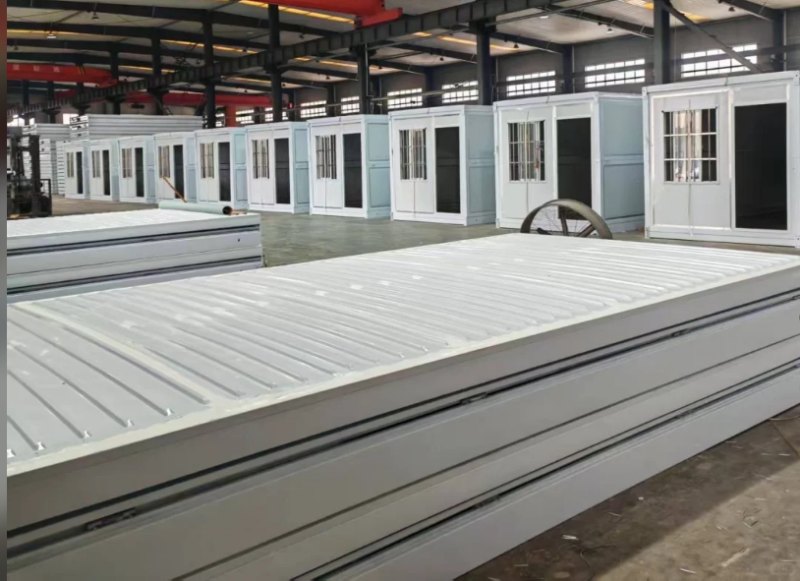
There is no fixed global price for wholesale container houses,as products vary significantly in terms of structure,dimensions,and configuration.A$6,000 container house might consist merely of a basic shell,whereas a$15,000 unit could include a bathroom,kitchen,and complete interior fit-out;effectively,they are not the same type of product.
For standard container houses with basic specifications,wholesale prices may start around$5,000 per unit.As features such as insulation,doors and windows,electrical systems,and interior finishes are added,the price can rise to$8,000 or higher.If you are interested in 40ft expandable container homes,a common wholesale price range to use as a preliminary budget reference is$8,000–$18,000+per unit.Because expandable structures remain compact during transport but unfold to provide a larger usable area upon arrival at the site,they are typically more expensive than basic,non-expandable container units.
Prices rise further for fully equipped homes ready for immediate occupancy.For instance,a unit outfitted with a private bathroom,kitchen,cabinetry,furniture,lighting,and basic electrical systems might cost between$10,000 and$25,000+.
There is an easily overlooked point here:a higher initial quote does not necessarily mean a higher final cost.
Suppose a basic container home is quoted at$7,000,but upon delivery,you still need to purchase furniture,install a kitchen and bathroom,and reconfigure the electrical system;your total expenditure could end up being far higher than the initial$7,000.
Conversely,a fully equipped home quoted at$12,000—which already includes most interior amenities—might actually be a better fit for your project.
Therefore,when comparing wholesale prices for container homes,it is best to clarify exactly what the quote includes.Factors such as the structural build,insulation,doors and windows,bathroom and kitchen facilities,and furniture all directly impact your final budget.
The most obvious advantage of wholesale container house purchasing is that the larger the order quantity,the easier it is for the manufacturer to lower the average cost through standardized production.
Let’s assume the price for a single 40ft expandable container home is$12,000.If you purchase 10 units at once,the manufacturer might offer a wholesale price of around$10,500 per unit;increasing the order to 20 units could lower the price to approximately$9,500 per unit;and for an order of 50 units,the price could potentially drop to around$8,500 per unit.Based on this example,purchasing 20 units costs:
$9,500×20=$190,000
If all 20 units were purchased individually at the standard price of$12,000,the cost would be:
$12,000×20=$240,000
The difference is:$50,000
Of course,this is merely an example to illustrate how bulk pricing works;not all manufacturers offer discounts at this specific ratio.Actual wholesale prices depend on the product model,order quantity,customization requirements,and current production schedules.
Bulk orders lower prices not simply because the manufacturer offers a"discount,"but because the production method changes.For instance,with 20 units featuring the same layout,materials like wall panels,doors,and windows can be procured in bulk,and the units can be processed using a standardized production workflow.
If every unit features a completely different design,the production efficiency gains from bulk purchasing are reduced.Conversely,if you standardize the structure and key specifications of the houses,the cost advantages of wholesale purchasing usually become much more significant.
Additionally,when purchasing wholesale,do not focus solely on the unit price.
A more useful calculation method is:
Total Project Cost÷Number of Units=Average Cost per Unit
This is because a$9,000 house with exceptionally high shipping and installation costs might ultimately have a higher average cost than a$10,000 house with a more cost-effective shipping arrangement.
In short,the true metric for wholesale purchasing is the total cost required to deliver and set up each house at the final site.
For international wholesale orders,shipping is often one of the largest costs aside from the product itself.This is particularly true when exporting container houses from China to the US,Australia,or Europe;ocean freight costs are influenced by the destination port,shipping season,cargo volume,and specific container loading methods.
Total international logistics costs typically encompass more than just ocean freight;they may also include port handling,documentation processing,customs clearance,import duties,and inland transportation from the destination port to the project site.
Therefore,when calculating shipping costs for wholesale container houses,you should not rely solely on the ocean freight quote provided by the manufacturer.Costs incurred after the shipment reaches the destination port must also be factored into the project budget in advance.
Suppose a project involves purchasing 20 expandable 40ft container homes with a total product value of$190,000.If international shipping and related logistics costs are estimated at$30,000,the average shipping cost per unit would be:
$30,000÷20=$1,500 per unit
If only a single unit were purchased,many shipping costs would not decrease proportionally.In other words,while the total shipping cost for a bulk order is higher,the average cost per unit may actually be lower.
However,bulk shipping is not simply a case of"the more you buy,the cheaper the freight."As order volume increases,you may need to use more containers or arrange more complex logistics,naturally driving up the total shipping cost.
Therefore,the key metric to focus on is the shipping cost per unit.
For instance,a total shipping cost of$30,000 for 20 units may seem like a significant expense,but it adds only$1,500 per unit.If the project utilizes consolidated shipping and centralized distribution,overall logistics efficiency may be higher than making 20 separate purchases.
Beyond international shipping,you must also account for post-arrival costs at the destination port.Once the goods arrive,additional expenses such as customs clearance,import duties,port fees,and local trucking may apply.
If the project site is far from the port,the final leg of transportation can become a substantial part of the budget.Consequently,when requesting a quote,it is best to clarify whether the price is EXW,FOB,or CIF so you can determine exactly which logistics stages are included.
For bulk projects,it is advisable to ask the supplier for a detailed breakdown of shipping costs,specifying international sea freight,destination port charges,and local delivery fees.This allows you to calculate the actual landed cost per container home more accurately,rather than basing your project budget solely on the factory's quoted price.
Many people mistakenly believe that"wholesale container houses"simply means purchasing a large number of existing,standard products from a manufacturer.In reality,bulk purchasing for large-scale projects often allows for more flexible customization services.
This is especially true when your project requires 10,20,or even over 50 units;unified design and mass production offer significant value in such cases.
For example,a glamping project might require all guest units to feature identical bedroom layouts and bathroom configurations;a worker accommodation project might prioritize bed capacity and communal areas;while a resort project might need a variety of unit sizes and functional layouts.
These requirements can all be planned during the initial design phase.
Interior layout is one of the most common areas for customization.
You can adjust the spatial relationship between bedrooms,bathrooms,kitchens,and living areas based on the project's specific purpose.
For instance,a 40-foot expandable container house can be designed as a complete home suitable for families,or modified to include larger bedrooms and en-suite bathrooms to meet resort requirements.
Worker accommodation projects,on the other hand,might prioritize space efficiency.Different use cases demand vastly different layouts,even for units of the same size.
The advantage of bulk purchasing is that once the final design is established,units can be mass-produced to a consistent standard,ensuring uniformity across the entire project.
Beyond the layout,interior configurations can also be tailored to project needs.
Kitchen cabinetry and counter space can be sized according to the number of occupants,and bathrooms can be fitted with fixtures that meet specific project standards.Furniture,lighting,and electrical systems can also be planned consistently.
If you are purchasing 20 units,it is far more efficient to determine a unified configuration during the production phase rather than installing furniture and equipment in each unit individually later on.This approach not only makes it easier to maintain a consistent style but also minimizes the need for additional on-site installation work after delivery.
Exterior elements—such as color,doors,windows,and façade design—can also be adjusted to align with the project's positioning.
For glamping or resort projects,the exterior design might prioritize visual appeal;for worker accommodation or temporary housing,durability and maintenance costs might be the primary concerns.
Additionally,functional systems such as air conditioning,water heaters,and solar power setups can be configured to suit local climate conditions and specific usage requirements.For instance,in regions with hot Australian summers,the demand for air conditioning might be high,whereas projects in remote areas might require solar power and battery storage solutions.
Therefore,customizing wholesale container houses involves more than just changing colors or exterior appearances.True customization lies in aligning the spatial layout,interior fittings,and functional systems with the project's specific requirements.
For projects involving 10,20,or even over 50 units,a significant practical benefit of standardized customization is simplified long-term management.
If 20 units utilize identical lighting,air conditioning,bathroom fixtures,and furniture,sourcing spare parts for maintenance becomes easier,eliminating the need to stock a vast array of different components for various unit types.
From an operational standpoint,this standardized configuration may prove more valuable in the long run than simply saving a few hundred dollars on the initial product cost.
Wholesale container houses are generally best suited for projects requiring multiple independent units.
For resort and hotel projects,purchasing 10,20,or 50 units at once allows for unified planning of unit types and interior configurations.This ensures consistency in layout,furniture,and electrical equipment across all rooms,thereby streamlining future operations and maintenance.
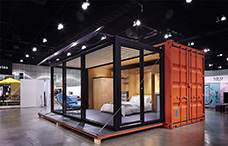
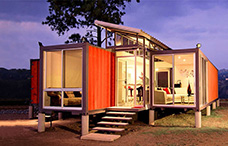
"Glamping"projects are also ideal for bulk purchasing.You can design standard,family-style,or premium units based on the project's positioning and then mass-produce them using a unified design.
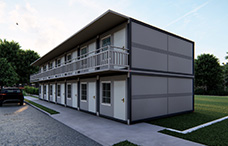
For worker accommodation projects,the advantages of bulk purchasing lie primarily in rapid deployment and standardization.Using uniform specifications for multiple housing units reduces on-site construction time.
For rental housing or temporary accommodation projects requiring the simultaneous construction of dozens of units,bulk purchasing helps you better control overall costs.
In short,while individual purchasing might be simpler if you only need one or two units,bulk purchasing offers distinct advantages in terms of price,production efficiency,transportation,and customization when a project requires 10,20,or more units.
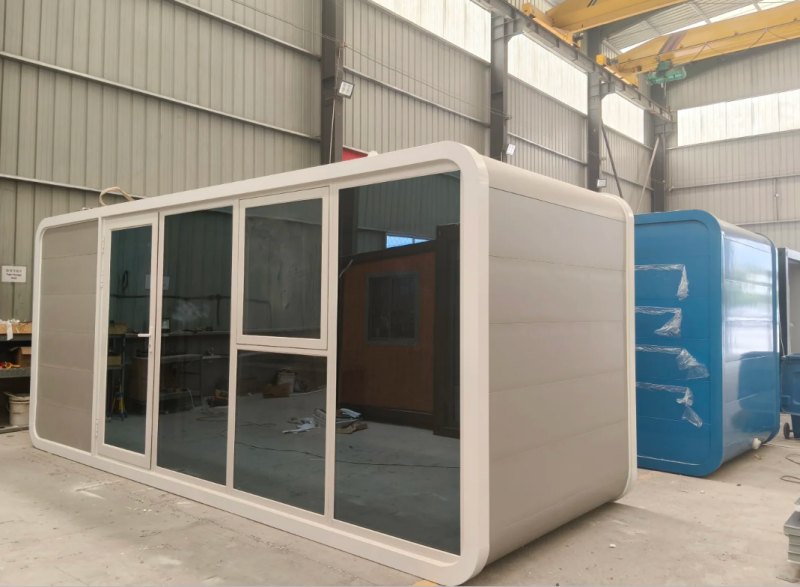
When requesting a quote from a manufacturer,it is best to avoid simply asking,"How much is a wholesale container house?"This question is too vague;the manufacturer lacks the necessary information regarding the number of units,the intended location,and the required specifications.You can inform the manufacturer of your estimated purchase volume in advance—such as 10,20,or 50 units—while also specifying the project's location(country and city)and the intended use of the units.
For glamping projects,specify the required number of bedrooms and bathrooms per unit;for long-term residential projects,indicate whether amenities like kitchens,air conditioning,and water heaters are needed.
For large-scale projects,providing a preliminary floor plan or a list of functional requirements is also helpful.Upon receiving a quote,it is advisable to ask the manufacturer to itemize the costs,such as:
Unit Price
Customization
Packaging
Shipping
Installation
This allows you to clearly understand the base product cost and compare quotes from different suppliers effectively.Additionally,you should confirm the MOQ(Minimum Order Quantity)and the estimated production lead time.
If a project requires 20 units and the manufacturer needs 60 days for production,shipping and on-site preparations should be scheduled in advance;otherwise,the units might arrive before the foundation work is complete.
For wholesale projects,clarifying these details early on is often more important than simply seeking the lowest unit price.
If you are looking for a supplier for bulk container house orders,WZHhouse can provide tailored product solutions based on your project volume,location,and usage scenario.In addition to standard container houses,we offer customization options for layouts,kitchens,bathrooms,furniture,and electrical systems to meet specific project needs.
For projects requiring 10,20,or more units,providing specific volume and customization requirements upfront allows WZHhouse to assess product configuration,production scheduling,and shipping logistics based on your actual project needs,rather than providing a generic price based on a single unit.
How Much Do Wholesale Container Houses Cost?
Wholesale container house prices generally depend on the product type and configuration.Basic models may range from approximately$5,000 to$10,000+per unit;40ft expandable container houses typically range from$8,000 to$18,000+per unit;and fully equipped residential models can range from$10,000 to$25,000+per unit.
These prices serve as a preliminary budget reference;actual quotes are determined based on purchase volume,customization details,and the shipping destination.
Are Wholesale Container Houses Cheaper Than Buying a Single Unit?
Generally,yes.Bulk purchasing allows manufacturers to consolidate material procurement,centralize production,and batch-package units;consequently,the average cost per unit is usually lower than purchasing a single unit.
However,you should compare the total project cost rather than focusing solely on the unit price.
How Many Container Houses Do I Need to Buy for Wholesale Pricing?
Definitions of wholesale orders vary by manufacturer.Some suppliers may offer bulk pricing starting at 5 units,while others might require 10,20,or even more.
If your project requires multiple units,it is best to inform the manufacturer of your estimated purchase volume directly to confirm the corresponding Minimum Order Quantity(MOQ)and wholesale price.
Can I Customize Wholesale Container Houses?
Yes.Bulk orders often allow for customization of the layout,kitchen,bathroom,furniture,and electrical configurations based on project requirements.
For large-scale projects,standardized customization ensures consistent design standards across all units,facilitating future operations and maintenance.
Is Shipping Included in the Wholesale Price?
Not necessarily.Trade terms vary by manufacturer;some quotes cover only Ex-Works(EXW)pricing,while others may include transport to the port of arrival.
Therefore,when receiving a quote,you should clarify the trade terms(e.g.,EXW,FOB,CIF)and determine whether additional costs—such as customs clearance,import duties,and local transport from the destination port—will apply.
How Do I Get a Wholesale Container House Quote?
You can provide the manufacturer with details regarding the purchase quantity,project location,intended use,and customization requirements.
Providing additional information—such as floor plans,interior specifications,and the expected delivery timeline—usually enables the manufacturer to provide a more accurate and useful project quote.
If you only need a single container house,purchasing a standalone unit may be simpler.However,if your project requires 10,20,or even 50+units,bulk purchasing can reduce overall project costs through lower unit prices,higher production efficiency,and more streamlined shipping arrangements.
More importantly,wholesale purchasing is about more than just"buying in bulk for a lower price."For projects such as resorts,glamping sites,worker accommodation,and large-scale housing developments,bulk customization allows for consistent layouts,exteriors,and interior configurations across multiple units,thereby simplifying future operations and maintenance.
Therefore,when evaluating the cost-effectiveness of a wholesale container house project,it is best to calculate the total cost from the factory to the project site rather than simply asking,"How much does each unit cost?"If you are planning a bulk procurement project,you can provide WZHhouse with details regarding the order quantity,project location,intended use,and customization requirements.Based on this information,you can explore container house configurations suitable for your project and receive a tailored wholesale proposal and quote covering the products,customization,and shipping.



Copyright © Hebei Weizhengheng Modular House Technology Co., Ltd. All Rights Reserved
Sitemap

 +8615081877521
 +8615081877521