- icy@wzhgroup.com
- +86 15081877521


The cost of building a container home can range from approximately$25,000 to over$200,000.For small,basic container conversion projects,the budget might fall between$25,000 and$60,000;professionally built 40-foot container homes can cost between$60,000 and$100,000 or more.For large residences made by combining multiple containers,the total cost can easily exceed$150,000 to$200,000.
The cost structure for prefabricated container homes differs.You are typically paying for a unit that has already undergone partial manufacturing and finishing in a factory;additional costs—such as transportation,foundations,installation,on-site work,and permits—must also be factored in.
It is important to clarify that there are two main ways to build a container home.One method involves purchasing a standard shipping container and converting it into a residence yourself or hiring a local contractor to do so.The other method involves purchasing a prefabricated container home that has already been manufactured and finished in a factory.Both approaches result in a livable home,but the cost structures differ.
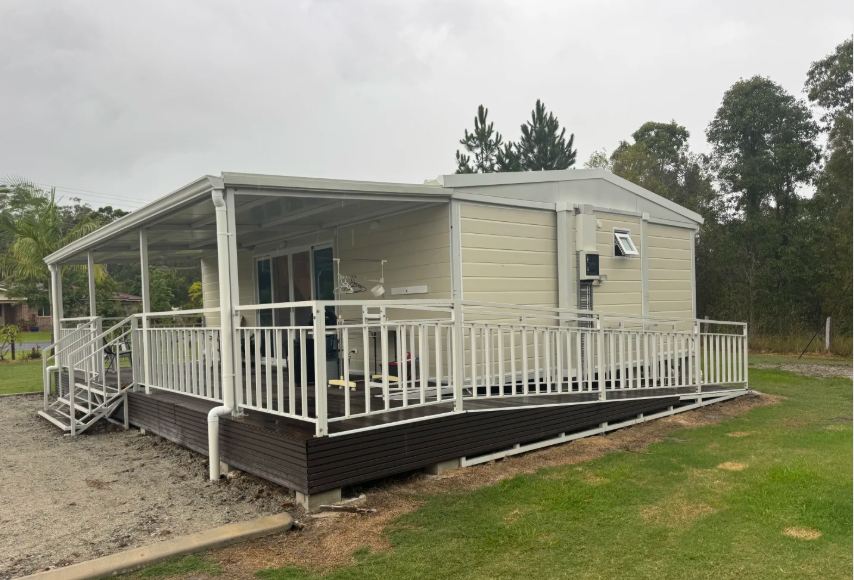
If you choose to build a home starting with a standard shipping container,you are essentially undertaking a small-scale construction project.You begin with an empty container and gradually add the various components required for a residence.
20-foot and 40-foot containers are common choices.Based on recent US market data,a used 20-foot container costs approximately$1,500–$3,000,while a new or"one-trip"40-foot high-cube container might cost around$5,500–$8,500;actual prices vary depending on the region and market conditions.These figures represent only the starting point of the project and do not reflect the total cost of a complete container home.
Significant costs arise from structural modifications.
If you need to cut large openings for doors and windows,join two containers together,remove sections of the sidewalls,or create a more spacious interior,the original container structure may require reinforcement.
This explains why the final project cost can increase dramatically after a container—originally costing just a few thousand dollars—undergoes residential conversion.
It is important to note that cutting into a container is not as simple as merely"adding a window."Removing parts of the original structure often entails structural reinforcement,engineering design,and specialized on-site construction.
Container shells are primarily made of steel,a material with high thermal conductivity.Without proper design of the walls and roof,the home may suffer from temperature control issues and condensation problems.
Consequently,converting a container into a residence typically requires the installation of insulation,interior framing,wall finishes,flooring,and ceilings.
Doors and windows represent a separate cost category,especially if you opt for large floor-to-ceiling windows or custom-made fixtures.
When a container is used as a residence,electrical,plumbing,and HVAC(heating,ventilation,and air conditioning)systems are essential.
You may need to install distribution panels,wiring,lighting,water supply lines,drainage systems,water heaters,and air conditioning units.If the home includes a kitchen and bathroom,the relevant fixtures must be connected to the overall plumbing and electrical infrastructure.
These costs often far exceed the initial purchase price of the container itself.
Once the home is completed,you must consider how it will be placed on your land.
Depending on local building codes and soil conditions,you may need foundation systems such as concrete piers,strip footings,pads,or a concrete slab.The land itself may also require grading,drainage improvements,and other site preparation work.
Transportation is another factor that cannot be overlooked.If the home must be trucked to the site,you need to consider road conditions,transport distance,and the logistics of lifting or positioning the unit upon arrival.
Labor is a cost component that can vary significantly in container conversion projects.
If you possess the necessary construction skills and handle some of the fit-out work yourself,you can reduce labor expenses.However,in some regions,structural modifications,electrical work,plumbing,and other regulated construction tasks may require completion by qualified professionals.
Therefore,a$3,000–$8,000 shipping container does not mean you can build a home for that same amount.
The true cost lies in transforming a shipping container into a fully functional living space.
Prefabricated container homes operate on a different model.
Instead of starting with an empty container,you purchase a home that has already been manufactured and fitted out in a factory.Much of the construction work is completed at the factory before the unit is transported to your project site.
Depending on the specific product and manufacturer configuration,a prefabricated container home may include the steel structure,wall and roof systems,insulation,doors and windows,flooring,electrical wiring,plumbing,bathroom and kitchen facilities,and some interior finishes.
The most important step here is to review the"Scope of Supply."Different manufacturers have varying definitions of a"finished container home."
A factory quote for a prefabricated container home might include:
Main structural framework
Wall and roof systems
Insulation system
Doors and windows
Electrical system
Plumbing system
Kitchen and bathroom
Flooring and interior finishes
Selected furniture and appliances
However,the exact inclusions depend on the manufacturer's product specifications and quotation.
For example,a factory quote of$15,000 does not mean the entire project will cost only$15,000.This figure likely represents the ex-factory or FOB price,excluding ocean freight,port charges,customs clearance fees,local transport,foundation work,and on-site installation.Even if the factory supplies a unit that is largely finished,local building codes and site conditions can still lead to additional costs.
Common additional costs associated with purchasing a prefabricated container home include:
Ocean freight
Port handling charges
Customs clearance fees
Local transport
Foundation work
Hoisting and positioning
On-site installation
Utility connections
Permits
Engineering design
Site preparation
This is why,when comparing quotes from different manufacturers,you shouldn't look solely at the price of the product itself.
The true advantage of prefabrication lies in the fact that a significant portion of the manufacturing work is completed in the factory.Instead of having local crews handle cutting,framing,insulation,utilities,and interior finishing on-site,parts of this work are completed beforehand,and the finished unit is then transported to the location.
For a single standardized unit,this approach allows for a more centralized production process.This advantage is often even more pronounced in projects requiring multiple identical or similar units—such as resorts,worker housing,camps,or batch backyard dwelling projects.
Ultimately,you need to calculate the total cost based on the unit's price upon delivery and installation,rather than just the factory quote.
A practical calculation method is:
Total Cost of Prefab Container Home=Factory Price+Shipping+Local Delivery+Foundation+Installation+Utilities+Permits
This figure provides a much more accurate estimate of your actual project budget.
There is no one-size-fits-all answer to this question,as the two methods simply allocate costs to different stages of the process.
If you choose a container conversion,your initial purchase cost may be lower,but you will have to handle more on-site construction work.You will need to coordinate structural modifications,insulation,interior finishing,electrical and plumbing systems,and various trades.This approach may be more suitable if you already own a suitable container,possess construction experience,or have access to reliable local contractors.
Prefabricated container homes usually come with a higher price tag because a significant portion of the construction is completed in the factory.However,the work required on-site is often drastically reduced—especially if the unit arrives with most of the interior finishing already done.
| Cost Factor | Container Conversion | Prefabricated Container Home |
|---|---|---|
| Starting Point | Empty shipping container | Factory-prefabricated unit |
| Primary Labor | Local construction | Factory production |
| Structural Modification | Usually required | Mostly completed |
| Interior Finishing | Done locally | Usually partially or fully factory-completed |
| Transportation | Container transport | Finished unit transport |
| On-site Construction | Still required | Still required |
| Customization | High flexibility for on-site customization | Depends on manufacturer design and production capabilities |
| Construction Time | Usually longer | Usually shorter on site |
| Best Suited For | Personalized projects | Standardized or batch projects |
The real comparison shouldn't be between the price of a raw container and a prefab unit,but rather the final project cost once both reach the same level of completion.
For example,suppose you need a container home of approximately 320 square feet.One option might involve purchasing a container for just$5,000,but this would require extensive local work on structural modifications,insulation,utilities,and interior finishing.Another option might involve a higher factory price,but the unit would already include these systems.
While the first option appears to have a lower starting price,the final project cost could end up being very similar to that of the second option.
Therefore,when determining which method is cheaper,the most important step is to compare exactly what is included in each quote.
When creating a budget,the total cost of a container home can be broken down into four components:the house itself,transportation,site preparation and construction,and costs related to regulations and utilities.
The cost of the house includes the container itself plus any subsequent modifications,or the factory price for a prefabricated container home.For conversion projects,you must consider structural modifications,insulation,interior finishing,and building systems;for prefabricated homes,you need to verify exactly which features and equipment are included in the factory quote.
Transportation costs are particularly significant when purchasing prefabricated container homes internationally.Ocean freight,port handling,customs clearance fees,and final-mile delivery all impact the landed cost.The distance from the port to your land adds to transport expenses,and on-site road conditions may influence the choice of transport vehicles and lifting equipment.
Next are the costs for site preparation and construction.Your land may require grading,drainage,and foundation work,such as a concrete slab or pier foundation.If the site lacks existing electricity,water supply,or sewage systems,connecting utilities can cost thousands or even tens of thousands of dollars.
Finally,there are costs for permits,engineering design,and inspections.If the container home is intended as a permanent residence,it must comply with local building codes.Regulations vary by city,state,or country and may cover structural design,building permits,and on-site inspections.
Therefore,you can use the following formula for estimation:
Total Container Home Cost=House Cost+Transportation+Foundation+Site Preparation+Installation+Utilities+Permits&Engineering
This is the key figure for determining whether your budget is sufficient.
The home's size directly affects the price,though costs do not necessarily scale linearly with the square footage.
A 20-foot container has an exterior footprint of approximately 160 square feet;after accounting for wall thickness and internal structures,the actual usable area is smaller.It is suitable for a small studio,a guest room,or compact living quarters.
If you opt for a full kitchen,bathroom,HVAC system,and high-end finishes,the overall cost can rise significantly,even if the home's footprint remains small.A 40-foot shipping container has an exterior footprint of approximately 320 square feet,offering ample space for a studio or one-bedroom layout.Current market data in the U.S.indicates that a professionally finished 40-foot container home typically costs between$40,000 and over$100,000,depending on specifications and location.
Using two or more containers increases the project's complexity.While this allows for larger living rooms and bedrooms,as well as separate kitchen and bathroom areas,joining multiple containers often requires additional structural work and foundation construction.
For instance,two 40-foot containers provide a combined exterior footprint of about 640 square feet,though the actual interior living space will be somewhat smaller due to wall thickness and connection areas.Estimates in the U.S.market suggest that a two-container home costs roughly$80,000 to$175,000,with high-end projects or sites with complex construction requirements potentially exceeding this range.
This is why simply comparing the"price per square foot"is not always accurate.
Even a small container home requires a kitchen,bathroom,HVAC,electrical systems,and utility hookups;these fixed costs must be absorbed by a smaller total area.Consequently,the cost per unit of area can actually be higher for smaller homes.
As the home's size increases,certain fixed costs can be spread across a larger usable area,though adding more containers introduces new expenses related to connections,foundations,and interior finishing.
The cost of building a container home depends less on the price of the steel container itself and more on the amount of work required to transform it into a fully functional residence.
If you start with a standard container and handle the conversion locally,a basic project might cost between$25,000 and$60,000;conversely,a fully finished single-container home completed by a professional team could cost anywhere from$60,000 to over$100,000.For a large residence composed of multiple containers,the total cost could exceed$150,000–$200,000.
If you opt for a prefabricated container home,the factory price may be lower than the final project budget,as costs for transportation,foundations,installation,utilities,and local permits must be calculated separately.
Therefore,when comparing these two options,the most sensible approach is not simply to look for the lowest quote,but to evaluate them against the same set of criteria:
What exactly are you getting?What is included in the quote?What work remains to be done locally?What is the total cost to make the home fully operational?
If you are considering sourcing a prefabricated container home from China,WZHHouse—a Chinese manufacturer of container homes—can provide various types of container homes and customized spatial solutions.
Compared to locally modifying a standard shipping container,factory prefabrication allows for the completion of the structure,insulation,doors and windows,interior finishes,and some utility systems in advance,thereby reducing on-site work.Single units can be configured to meet specific needs;for orders of five,ten,or more units,standardized production and batch manufacturing make it easier to control product specifications and overall costs.
If you would like to know the actual cost of sourcing a container home from China,it is recommended that you provide the following information when inquiring:
Project purpose:Residence,ADU(Accessory Dwelling Unit),vacation rental,worker dormitory,etc.
Quantity required
Home dimensions or floor plan
Destination country and city
Desired configuration and finishing standards
WZHHouse can provide a corresponding product proposal and quote based on this information.Rather than focusing solely on a seemingly low factory price,it is more important to verify the product configuration,scope of supply,shipping method,and the work required upon arrival;this ensures you get a more accurate picture of the project's total cost.
If you have already determined the quantity,dimensions,and destination,you can contact WZHHouse directly to obtain a specific container home proposal and quote.



Copyright © Hebei Weizhengheng Modular House Technology Co., Ltd. All Rights Reserved
Sitemap


 +8615081877521
 +8615081877521