- icy@wzhgroup.com
- +86 15081877521


If you are looking to purchase a container home to serve as a residence for your family,a standard 40-foot container unit might feel a bit cramped—especially for families with children who require more room for activities and privacy.
For a family of 3 to 4 people,a 2-story container home is often the best choice.It allows everyone to have their own separate sleeping area while providing more spacious living zones.
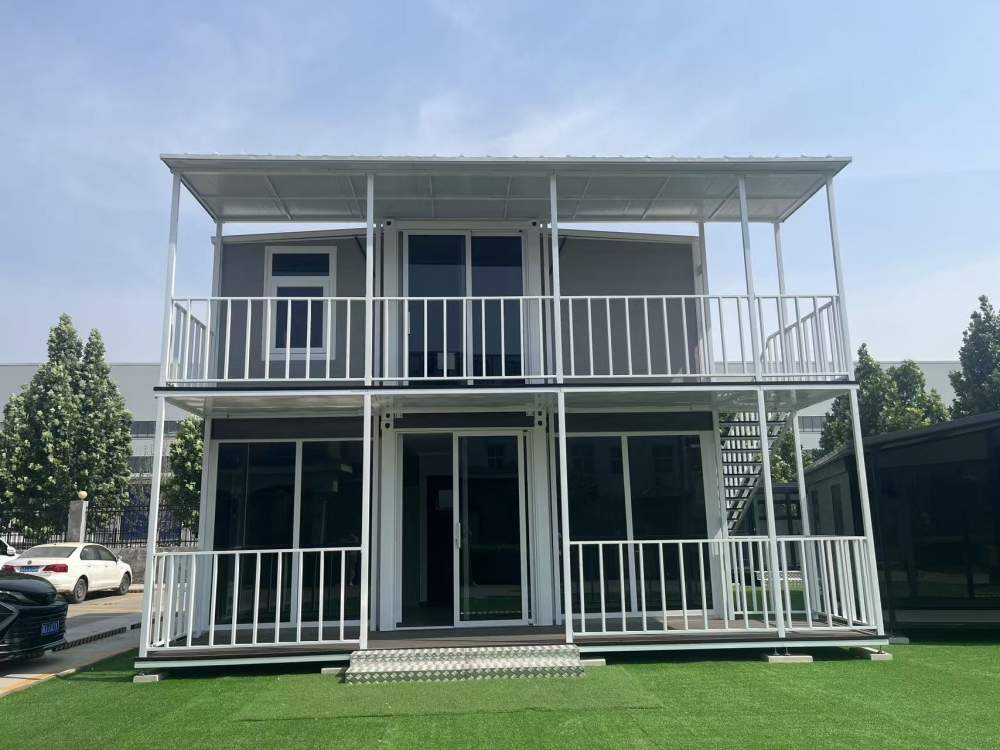
Most 2-story container homes can comfortably accommodate 3–5 people,depending on the floor plan and available living space.
When designing a family home,the number of occupants is a crucial factor influencing spatial planning.
In 2-story container homes,separating common living areas from sleeping quarters effectively maximizes space utilization and enhances privacy for family members.
These homes typically offer ample living space for couples or families of three.Even for families of four or five,long-term living needs can be met provided the number of bedrooms and storage solutions are well-planned.
When first exploring container homes,many people worry that the space might feel too confined.However,actual projects show that families prioritize functionality and layout over raw square footage.
Family Size | Comfort Level |
2 People | Very Spacious |
3–4 People | Ideal |
5 People | Comfortable |
6+ People | Depends on Layout |
A family-friendly 2-story container home separates daily living areas from private sleeping spaces,creating a more comfortable living environment.
For family homes,a sensible floor plan is often more important than simply increasing the number of rooms.
Most 2-story homes utilize a vertical zoning design,placing communal family areas on the ground floor and bedrooms on the upper floor.This layout aligns with the lifestyle habits of most families and improves space efficiency.
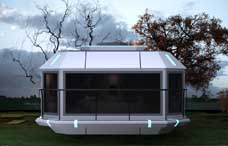
Taking the WZHHouse 2-story expandable container home as an example:the ground floor includes a living room,dining area,open-concept kitchen,bathroom,and one bedroom.The open design minimizes partitions,making the communal area feel more airy and spacious.
The upper floor features a small lounge area and two bedrooms,providing family members with relatively independent sleeping quarters.A ground-floor bedroom also offers greater flexibility for users who live with elderly family members,require a guest room,or plan to set up a home office.
A two-story container home generally offers less total space than a traditional house,but its lower two-story container home cost provides superior space efficiency and better overall value for many buyers.
Many people compare container homes to traditional houses when evaluating them.
In terms of floor area,traditional houses usually offer more interior space.However,from a practical standpoint,container homes often achieve higher space utilization through compact design.
For families with limited budgets who want to move in quickly or desire a modern architectural style,a two-story container home is a compelling option.
Home Type | Sense of Space | Cost | Flexibility |
Container Home | Compact but Efficient | Lower | High |
Traditional House | Spacious | Higher | Medium |
Modular Home | Balanced | Medium | Medium |
The sense of space depends more on design quality than on the container size alone.
When looking at floor plans,many people focus first on the square footage.
However,the actual living experience is influenced by far more than just the number of square meters.Two homes with the same floor area can offer completely different living experiences.
Open-plan living room and kitchen designs often enhance the sense of visual continuity,making common areas feel more spacious.Large windows and abundant natural light help create an airy,open atmosphere.
At the same time,factors such as staircase placement,ceiling height,and storage planning affect how efficiently space is used.Therefore,excellent design is often more important than simply increasing the floor area.
Yes.A well-designed and properly insulated container home can serve as a comfortable,long-term residence for families.
Long-term living requires not only adequate space but also a high level of comfort.
Modern container homes typically incorporate thermal insulation,heat-blocking materials,double-glazed windows,and ventilation systems to improve the indoor environment.With thoughtful design,the living experience can meet the needs of most families.
When choosing a home,you should focus on build quality,thermal performance,structural safety,and long-term maintenance costs,rather than just the exterior design.
For families seeking a cost-effective housing solution,two-story container homes have become an increasingly popular choice.
A two-story container home is best suited for couples,small families,and medium-sized households.
Different family sizes have varying spatial needs.
For couples,a two-story layout typically offers ample living space,allowing for the inclusion of a home office or a hobby room.
For families of three to four people,this type of home often strikes a good balance between comfort and cost-effectiveness.
For households with five or more members,greater attention must be paid to bedroom configuration and storage planning to ensure long-term livability.
Interest in two-story container homes is rising in the residential market,primarily because they balance cost control with efficient space utilization.
However,there are structural limitations—particularly regarding floor area and design layout—that require thorough assessment during the planning stage.
One of the most obvious advantages is the relatively low overall construction cost.
Compared to traditional brick-and-concrete homes,two-story container homes can typically save 20%–40%on total costs.These savings stem from bulk material purchasing made possible by factory prefabrication and reduced labor expenses due to shorter on-site construction times.
Beyond cost benefits,construction efficiency is another key feature.The total construction timeline is often 30%–60%shorter than that of traditional homes,making this a highly attractive option for families eager to move in quickly.
Regarding space utilization,a two-story structure allows for the separation of public and private areas.The ground floor is typically used for family activities,while the upper floor serves as the sleeping area;this layout mirrors traditional home design,making it more readily accepted by families.
Additionally,these buildings offer excellent scalability.As family needs change,modules can be added or internal layouts adjusted later on,allowing the home to adapt and grow with the family.
Despite their clear advantages,two-story container homes come with limitations that cannot be overlooked.
First,the total usable floor area is relatively limited.For the same budget,the interior usable space is often smaller than that of some traditional suburban homes;therefore,the planning phase must prioritize space efficiency rather than simply chasing square footage.Next is the issue of storage space.Without a systematic storage design from the outset,the living space can easily become cramped or cluttered—a problem that is particularly pronounced in households with many members.
Additionally,building codes and approval requirements vary by region.In some areas,container homes may require additional approval processes,which adds uncertainty to the project.
Finally,design quality plays a crucial role.An inefficient layout—such as excessive circulation paths or unclear zoning of functional areas—can compromise the overall living experience,even if the total floor area is sufficient.
Two-story container homes serve purposes far beyond that of primary residences.Their flexible structure allows them to adapt to diverse lifestyles,site conditions,and investment strategies.
With the evolution of modular construction,two-story container homes are finding applications in a wider range of scenarios,moving beyond the limitations of single-family housing.Designs can be tailored to balance comfort and functionality according to user needs,making them suitable for various environments.
This is one of the most common applications and the primary use case most users consider.
For families of three to five people,a two-story structure effectively separates communal living areas from private sleeping quarters.The ground floor typically accommodates daily activities like the living room and kitchen,while the upper floor is dedicated to rest;this layout enhances overall living comfort within a compact footprint while keeping construction costs in check.
Container homes are increasingly being used as vacation properties in coastal,lakeside,mountainous,or rural settings.
Compared to traditional villas,these homes offer shorter construction times and greater adaptability to the terrain,giving them a distinct advantage on non-standard sites.They are also easier to customize based on the landscape,allowing for better integration between the structure and the natural environment.
With their modern aesthetic and distinctive appearance,two-story container homes hold strong appeal in the short-term rental market.
For investors,the initial investment for such projects is generally lower than that of traditional guesthouses or small villas.Furthermore,the shorter construction period allows for a quicker transition to operations,thereby shortening the payback period.Farm or Rural Housing
In farming,ranching,or rural areas,these structures are frequently used as permanent residences or multi-functional homes.
Beyond meeting basic domestic needs,they can incorporate office or temporary storage spaces,thereby enhancing land-use efficiency.For users who need to balance productive activities with daily living,this type of structure offers great practicality.
For families requiring extra living space,two-story container homes can serve as independent guest houses or accessory dwelling units.
Some families use them as living quarters for aging parents,independent living areas for adult children,or accommodation for long-term guests.This approach increases overall living flexibility and land-use efficiency without placing a burden on the main house.
How many bedrooms can a two-story container home accommodate?
Most two-story container homes designed for family living can accommodate 2–4 bedrooms,depending on the overall layout and the specific combination of containers used.
With smart space planning—such as optimizing traffic flow and functional zoning—it is possible to achieve high living efficiency within a limited footprint.
Can a family of five live comfortably in a two-story container home?
Yes.Many two-story container homes are specifically designed to meet the needs of a family of 4–5 people.
As long as the number of bedrooms and the allocation of communal spaces are well-planned,a family of five generally won't feel cramped;a layout that separates living areas across the two floors can further balance the living experience.
Are two-story container homes safe for children?
Yes,they are safe.When designed and constructed to residential building standards,container homes offer structural safety comparable to traditional houses.
Additionally,safety features—such as secure stair railings and safe window/door designs—can further enhance safety for family use.
For a family home,floor area is just one factor to consider.More importantly,the spatial layout must be logical,and the various functional areas must meet actual lifestyle needs.
Products like the WZHHouse two-story expandable container home,the design effectively separates public activity areas from private living spaces,balancing comfort,practicality,and flexibility.
If you have a household of three to five people and are looking for a modern,cost-effective,and rapidly deployable housing solution,a two-story container home is certainly worth serious consideration.



Copyright © Hebei Weizhengheng Modular House Technology Co., Ltd. All Rights Reserved
Sitemap

 +8615081877521
 +8615081877521