- icy@wzhgroup.com
- +86 15081877521


When purchasing modular housing,many clients initially focus primarily on"price"and"aesthetics,"often overlooking a far more critical issue:the reliability of their OEM partner.
If this crucial step is mishandled,you may easily encounter a host of subsequent problems,such as:
Repeated delays in delivery timelines,preventing the project from ever getting off the ground.
Discrepancies between the physical structure and the design blueprints,leading to difficulties during on-site installation.
Substandard structural integrity or materials,compromising user safety.
Inefficient communication,where issues persist despite repeated clarification attempts.
A lack of technical support post-delivery,resulting in ever-increasing maintenance costs.
To put it more pragmatically,some projects fail not because of flaws in the design concept,but simply because the"wrong partner was chosen."Therefore,before placing a formal order,taking the time to thoroughly evaluate your OEM partner is,in essence,a proactive measure to help you mitigate far greater risks down the road.
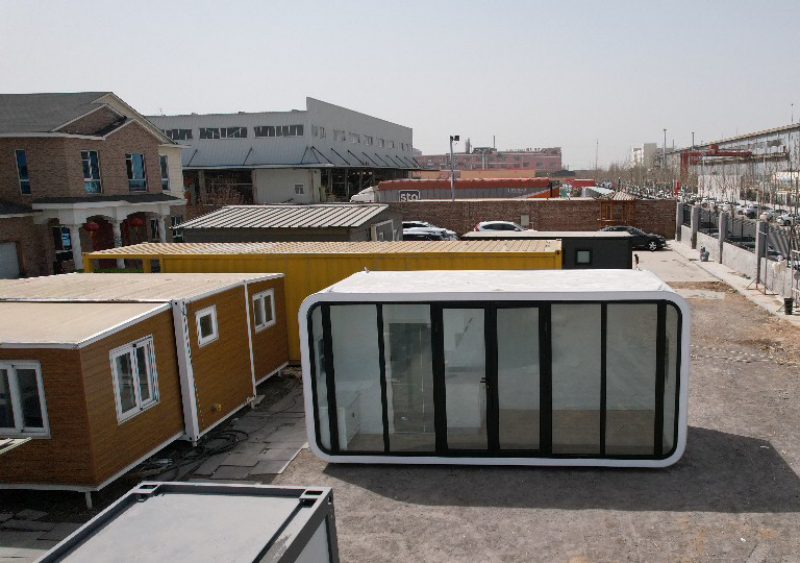
Your OEM partner directly determines whether your project can be successfully realized—on time,to specification,and within budget.Unlike traditional construction,modular housing relies heavily on factory prefabrication.Consequently,if issues arise during the production phase,there is virtually no"room for remediation"once the components arrive on-site.
A reliable OEM partner can typically help you resolve these critical challenges:
More Stable Project Timelines:Standardized production processes combined with mature workflows significantly reduce uncertainties.
Greater Quality Control:Rigorous quality checks are applied to everything from raw materials to structural components.
Smoother Project Execution:Seamless integration between design and production minimizes the need for rework.
Efficient Logistics and Installation:Transportation and assembly logistics are carefully planned and optimized in advance.
Greater Peace of Mind in Long-Term Collaboration:Future expansions or repeat orders become much simpler and hassle-free.
In other words,a competent OEM is more than just a"manufacturer";they serve as the dedicated execution team supporting your entire project.
During the actual vetting process,we recommend looking beyond mere price quotes and instead conducting a comprehensive assessment across multiple dimensions.Many projects encounter problems later on precisely because the initial evaluation was not sufficiently thorough.
The following key points will help you more clearly determine whether a potential OEM partner is truly reliable.
Production capacity may seem like a fundamental requirement,yet it directly impacts the smoothness and reliability of the final delivery.During initial consultations,many clients tend to focus solely on samples or individual units,often overlooking the realities of mass production.
A mature manufacturer typically possesses large-scale production facilities and a stable output capacity.They are equipped to handle not only small-scale projects involving a few dozen units but also orders of hundreds—or even larger scales.Furthermore,the standardization of production processes is critical,as it directly determines the consistency of every product batch.
Simply put,if a manufacturer lacks a stable production foundation,a sudden surge in orders can easily lead to scheduling delays,ultimately jeopardizing the entire project timeline.
Modular housing is not merely about"building it";more importantly,it is about"designing it sensibly."Fundamentally,it is a product born from the deep integration of design and manufacturing.
Experienced OEM manufacturers typically engage in design optimization early in the process—for instance,adjusting structural elements and insulation systems to suit the specific climatic conditions of the destination country—rather than simply replicating blueprints verbatim.At the same time,they can provide appropriate customization based on project requirements,ensuring the solution aligns closely with actual usage scenarios.
If a supplier merely manufactures strictly according to provided drawings,and the original design contains flaws,there is virtually no room for subsequent adjustments;consequently,the entire risk falls squarely upon the buyer.
The choice of materials directly determines the service life and safety of a modular home.While this distinction may not be immediately apparent,the differences become increasingly significant over the course of long-term use.
During consultations,it is crucial to inquire whether the steel structure has undergone anti-corrosion treatment(such as hot-dip galvanizing);whether the thickness and performance of the insulation materials meet the requirements of the intended region;and whether the overall product complies with international standards,such as CE or ISO certification.
Experienced buyers typically look beyond the initial procurement cost,placing greater value on long-term stability and maintenance costs throughout the product's entire lifecycle.
The most direct way to assess a manufacturer's reliability is to examine the projects they have successfully completed.
A mature OEM partner will typically have a portfolio of completed projects across various countries and application scenarios—including residential housing,workforce camps,commercial spaces,and more.Moreover,these case studies should be verifiable,rather than existing merely as renderings or conceptual presentations.
This is because the requirements for structural design,transportation logistics,and installation procedures for modular housing vary significantly depending on the specific application scenario.Manufacturers with practical,real-world experience are often able to anticipate potential issues in advance,thereby minimizing uncertainties throughout the project execution phase.
Theoretically,modular units are standardized products;however,in practical application,very few projects can simply be executed by"copying a template"verbatim.
A flexible OEM partner can typically adjust dimensions and optimize internal layouts according to specific requirements,while also supporting personalized designs regarding aesthetics and functionality.This ensures the product aligns more closely with its specific use case,rather than being constrained by the limitations of the product itself.
If the scope for customization is too limited,it often necessitates constant compromises during later stages,ultimately compromising the overall user experience.
Most modular housing projects involve cross-regional—or even international—transportation.This phase is often underestimated,yet it is absolutely critical.
An experienced manufacturer will not only provide a clear production timeline but also factor transportation considerations into the design phase—for instance,how to maximize container utilization rates or minimize shipping volume.Such details can often have a direct impact on overall project costs.
Furthermore,possessing mature export experience is vital,as it directly affects the smoothness of customs clearance,shipping,and final delivery.
Many people assume that a transaction is complete once the product has been shipped;however,in reality,the true challenges often emerge during the installation and operational phases.
Reliable OEM container house manufacturers typically provide comprehensive technical support—including installation guides,remote assistance,and even spare parts supply services.These services,which may appear to be mere"add-ons,"are actually critical in real-world projects,particularly those located overseas.
Without such support,the cost of resolving issues that arise on-site can be prohibitively high.
Communication is a factor that is easily overlooked,yet it has a significant practical impact.
If early-stage communications are plagued by slow response times,vague information,or unclear quotations,these issues will likely be amplified during subsequent stages of collaboration—potentially even jeopardizing the project timeline.
Conversely,a partner with smooth communication channels typically employs clear processes and well-defined feedback mechanisms,making the entire project progression more efficient and manageable.
In the actual procurement process,many issues can actually be avoided in advance.Rather than constantly engaging in"damage control"during the later stages,it is far better to invest a little extra time upfront to clearly identify and verify key points.
The following are some details that are frequently overlooked when vetting potential OEM partners.
Price is often the first factor you notice,but it is also the one most likely to lead to an incomplete or biased judgment.In many cases,a low price may mask compromises made regarding materials,workmanship,or production standards.
It is only after the product is put into actual use that problems begin to surface—such as inconsistent quality,increased rework requirements,or even delivery delays—ultimately making the entire endeavor more expensive in the long run.
Therefore,a more prudent approach is to evaluate quality,delivery capabilities,and long-term operational costs collectively,rather than fixating solely on the quoted price.
While many modular buildings may appear similar on the surface,the actual internal materials and structural standards can vary significantly.If you fail to clearly verify compliance with relevant certifications—such as structural safety,thermal insulation performance,or fire resistance ratings—during the initial stages,you may be planting the seeds of potential hazards for the future.
This step is absolutely indispensable,particularly for export projects or projects intended for long-term use.
Many manufacturers will present you with renderings or promotional brochures;however,these serve primarily as"showpieces"and do not necessarily reflect their actual delivery capabilities.
Of far greater reference value are completed projects that have already been implemented and are currently in active use.By examining these real-world examples,you can gain a more intuitive understanding of how the product performs in an actual operating environment,as well as gauge the manufacturer's overall reliability in project execution.
If this verification step is skipped,it becomes quite common to encounter discrepancies between expectations and reality later in the process.
In some instances,you may proceed to place an order before your requirements have been fully clarified—for example,while specifications regarding dimensions,functionality,or configurations remain in a vague or preliminary stage.
The risk associated with this approach is that if adjustments become necessary later on,not only will costs inevitably rise,but the entire project timeline may also be disrupted.Although modular products offer flexibility,they cannot be fundamentally overhauled at a moment's notice.Taking the time to think through your requirements thoroughly upfront will make the entire process much smoother and easier later on.
Communication issues may not be immediately apparent,but they can easily become amplified as a project progresses.
Factors such as slow response times,unclear messaging,or misunderstandings can all evolve into operational bottlenecks during the later stages,thereby disrupting the entire project rhythm.
Conversely,if communication flows smoothly,you will find that many potential issues can actually be resolved proactively,making the entire project execution process far less stressful and more efficient.
For many overseas clients,selecting a container house manufacturer with mature experience and stable operations is,in essence,a strategy to mitigate project risks and minimize the costs associated with trial and error.This is particularly true in the modular construction industry—a sector heavily reliant on robust supply chains and seamless engineering coordination—where a reliable OEM partner often serves as the decisive factor in whether a project can be successfully brought to fruition.
Mature Production System:WZHhouse possesses a comprehensive system for large-scale manufacturing,boasting an annual production capacity exceeding 100,000 square meters.This capability enables us to meet the delivery requiremWhen purchasing modular housing,many clients initially focus primarily on"price"and"aesthetics,"often overlooking a far more critical issue:the reliability of their OEM partner.ents of projects across a wide spectrum of scales.
Extensive Export Experience:WZHhouse products have been exported to over 100 countries and regions,serving a diverse range of applications including residential housing,workforce camps,commercial spaces,and temporary structures.
Comprehensive Engineering Support:Beyond product manufacturing,WZHhouse provides end-to-end engineering support,guiding clients through every stage from initial design to final project completion.
Flexible Customization Capabilities:In real-world projects,requirements are rarely entirely standardized;consequently,the ability to offer flexible customization is of paramount importance.
Standardized Quality Control System:Regarding quality management,WZHhouse strictly adheres to international standards throughout its production processes,ensuring that our products meet global market requirements for both safety and durability.We hold both CE certification and ISO 9001 Quality Management System certification.
Ultimately,selecting an OEM partner is not merely a simple procurement transaction;rather,it is the act of choosing a collaborative execution team for the long term.
Choose correctly,and your project will proceed more smoothly,timelines will be more controllable,and overall costs will be easier to optimize.Choose incorrectly,and you will often find yourself constantly"plugging holes"in the aftermath—a process that repeatedly drains your time,budget,and energy.
For clients currently planning modular housing projects,it is far more prudent to invest a little extra time upfront to thoroughly vet potential partners than to spend the later stages of the project constantly resolving issues.Many costs that appear to be"saved"during the initial planning phase often end up multiplying exponentially during the actual project execution phase.
A truly reliable OEM partner delivers more than just a product;they provide a sense of certainty and stability for the entire project.Compared to short-term,low-cost solutions,the capacity for stable,long-term collaboration is invariably the more valuable asset.



Copyright © Hebei Weizhengheng Modular House Technology Co., Ltd. All Rights Reserved
Sitemap


 +8615081877521
 +8615081877521