- icy@wzhgroup.com
- +86 15081877521


For investors planning to develop hotels,resorts,or campsites,container accommodation offers an alternative to traditional construction.Factory-prefabricated accommodation units can have part of their structural work and interior finishing completed in advance before being transported to the project site for installation.This approach is suitable for commercial projects seeking to control construction timelines,expand in phases,or create distinctive accommodation experiences.
However,container accommodation does not necessarily mean lower project costs,nor is every site suitable for this solution.Investors need to evaluate the commercial viability of a project based on land conditions,local building regulations,room positioning,operating costs,and expected revenue.
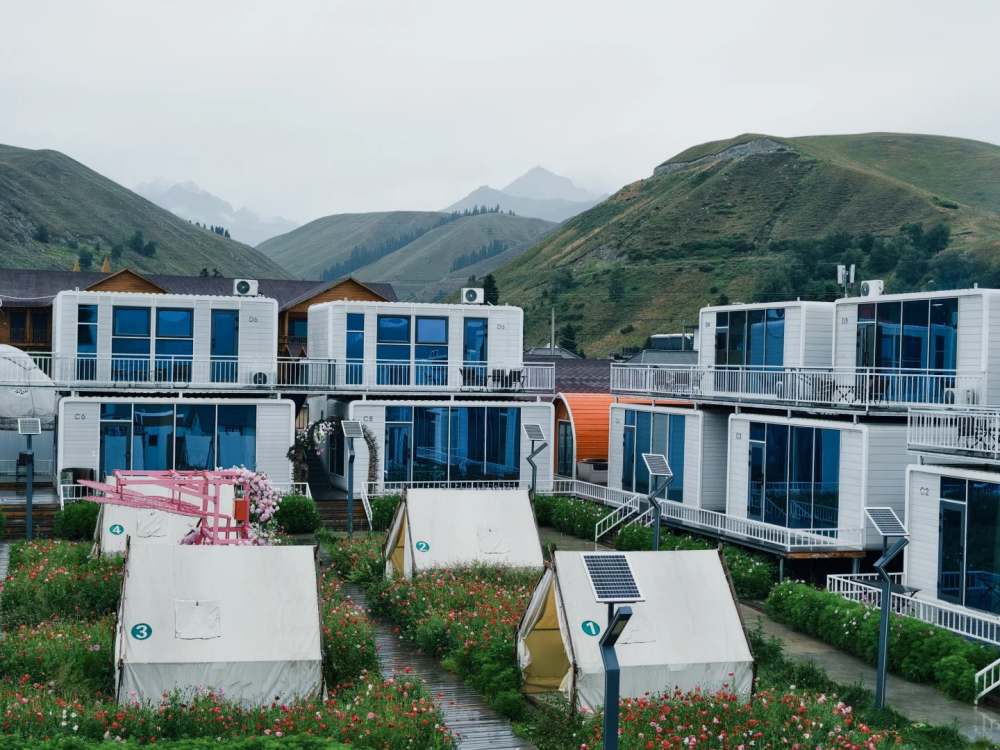
Tourism demand provides a market foundation for distinctive accommodation projects.According to data released by Eurostat,tourist accommodation establishments in the European Union recorded approximately 3.1 billion overnight stays in 2025,representing an increase of about 2.2%.This reflects growing demand for tourist accommodation in Europe,but it does not directly demonstrate the market size or investment returns of container hotels.Eurostat
In the container hotel market,Intel Market Research estimates that the global market was worth approximately$1.45 billion in 2025 and projects it to reach$3.18 billion by 2034,with a compound annual growth rate of 9.7%during the forecast period.These figures are third-party market estimates rather than official statistics.Different research organizations may use different market definitions and calculation methods.Intel Market Research
For hotel and resort operators,the practical value of container accommodation lies primarily in project planning.Accommodation units can be manufactured in batches according to standardized specifications,or configured with bathrooms,furniture,and interior layouts to suit different room types.Operators can build an initial portion of the rooms and decide whether to expand based on occupancy rates and business performance.
This approach is particularly suitable for resorts,nature camps,ecotourism projects,and seasonal accommodation sites.However,investors still need to confirm land use,building permits,fire safety standards,and infrastructure conditions.The fact that a unit can be transported or relocated does not automatically mean that the project is exempt from approval requirements.
Container accommodation units can have most of their structural production,wall installation,and interior finishing completed in the factory before being transported to the project site for installation.For some highly prefabricated products,the factory prefabrication rate can reach approximately 90%.For large or combined units,on-site installation can typically be completed within 1–2 days with a team of 4–6 people.The actual timeframe depends on the product structure,installation conditions,and site readiness.
Compared with traditional construction,factory prefabrication allows unit production and site preparation to proceed simultaneously,reducing the amount of work that needs to be completed on-site.
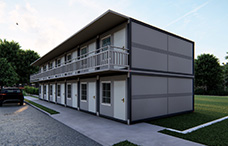
Container accommodation can be designed with different room layouts according to the positioning of a hotel or resort,including standard rooms,family rooms,accommodation units with private bathrooms,and resort rooms with private terraces.Projects can use standardized specifications for bulk purchasing or adjust interior layouts and facilities to suit different guest groups.
For projects planning to build 20,50,or more rooms,standardizing room types and equipment specifications in advance helps simplify procurement,production,and subsequent maintenance.The actual number and combination of available room types must be determined according to unit dimensions,site layout,and local building requirements.
Unlike traditional buildings,which are usually fixed in their original locations,container accommodation units designed with detachable and lifting-friendly structures can be relocated and reused elsewhere when transportation and site conditions permit.For example,when a leased site reaches the end of its term,a resort needs to adjust its layout,or a project changes operating locations,operators can assess the possibility of transferring existing accommodation units to a new site rather than abandoning them.
This flexibility is particularly valuable for seasonal tourism projects and temporary accommodation facilities.Before relocation,operators still need to inspect structural conditions,lifting requirements,utility connections,transportation routes,and approval requirements at the new site.Actual relocation time and costs depend on unit dimensions,transportation distance,and the amount of dismantling and reassembly required.They cannot simply be estimated using the transportation costs of ordinary goods.
The advantages of container accommodation extend beyond mobility.When a project's purpose changes,owners may have the opportunity to continue using the units or resell them to other operators.If the room structures,interiors,and equipment remain in good condition,the units may be suitable for other resorts,campsites,tourist accommodation projects,or temporary accommodation facilities.
For investors,this means that when a project ends,relocation,reuse,and second-hand sales can be considered as alternatives to demolition or disposal.Considering detachable connections,standard specifications,and easy-to-maintain materials during the procurement stage can help improve the feasibility of future reuse.
However,resale does not guarantee recovery of the original investment.The actual selling price depends on service life,maintenance condition,product specifications,transportation and refurbishment costs,and second-hand market demand.Investors are advised to treat resale income as a potential benefit in their financial models rather than a guaranteed return.
Container accommodation can be equipped with insulation,thermal protection,moisture control,ventilation,air conditioning,and soundproofing systems according to the local climate.In areas with hot summers,cold winters,or high humidity,particular attention should be paid to wall and roof insulation materials,window and door performance,air circulation,and waterproofing design.
During procurement,investors are advised to request clear material specifications,thickness measurements,and relevant performance documentation from the manufacturer,and have these reviewed against local building regulations.Comfort affects not only guest reviews but also long-term energy consumption and maintenance costs.
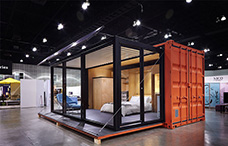
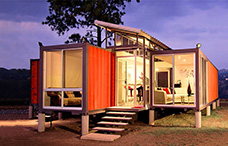
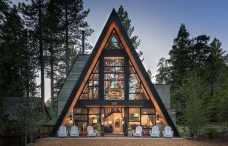
Container accommodation can feature modern minimalist designs,natural wood finishes,or other customized exterior styles,combined with picture windows,private terraces,and outdoor seating areas to help resorts create distinctive accommodation experiences.
For nature tourism,glamping,and short-stay vacation projects,design should consider visual appeal,guest privacy,indoor comfort,and long-term maintenance.Projects can first define their target guests and room types before selecting suitable exterior designs and interior configurations.This helps avoid spending too much of the budget on appearance while overlooking the features that genuinely affect the guest experience.
The cost of container accommodation depends on room dimensions,interior configurations,order quantities,and on-site installation conditions.Basic accommodation units generally cost less than rooms equipped with complete bathrooms,air conditioning,and upgraded interiors.When comparing quotations,investors should carefully check the product specifications rather than focusing only on factory prices.
The following figures are for budget estimation only.They are not verified market averages and do not represent actual quotations from WZHHouse.
Product Configuration Assumed Unit Price Procurement Cost for 20 Units
Basic$15,000$300,000
Mid-range$25,000$500,000
High-end$40,000$800,000
The total project budget must also account for transportation,lifting and installation,foundation construction,utilities,approvals,landscaping,and opening preparations.Actual costs depend on the project location and the scope of construction.Further confirmation should be obtained through supplier quotations and estimates from local contractors.
According to HVS's 2026 U.S.Hotel Development Cost Survey,based on project budgets for 2025,the median development cost per room for the surveyed U.S.hotel projects was approximately$213,000.This figure covers traditional hotel development costs and cannot be directly compared with the purchase price of an individual container accommodation unit.
Factory-prefabricated accommodation can reduce some on-site construction work,but the actual savings still depend on transportation,site preparation,infrastructure,and local approval requirements.To accurately compare different construction solutions,investors should focus on calculating the total cost per guest room ready for commercial operation,rather than just the factory purchase price.
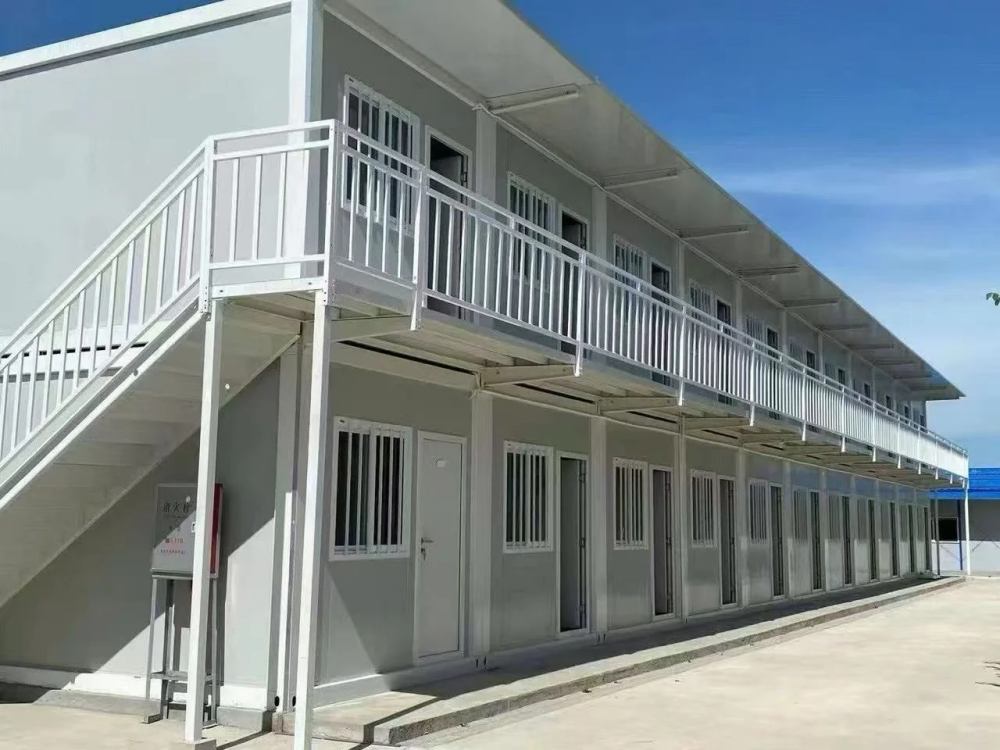
The return on investment for container accommodation depends on room revenue,occupancy rates,average daily rate(ADR),and actual operating expenses.Factory prefabrication may help shorten part of the on-site construction period,but whether a project can open earlier also depends on approvals,foundation work,transportation,and equipment commissioning.
The following hypothetical project illustrates how to conduct an initial calculation.
Project Metric | Assumed Value |
|---|---|
Number of Rooms | 20 |
Average Daily Rate (ADR) | $180 |
Average Occupancy Rate | 60% |
Annual Room Revenue | $788,400 |
Assumed Operating Expense Ratio | 55% |
Estimated Operating Surplus | $354,780 |
Assumed Total Project Investment | $1,200,000 |
Simple Payback Period | Approximately 3.38 years |
Annual room revenue is calculated as follows:20 rooms×365 days×60%occupancy×$180,resulting in$788,400.Assuming operating expenses account for 55%of room revenue,the annual operating surplus is$354,780.Dividing the assumed total investment of$1,200,000 by the annual operating surplus gives a simple payback period of approximately 3.38 years.
This is a hypothetical example intended only to demonstrate the calculation method.It is not an industry average or a guarantee of returns.Actual projects need to account for other revenue,such as food and beverage sales,staff wages,booking platform commissions,utilities,cleaning,repairs,insurance,taxes,financing costs,and seasonal fluctuations.The operating surplus above is also not equivalent to net profit or distributable cash flow.The simple payback period does not account for financing,taxes,depreciation,or subsequent capital expenditures.
Investors should use actual room rates and occupancy rates from comparable local accommodation businesses to develop conservative,base-case,and optimistic scenarios.An investment plan is generally more robust if the project can still cover its fixed costs at low occupancy rates.
A comfortable accommodation environment is fundamental to guest satisfaction.Container guest rooms should prioritize insulation,soundproofing,ventilation,natural lighting,and bathroom facilities,while arranging beds and storage space according to the needs of the target guests.Family vacation projects can include practical storage areas and flexible bed layouts,while couples'and leisure-oriented accommodation can enhance the experience through picture windows,private terraces,and private spaces.
Container accommodation can use distinctive architectural styles and the surrounding natural environment to create recognizable vacation experiences.Large picture windows,outdoor seating areas,personalized interiors,and designs that complement the natural surroundings can all become defining features of a project.Operators should determine their design direction according to site conditions and target guests rather than pursuing visual uniqueness alone.
Room cleanliness,equipment reliability,and everyday convenience all affect the overall guest experience.Using durable,easy-to-clean finishing materials,installing reliable bathroom and air-conditioning equipment,and maintaining consistent facility standards across rooms can help reduce maintenance work and guest complaints.Before placing a bulk order,operators can first confirm the materials,equipment,and finishing quality of a sample room before finalizing the production standards.
Marketing for container accommodation should highlight genuine experiential value rather than focusing solely on the building format.Projects can establish their brand positioning around the natural environment,distinctive design,family travel,outdoor activities,or private vacation spaces.
Website content should showcase authentic guest room photographs,floor plans,facility lists,transportation information,and nearby activities.Potential guests generally need to know whether rooms include private bathrooms,air conditioning,kitchens,or terraces,as well as whether the accommodation is suitable for families or multiple guests.Clear information helps visitors determine whether the offering meets their needs.
Operators can also promote their projects through hotel booking platforms,social media,travel content creators,and local tourism partners.Marketing campaigns should align with seasonal demand,such as promoting rooms with scenic views during peak seasons and offering long-stay or weekend packages during quieter periods.
If a project emphasizes environmental protection or sustainability,its promotional claims should be supported by facts.Factory prefabrication may reduce certain on-site construction activities and material waste,but the project's actual environmental performance is also affected by material sourcing,transportation distances,energy consumption,and service life.Absolute claims should not be made without verification.
When selecting a container accommodation manufacturer,investors need to evaluate more than product appearance and unit price.Engineering support,production quality,export experience,and project delivery capabilities are also important.
Confirm manufacturing and customization capabilities:Find out whether the supplier can adjust dimensions,layouts,interiors,and equipment according to project requirements.Confirm which configurations are standard and which require additional payment.
Verify materials and quality documentation:Request relevant documentation for steel,insulation materials,electrical equipment,fire performance,and corrosion protection.The applicability of certificates must be verified against the destination country's regulations and the specific product.
Clarify transportation and on-site responsibilities:Specify packaging methods,container loading quantities,transportation scope,unloading and lifting responsibilities,and which party is responsible for utility connections and on-site installation in the contract.
Address approval requirements in advance:Before starting mass production,consult local architects,engineers,or approval authorities to confirm land use,building permits,structural requirements,fire safety,energy requirements,and sanitation standards.Product certificates provided by a supplier do not necessarily replace local project approvals.
Confirm after-sales service and warranty terms:Check the warranty period,coverage,availability of replacement parts,repair procedures,and claim conditions.Clearly define responsibility for transportation damage or improper installation.
Investors are advised to determine the project location,number of rooms,target guests,and budget range before requesting comparable quotations from manufacturers.Detailed technical specifications,supply scope,and delivery terms help reduce changes and additional expenses after the contract is signed.
Is Container Accommodation Cheaper Than Traditional Hotel Construction?
Container accommodation may reduce some on-site construction work and improve construction coordination through batch production,but the overall cost is not necessarily lower than that of traditional buildings.Land,infrastructure,transportation,interior standards,approvals,and on-site installation all affect the final budget.Investors should compare the complete project costs of both options rather than comparing only the prices of the building units.
How Long Does It Take to Build a Container Hotel?
The project timeline depends on design complexity,approval progress,production quantities,transportation distance,and site readiness.Factory production can proceed alongside some on-site work,but approvals,foundations,utility connections,and final inspections may still affect the opening date.Suppliers should provide production schedules,transportation timelines,and on-site installation plans,while explaining the prerequisites for each stage.
Can Container Accommodation Be Used in All Climates?
Container accommodation can be equipped with insulation,thermal protection,ventilation,moisture control,and air-conditioning systems according to the climate.However,not all standard configurations are suitable for extreme temperatures or high-humidity environments.Investors need to select materials and systems based on the local climate,building codes,and intended use,and verify that the structural and building envelope performance meets the applicable requirements.
Do Container Hotels Require Building Permits?
Whether permits are required depends on the project's location,land use,building form,and local regulations.Even if accommodation units can be transported or relocated,this does not automatically exempt the project from building,fire safety,sanitation,or other approval requirements.Investors should confirm the requirements with local authorities or professional consultants before procurement.
Can Container Accommodation Be Expanded Later?
Modular solutions generally make it easier to plan future expansion using standardized specifications.However,expansion still requires consideration of available land,infrastructure capacity,fire access routes,building permits,and connections between existing and new units.Ideally,the first phase should reserve sufficient space and utility capacity for future expansion.
Prefabricated container accommodation offers a flexible construction option for hotels,resorts,and campsites,making it particularly suitable for projects that require phased development,standardized guest rooms,or distinctive accommodation experiences.Its commercial value depends not only on unit purchase prices but also on construction timelines,operational efficiency,guest experience,and long-term maintenance costs.
For B2B projects,investors are advised to evaluate market demand and investment returns first,then confirm site conditions and local approval requirements before selecting a suitable manufacturer based on complete technical specifications and delivery scope.Only by integrating product design,site conditions,and operational plans can container accommodation become a practical and viable commercial investment.
If you are planning to develop a prefabricated container accommodation project,contact WZHHouse,a container house manufacturer in China,to discuss your project requirements.WZHHouse provides customized solutions for hotels,resorts,camps,and other commercial accommodation projects.



Copyright © Hebei Weizhengheng Modular House Technology Co., Ltd. All Rights Reserved
Sitemap

 +8615081877521
 +8615081877521