- icy@wzhgroup.com
- +86 15081877521


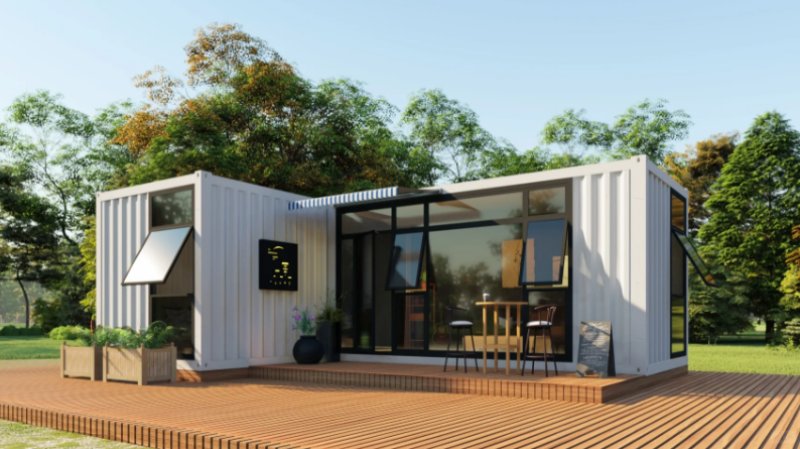
In Australia,commercial container buildings can indeed be officially registered and pass final inspection.However,you must complete the full approval process,adhering to the same standards required for formal construction projects.
If you intend to use a container structure for commercial purposes—such as a coffee shop,retail store,or office space—it will not be classified as a temporary facility;instead,it must be integrated into the standard building regulatory framework.Consequently,you are required to apply for approval as you would for any conventional construction project.
Many commercial container projects are halted midway through development—not because regulations prohibit them,but because the necessary regulatory approvals were never sought.The approval process is complex,encompassing multiple stages including planning,design,construction,and final inspection.

In Australia,the determination of what constitutes a"building"does not depend on the structure's form or physical composition,but primarily on its intended*use*.In other words,whether or not a structure is classified as a building depends largely on"what it does."
A container structure undergoes a change in classification once it begins to exhibit the following characteristics:
It is situated at a fixed location and intended for long-term use.
It is connected to utility services,such as water,electricity,or sewage systems.
It serves as a venue for commercial activities—such as retail operations,office work,or the provision of public services.
When these conditions converge,the structure is generally no longer regarded merely as a simple"container,"but is instead brought under the purview of standard building regulations.
For this very reason,such projects are typically subject to regulation under the*National Construction Code*(NCC).For instance,a container used for selling coffee would likely be classified under"Class 6"(Retail Buildings).Once assigned to this classification,the regulatory review standards applied to it become identical to those for any standard retail shop;consequently,you must submit your application in accordance with the procedures for conventional commercial premises.
Therefore,in Australia,the critical question regarding commercial container structures is never simply"Is it a container?"but rather,"Does it comply with building codes?"
Many people encountering this type of project for the first time tend to view the approval process as a single,isolated event—such as merely submitting an application and awaiting a response.However,in practice,one discovers that it is actually a progressive,multi-stage journey;each step follows a distinct logical sequence and is inextricably linked to the next.Based on practical experience,a commercial shipping container project typically proceeds through three distinct phases.While each phase appears independent,if the preceding step is not handled properly,subsequent work often becomes extremely difficult to advance.
A project does not begin with drafting blueprints;rather,the initial step is to determine whether the undertaking is"feasible"in principle.
During this phase,the local Council primarily focuses on the compatibility between the proposed project and the land itself.For instance,they assess whether the land zoning permits commercial use,whether the project's form complies with regional planning regulations,and whether its overall aesthetic will have a significant impact on the surrounding environment.
Some projects are rejected at this very stage—not because of flaws in the design,but because the inherent attributes of the land itself do not support the proposed use.Such scenarios are actually quite common;in some cases,this incompatibility is discovered only after the design work has already been completed,rendering the extensive preliminary efforts almost entirely in vain.
Therefore,experience suggests that investing a little time to clarify planning conditions*before*formal design commences can often save significant costs associated with repeated revisions further down the line.
Once there are no issues at the planning level,the project advances to a more specific technical review phase.
The documentation submitted during this stage is relatively comprehensive,extending beyond mere artistic renderings to include various technical documents essential for actual construction.These include architectural drawings,structural calculations,foundation plans,as well as designs related to fire safety and energy efficiency.
One specific detail requires particular attention at this juncture:
While a shipping container constitutes a complete structural unit in its original transport state,its inherent load-bearing system is fundamentally altered the moment modifications begin—such as cutting openings for doors and windows,or joining multiple containers together.
Although these structural changes may not be visually apparent,they constitute a primary focus of scrutiny during the approval process.Consequently,in most cases,a complete recalculation of structural loads is required,followed by certification from a qualified engineer.If this aspect is inadequately prepared,it will often directly impede the progress of the approval process.
Many people assume that once a project is built,it can immediately be put into operation;however,in Australia,this step is not quite so straightforward.
Upon the completion of construction,the project must undergo a series of inspections to verify that the actual build aligns precisely with the approved design.Simultaneously,systems such as electrical installations and fire safety measures are rigorously validated.Only when all these elements meet the requisite standards is the project granted an"Occupancy Certificate."
To put it another way,until this certificate is obtained,it remains extremely difficult to enter the formal operational phase—even if the physical construction of the building is already complete.This point is of particular importance in the context of commercial projects.
During the approval process,a certain percentage of applications are rejected or fail to pass review.Such occurrences are often linked to a combination of factors;applicants must identify exactly where the application falls short and subsequently make the necessary modifications and adjustments.
Listed below are several key factors within the approval process that significantly impact the final inspection and acceptance:
Containers inherently possess robust load-bearing capabilities;however,once modified for specific installations,this inherent strength may be compromised.For instance,the placement of structural openings,the methods used for splicing sections,and similar details can profoundly affect the overall structural stability of the container unit.Without appropriate structural calculations or reinforcement measures,obtaining approval becomes significantly more difficult.
Fire safety is the single most critical requirement for containers intended for commercial use;if this criterion cannot be met,the unit will not be authorized for commercial operation.
For commercial spaces,fire safety encompasses far more than just material selection;it also involves various aspects such as evacuation routes and spatial layout.This scrutiny is particularly rigorous for units intended for use as restaurants,where the review process is exceptionally detailed.Some designs may appear sound during the preliminary stages,yet upon detailed refinement,they are often found to require significant adjustments to meet safety standards.
Australia maintains clear and specific standards regarding building energy efficiency,generally requiring structures to achieve a certain energy rating.This mandates that the walls,roofing,and door and window systems all possess specific performance characteristics.Simple container structures—without additional modifications or treatments—often struggle to satisfy these stringent requirements.
In practice,very few commercial container projects involve simply placing the container directly onto the ground for use.In most instances,it is necessary to construct a concrete foundation or install other forms of supporting structures,which must then be securely anchored.This requirement pertains not only to structural stability but also constitutes a mandatory component of the regulatory approval process.
Projects intended for storage or temporary office use tend to pass the approval process with relative ease.Conversely,spaces designed for human occupancy—such as retail areas,dining establishments,or residential units—are subject to much higher standards regarding safety and comfort,resulting in correspondingly stricter approval criteria.
In reality,the failure of certain projects to proceed smoothly is rarely attributable to a single isolated issue;rather,it is typically the result of a confluence of multiple compounding factors.
Some projects attempt to directly transplant design schemes from other countries during the initial design phase,only to discover later that these designs fail to meet local standards regarding structural integrity or energy efficiency.Other projects falter because key documentation—such as professional engineering certifications—is missing at the time of submission,thereby halting the approval process in its tracks.Another common scenario involves failing to verify land usage during the initial stages,only to discover—once the project enters the planning phase—that it does not meet regulatory requirements.Once such an issue arises,the scope for making adjustments is typically quite limited.
While these issues are not inherently complex,if they surface during the later stages of a project,they will significantly increase time costs and disrupt the overall project timeline.
From the perspective of project implementation,several strategies have proven highly effective and warrant particular attention during practical execution:
At the very outset of the project,clarify the land attributes—specifically zoning regulations and usage restrictions.This step may appear simple,yet it often determines whether all subsequent work will be productive and meaningful.
Once you enter the design phase,strive to adhere to Australian standards from the start,rather than waiting until the approval stage to make adjustments.Critical aspects—such as structural integrity,fire safety,and energy efficiency—require your close attention when selecting container units;you must verify with the manufacturer that their products fully comply with Australian market requirements.Incorporating these considerations during the initial planning phase will ensure a much smoother subsequent approval process.
If your project involves long-term development plans,consider incorporating specific custom design requirements.For instance,you might or standardized module dimensions or instruct your designers to pre-allocate connection points for utility lines(plumbing,electrical,etc.).This approach proves highly efficient when replicating the project in the future and simultaneously facilitates easier compliance with regulatory approval criteria.
Based on both regulatory policies and actual case studies,the answer is unequivocal:commercial container-based architecture is indeed viable in Australia,and numerous successful projects have already been completed.However,the critical question is not simply"can it be done?"but rather*how*it is planned and executed.By framing container-based construction within the broader context of a standard"building project,"the approval process,technical requirements,and scheduling become far more transparent and manageable.
In practice,many instances of back-and-forth revision do not stem from overly stringent standards,but rather from a failure to properly define the project's direction during the initial stages.For example,commencing design work without first verifying land usage,or attempting to retroactively resolve structural and energy-efficiency issues during the later stages,inevitably incurs additional costs.Provided that planning conditions,design compliance,and fundamental technical specifications are properly addressed during the preliminary phase,the subsequent project workflow typically proceeds without complications.
For both businesses and individuals,rather than constantly testing regulatory boundaries throughout the process,it is far more prudent to establish a clear and logical project framework from the very beginning.This approach not only minimizes the costs associated with repeated revisions but also ensures that the entire project remains stable,predictable,and on track.
WZHHouse container design and manufacturing of container-based housing solutions.Primarily serving the Australian market,our products are fully compliant with all local building codes and safety standards.Key advantages include:
Compliance with Australian Regulations:Design and construction strictly adhere to Australian building codes and energy efficiency standards.
Modular Flexibility:Available in a variety of sizes and layouts,allowing for combination and customization to meet specific requirements.
High-Quality Materials:Utilizes premium steel structures and weather-resistant materials to ensure long-term durability.
Rapid Delivery:Standardized modular production shortens construction timelines and enhances project efficiency.
If you are considering container-based structures for commercial or residential use,WZHHouse offers comprehensive solutions—providing end-to-end service from design through to construction.Contact us today to receive a customized proposal and expert consultation.



Copyright © Hebei Weizhengheng Modular House Technology Co., Ltd. All Rights Reserved
Sitemap



 +8615081877521
 +8615081877521