- icy@wzhgroup.com
- +86 15081877521


In Australia,when expandable container homes are mentioned,many people raise an eyebrow–"Are they really reliable?"The answer is,quite reliable.They're inexpensive,easy to build,and most importantly,hassle-free to use.You might not need a large plot of land,nor do you have to wait six months for a house to be built;you can have your own small space,even if it's just a place to shelter from the wind,sleep,and store a few things.
Moreover,it's not just a box for"living in."It can serve as temporary accommodation,an office,or even a resort or farm cottage.Imagine moving a small house to the beach,the foot of a mountain,or next to a vineyard–that feeling of freedom to live anywhere,anytime–it's a very different feeling compared to traditional houses.
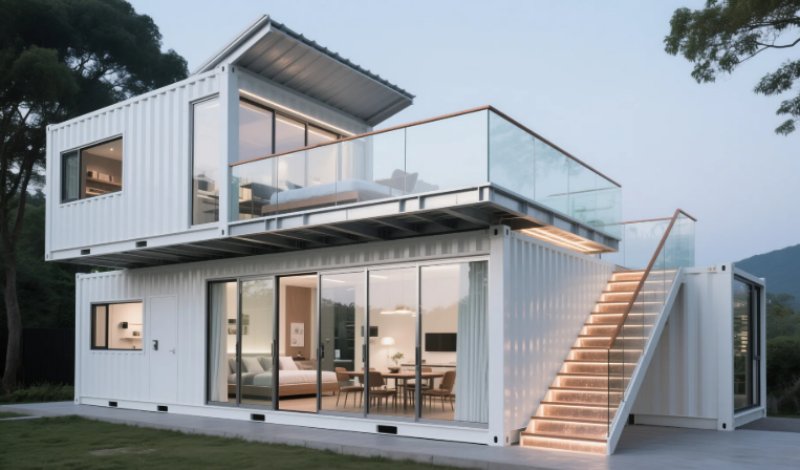
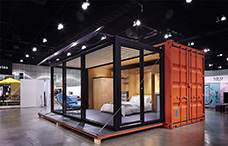
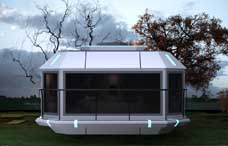
Simply put,expandable container homes are a form of housing that combines modular design and industrial manufacturing.They are usually based on standard shipping container structures,and the space is expanded by unfolding,stretching,or assembling on-site,without occupying a larger footprint.
The charm of this design lies in its ability to combine the advantages of small size and easy transportation with a practical and comfortable living experience.Compared to traditional brick-and-mortar,on-site constructed houses,it can be assembled like a"magic box"in a few hours or even minutes,and the finished structure is sturdy,well-insulated,and ready for immediate occupancy.
In Australia,a country with vast territory and high housing costs,this option is no longer just an ideal"alternative architecture,"but a reality that is actually happening–people are buying them,companies are making them,and there are real-world applications.
Many people are wondering if there's a solution that allows them to own a home for less money,instead of constantly being a"cash machine"for rent.
Under this real-world pressure,a typical use of Expandable Container Homes is as affordable housing.Unlike expensive traditional houses that cost hundreds of thousands or even millions of Australian dollars,it can provide basic living space at a cost of less than hundreds of thousands of dollars,or even lower.
For example,some expandable container units around 40 feet in length are priced in the range of approximately A$25,000–A$30,000 on auction or second-hand markets.Compared to the hundreds of thousands of dollars required for traditional houses,this price range is certainly appealing to many prospective buyers.
Of course,to build a fully compliant and habitable house,you also need to consider insulation,plumbing installation,compliance inspections,foundation preparation,and permit fees.These additional costs are often unforeseen by many people initially.Some have shared similar experiences:they initially planned to buy a"cheap container,"but ended up spending a considerable amount on local installation and compliance approvals.
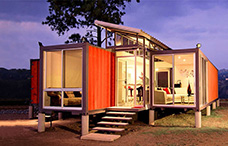
If you've ever imagined,"How wonderful would it be to have a piece of land near the sea and watch the sunset every night?"These expandable container homes can make your holiday home dream a reality at a lower cost.
For those who own a farm in the suburbs or a small plot of land by the sea,it provides an easier,faster,and more convenient solution than building a traditional wooden or brick house.
For example:
A stargazing cabin by a salt lake
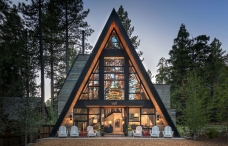
A holiday home at the foot of a mountain
A sketching studio by the rainforest
Temporary accommodation on a remote ranch
In these scenarios,you don't have to worry about the long construction period and high costs of building a house.You simply transport the container to the site,unfold it,connect the electricity and water,and you can move in.
Some suppliers even offer fully pre-assembled versions,including kitchen,bathroom,basic electrical wiring,and insulation materials,allowing you to move in immediately without worrying about renovation details.
Many unexpected situations in life may suddenly require temporary accommodation,such as:
Your old house is being renovated
You haven't found long-term accommodation for your new job
Family members temporarily need independent space
Temporarily accommodating relatives who have traveled a long distance
In these situations,expandable container homes are a solution that won't disappoint:unlike renting,you don't need to sign long-term leases,pay deposits,or worry about price increases;nor do you have to wait for the long construction period of traditional housing.Moreover,it's like a mobile"home."When you need to change locations or move,you simply pack it up,attach it to a trailer,and drive away.Its flexibility makes many people exclaim,"This is so convenient!"
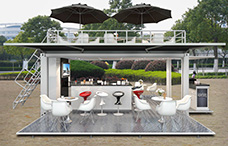
Interestingly,many entrepreneurs have already started using expandable container homes for commercial purposes.In some tourist attractions,seaside towns,or secluded campsites,you'll see:
Airbnb listings
Holiday guesthouses
Temporary studios
Small cafes
Temporary meeting rooms
These uses demonstrate that this type of container housing is not just a single-function"home substitute,"but a versatile space with a wide range of applications.
Imagine:Waking up in an Airbnb cottage next to a vineyard in the spring,moving it to a seaside resort as a scenic room in the summer,and transforming it into a pottery studio at the foot of a mountain in the autumn–this"adaptable"lifestyle is more in line with the travel pace of modern people than a rigid traditional house.
Speaking of which,the most realistic question comes down to the core question you most want to know:If I'm really interested,how much will expandable container home cost in Australia?
The cost largely depends on your needs,options,location,and compliance requirements.The following is a rough estimate based on current market and supply chain conditions(for reference only):
The starting price for a typical expandable container home(20–40ft)can range from approximately$18,000–$30,000 AUD(depending on specific specifications).
Some lightweight designs or more basic versions may be even cheaper,but these often require self-installation of plumbing or further renovation.
Versions with full amenities such as internal wiring,plumbing,bathrooms,and kitchens are usually more expensive.
Some manufacturers offer pre-assembled versions that can be unfolded and moved into directly on-site;these high-completion versions are significantly more expensive.
Many homebuyers initially only see the"purchase price,"but what really makes their hearts race are these:
Transportation costs:Delivery to your location may incur additional charges depending on distance and terrain.
On-site infrastructure:Water,electricity,sewage connections,and foundation construction require professional work.Compliance Review Costs:Many regions require building permits and installation inspections,and these fees and design costs must be included.
Therefore,the final cost of a fully functional,legally habitable home may be significantly higher than the price advertised,but it is still generally more economical compared to traditional housing.
By 2026,many will ask,"Will this become mainstream housing?"The realistic answer is that it will be very suitable for some areas,but not for everyone.
In rural areas like Queensland,farms in South Australia,and remote seaside resorts,the flexibility and cost advantages of these homes are very significant.
However,in prime real estate areas like the Sydney CBD,although some people are considering expandable containers as backyard cottages,studios,or Airbnb rentals,there are still hurdles to overcome before they become a"primary residence"in the traditional sense,such as legal compliance and neighborhood coordination.
In Australia,a place full of boundless imagination,Expandable Container Homes are not only a novel architectural form but also represent a new lifestyle choice:
You can build your own little world closer to nature with less money.
You can adjust your space according to your life rhythm,instead of being bound by mortgages and land deeds.
You can design the life you want,instead of settling for a traditional house you can afford.
It's not a panacea,but for many,it's the brick that makes dreams a little more tangible.
If you are considering this type of housing,you might want to start by considering your needs,budget,and actual living situation,and give it a try,as it may bring a completely different sense of freedom to your life.
If you are considering purchasing an expandable container house,you might want to learn about WZHhouse.
WZHhouse is a professional container house manufacturer from China,specializing in the design,production,and export of high-quality expandable container houses.Their product features include:
Modular design:Flexible customization of space layout and functional configuration according to customer needs.
High-quality materials:Using high-quality steel and environmentally friendly materials to ensure durability,waterproofing,and insulation.
Global export capabilities:Exportable to multiple countries and regions,including Australia,North America,and Europe,supporting remote transportation and on-site assembly.Versatile Applications:Suitable for various scenarios including affordable housing,vacation homes,temporary accommodation,and commercial use.
Whether you're looking for expandable container homes in Australia or planning to use them for overseas projects,WZHhouse provides a one-stop service from design solutions to logistics,transportation,and installation guidance,making it easy for you to own your own modular home.
If you would like to learn more about WZHhouse's specific models,pricing,or customized solutions,please contact our official customer service for professional advice and make your container home dream a reality.



Copyright © Hebei Weizhengheng Modular House Technology Co., Ltd. All Rights Reserved
Sitemap

 +8615081877521
 +8615081877521